Exploring Complex Survey Data Analysis Using R: A Complete Engineering Guide for Accurate Statistical Inference 📊🔬
Introduction 📖
Modern engineering, healthcare, economics, environmental science, transportation, and public policy rely heavily on survey data for decision-making. However, not all survey datasets are collected through simple random sampling. Most national and international surveys use sophisticated sampling designs involving stratification, clustering, unequal probabilities, and weighting.
Ignoring these survey characteristics can produce:
- ❌ Biased parameter estimates
- ❌ Incorrect standard errors
- 🤖 Misleading confidence intervals
- ❌ Invalid hypothesis tests
- ❌ Poor engineering and policy decisions
This is where Complex Survey Data Analysis becomes essential.
The R programming language provides one of the world’s most powerful ecosystems for analyzing survey data through packages such as survey, srvyr, and surveytools. These tools allow researchers to account for complex sampling structures while obtaining statistically valid results.
Whether you are an engineering student, statistician, data scientist, healthcare analyst, transportation researcher, or environmental engineer, mastering survey analysis in R will significantly improve the quality of your research.


Background Theory 📚
Survey sampling theory has evolved considerably over the past century.
Early statistical studies mainly assumed Simple Random Sampling (SRS), where every individual had an equal probability of selection.
As populations became larger and more geographically dispersed, statisticians introduced more efficient sampling techniques including:
- 🌍 Stratified Sampling
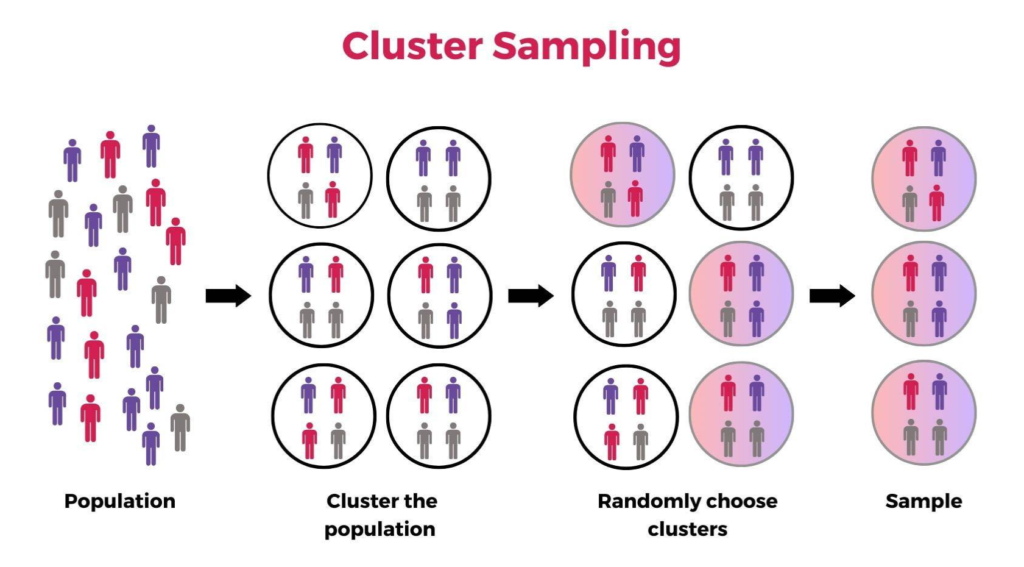
- 🏢 Cluster Sampling
- ⚖ Probability Proportional to Size (PPS)
- 📦 Multi-stage Sampling
- 🎯 Unequal Probability Sampling
Government organizations such as:
- U.S. Census Bureau
- Statistics Canada
- UK Office for National Statistics
- Australian Bureau of Statistics
- European Statistical Agencies
all employ these advanced sampling methods.
Complex survey analysis adjusts estimates so they accurately represent the target population.
Definition 🎯
Complex Survey Data Analysis is the statistical process of analyzing survey datasets collected through sampling designs that include one or more of the following:
- Survey weights
- Stratification
- Clustering
- Multi-stage sampling
- Unequal sampling probabilities
- Finite population corrections
Instead of treating observations as independent, complex survey methods correctly account for the survey design during estimation.
Why Survey Weights Matter ⚖
Suppose:
Population:
- 90% Urban
- 10% Rural
Sample:
- 60% Urban
- 40% Rural
Without weights:
The rural population becomes heavily overrepresented.
With survey weights:
The estimates correctly represent the actual population.
This dramatically improves:
✅ Means
✅ Totals
🤖 Percentages
✅ Regression models
✅ Standard errors
Major Components of Complex Survey Design 🏗
Stratification
Population divided into homogeneous groups.
Example:
- North Region
- South Region
- East Region
- West Region
Benefits:
- Lower variance
- Better representation
- Increased precision
Clustering
Instead of selecting individuals randomly, groups are selected.
Examples:
- Schools
- Cities
- Factories
- Hospitals
Advantages:
- Lower cost
- Easier logistics
Disadvantage:
- Correlated observations
Sampling Weights
Each observation receives a weight representing how many people it represents.
Example:
| Person | Weight |
|---|---|
| A | 80 |
| B | 150 |
| C | 210 |
Primary Sampling Units (PSUs)
PSUs are the first units selected during sampling.
Examples:
- Counties
- Districts
- Schools
- Hospitals
Installing Required R Packages 💻
Common packages include:
install.packages("survey")
install.packages("srvyr")
install.packages("dplyr")
Load them:
library(survey)
library(srvyr)
library(dplyr)
Step-by-Step Survey Analysis Using R 🚀


Step 1 — Import Data
survey_data <- read.csv("survey.csv")
Step 2 — Explore Variables
summary(survey_data)
Inspect:
- weights
- strata
- clusters
- variables
Step 3 — Create Survey Design
design <- svydesign(
id=~cluster,
strata=~strata,
weights=~weight,
data=survey_data
)
This step informs R about the sampling design.
Step 4 — Estimate Weighted Mean
svymean(~income, design)
Output includes:
- Mean
- Standard Error
- Confidence Interval
Step 5 — Weighted Totals
svytotal(~income, design)
Step 6 — Weighted Proportions
svymean(~gender, design)
Step 7 — Cross Tabulation
svytable(~gender+education, design)
Step 8 — Regression Analysis
svyglm(
income~age+education,
design=design
)
The regression correctly adjusts for the survey design.
Comparison ⚖
| Feature | Simple Random Sampling | Complex Survey |
|---|---|---|
| Weights | ❌ | ✅ |
| Clusters | ❌ | ✅ |
| Strata | ❌ | ✅ |
| Accurate Variance | Limited | Excellent |
| National Surveys | Rare | Common |
| R Package | Base R | survey |
Diagrams, Tables & Infographics 📊



Survey Design Flow
Population
     │
     ▼
 Stratification
     │
     ▼
 Cluster Selection
     │
     ▼
 Household Selection
     │
     ▼
 Individual Selection
     │
     ▼
 Survey Weights
     │
     ▼
 Statistical Analysis
Workflow Table
| Stage | Purpose |
|---|---|
| Sampling | Select participants |
| Weighting | Represent population |
| Cleaning | Remove errors |
| Survey Design | Define sampling structure |
| Analysis | Estimate parameters |
| Reporting | Publish findings |
Variance Estimation Methods
| Method | Accuracy | Speed |
|---|---|---|
| Taylor Linearization | ⭐⭐⭐⭐⭐ | Fast |
| Jackknife | ⭐⭐⭐⭐ | Medium |
| Bootstrap | ⭐⭐⭐⭐⭐ | Slow |
| Balanced Repeated Replication | ⭐⭐⭐⭐ | Medium |
Practical Examples 🔍
Example 1
Estimate average household income.
Functions:
svymean()
Example 2
Estimate unemployment rate.
Functions:
svymean()
Example 3
Compare regions.
Functions:
svyby()
Example 4
Weighted regression.
Functions:
svyglm()
Example 5
Cross-tabulation.
Functions:
svytable()
Real-World Applications 🌍
Complex survey analysis is widely used across engineering and scientific disciplines.
Civil Engineering 🏗
- Transportation surveys
- Road safety studies
- Infrastructure demand analysis
Environmental Engineering 🌱
- Pollution monitoring
- Climate surveys
- Water quality assessments
Electrical Engineering ⚡
- Energy consumption surveys
- Smart grid customer studies
Mechanical Engineering ⚙
- Manufacturing quality surveys
- Equipment reliability studies
Industrial Engineering 🏭
- Workforce productivity
- Lean manufacturing assessments
- Supply chain optimization
Healthcare Engineering 🏥
- Patient satisfaction
- Hospital resource allocation
- Medical technology adoption
Data Science 🤖
- Population analytics
- Market research
- Predictive modeling
Common Mistakes ❌
🤖 Ignoring survey weights.
Ignoring clustering.
Ignoring stratification.
Using ordinary regression instead of survey regression.
Treating weighted data as independent observations.
Using incorrect confidence intervals.
Failing to check missing values.
Misinterpreting weighted percentages.
Challenges & Solutions 🛠
| Challenge | Solution |
|---|---|
| Missing weights | Obtain official survey documentation |
| Complex design | Use svydesign() |
| Large datasets | Use efficient R workflows |
| Incorrect standard errors | Apply survey-specific estimators |
| Multiple survey waves | Harmonize variables before analysis |
| Nonresponse bias | Adjust weights or use calibration methods |
Case Study 📈
National Transportation Survey
An engineering research team wanted to estimate average daily commuting time across a country.
Problem
The survey used:
- Four sampling stages
- Regional stratification
- Household clustering
- Unequal selection probabilities
A traditional analysis underestimated variability and suggested overly precise results.
Solution
Researchers created a survey design object in R using weights, strata, and clusters, then estimated commuting times with svymean() and modeled influencing factors using svyglm().
Outcome
- ✔ More accurate national estimates
- ✔ Reliable confidence intervals
- 🤖 Better transportation planning recommendations
- ✔ Improved allocation of infrastructure investments
This case illustrates why accounting for survey design is essential when findings inform engineering and public policy decisions.
Essential Tips 💡
- 📘 Read the survey documentation before analysis.
- ⚖ Always apply the provided sampling weights.
- 🧩 Define strata and cluster variables correctly.
- 🧪 Validate data quality before modeling.
- 📊 Use
svydesign()as the foundation of your workflow. - 📈 Prefer survey-aware functions such as
svymean(),svytotal(), andsvyglm(). - 🔄 Document every transformation for reproducibility.
- 💾 Save scripts and analysis outputs using version control.
- 🤝 Compare weighted and unweighted summaries to understand the impact of the survey design.
Frequently Asked Questions ❓
What is complex survey data?
It is data collected using advanced sampling methods such as stratification, clustering, and weighting instead of simple random sampling.
Why shouldn’t I ignore survey weights?
Ignoring weights can produce biased estimates that no longer represent the target population accurately.
Which R package is most commonly used?
The survey package is the standard choice for complex survey analysis, while srvyr provides a tidyverse-friendly interface.
Can I perform regression on survey data?
Yes. Functions like svyglm() fit regression models while accounting for survey weights, strata, and clusters.
Are weighted and unweighted results always different?
Not always, but differences can be substantial when sampling probabilities vary across the population.
Is complex survey analysis only for government datasets?
No. Businesses, universities, healthcare organizations, engineering firms, and market research companies also use complex survey methods.
Which industries benefit the most?
Engineering, healthcare, environmental science, transportation, economics, social sciences, public policy, and data science all benefit from statistically valid survey analysis.
Conclusion 🎓
Complex survey data analysis is an indispensable skill for modern engineers, researchers, and data analysts working with real-world population data. Unlike traditional statistical methods, it recognizes that many surveys are built using sophisticated sampling strategies involving weights, stratification, clustering, and multi-stage designs. Ignoring these features can lead to biased estimates, underestimated uncertainty, and flawed conclusions.
R offers a mature and powerful ecosystem for handling these challenges. By defining the survey design correctly and using specialized functions such as svydesign(), svymean(), svytotal(), svytable(), and svyglm(), analysts can generate results that accurately reflect the target population while producing reliable standard errors and confidence intervals.
For students, learning these techniques provides a strong foundation in applied statistics and data science. For professionals, they improve the quality of engineering studies, policy evaluations, healthcare research, transportation planning, environmental monitoring, and market analytics. As datasets continue to grow in size and complexity, mastering complex survey analysis in R will remain a valuable and highly sought-after skill that supports evidence-based decision-making across industries.