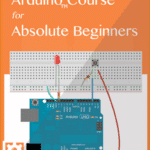
🚀 Beginning Arduino Programming: Writing Code for the Most Popular Microcontroller Board in the World 🌍
🌟 Introduction
Arduino programming has become one of the most accessible and powerful gateways into embedded systems, robotics, automation, and Internet of Things (IoT) development. Whether you are a high school student in Canada building your first LED circuit, an engineering undergraduate in the UK designing a smart sensor node, or a professional developer in the USA integrating hardware into industrial automation systems, Arduino offers a practical and scalable platform.
The Arduino board—especially the widely used Arduino Uno—is considered the most popular microcontroller development platform in the world. Its simplicity, open-source philosophy, and massive global community make it ideal for both beginners and advanced engineers.
This comprehensive engineering guide will walk you through:
Fundamental theory behind microcontrollers
Technical definitions and architecture
Step-by-step coding explanations
Comparisons with other platforms
Diagrams and tables
Detailed project examples
Real-world engineering applications
Professional challenges and solutions
By the end of this article, you will have a solid conceptual and practical understanding of Arduino programming—ready to apply in academic, research, or industrial settings.
📘 Background Theory
🔹 What Is a Microcontroller?
A microcontroller is a compact integrated circuit designed to govern a specific operation in an embedded system. It typically includes:
CPU (Central Processing Unit)
RAM (volatile memory)
Flash memory (program storage)
Input/Output (I/O) pins
Timers
Communication interfaces (UART, SPI, I2C)
Unlike general-purpose computers, microcontrollers are built for deterministic real-time tasks.
🔹 Embedded Systems Fundamentals
An embedded system consists of:
Hardware (microcontroller + peripherals)
Firmware (program code written by the engineer)
Sensors and actuators
The Arduino platform simplifies embedded development by abstracting complex hardware-level operations into easy-to-use programming functions.
🔹 Why Arduino Became So Popular 🌍
Arduino gained global adoption because:
🚀 It is open-source (hardware & software)
🚀 It uses simplified C/C++
It has a user-friendly IDE
It supports cross-platform development (Windows, macOS, Linux)
Massive community support in the USA, UK, Europe, Australia, and Canada
The official development software is Arduino IDE, which allows writing, compiling, and uploading code easily.
🧠 Technical Definition
🔹 Arduino (Engineering Definition)
Arduino is an open-source electronics prototyping platform based on easy-to-use hardware and software, designed for building digital and analog interactive devices.
🔹 Core Hardware: ATmega328P
The Arduino Uno uses the ATmega328P microcontroller.
Key Specifications:
| Parameter | Value |
|---|---|
| Clock Speed | 16 MHz |
| Flash Memory | 32 KB |
| SRAM | 2 KB |
| EEPROM | 1 KB |
| Digital I/O Pins | 14 |
| Analog Inputs | 6 |
| Operating Voltage | 5V |
🔹 Programming Language
Arduino uses a simplified version of:
C
C++
It adds abstraction functions like:
pinMode()digitalWrite()analogRead()
These hide low-level register manipulations.
🛠 Step-by-Step Explanation of Arduino Programming
🟢 Step 1: Install the Arduino IDE
Download and install the official IDE.
After installation:
Select board type (Arduino Uno)
Select COM port
Connect via USB
🟢 Step 2: Understanding the Basic Structure of Arduino Code
Every Arduino program (called a sketch) contains two main functions:
// runs once
}
void loop() {
// runs repeatedly
}
Explanation:
setup()initializes hardware.loop()executes repeatedly as long as power is supplied.
🟢 Step 3: Your First Program – Blink LED
pinMode(13, OUTPUT);
}
void loop() {
digitalWrite(13, HIGH);
delay(1000);
digitalWrite(13, LOW);
delay(1000);
}
How It Works:
Pin 13 is set as OUTPUT
LED turns ON
Wait 1 second
LED turns OFF
Repeat forever
🟢 Step 4: Understanding Digital vs Analog
Digital Signals
Only HIGH (5V)
Or LOW (0V)
Analog Signals
Continuous values
Arduino converts using 10-bit ADC
Range: 0–1023
🟢 Step 5: Reading a Sensor
void setup() {
Serial.begin(9600);
}
void loop() {
sensorValue = analogRead(A0);
Serial.println(sensorValue);
delay(500);
}
This reads voltage from analog pin A0.
⚖️ Comparison with Other Microcontroller Platforms
| Feature | Arduino | Raspberry Pi | STM32 |
|---|---|---|---|
| Type | Microcontroller | Microprocessor | Microcontroller |
| OS | No | Linux | No |
| Learning Curve | Easy | Moderate | Advanced |
| Real-time | Yes | Limited | Yes |
| Cost | Low | Medium | Medium |
Example alternative: Raspberry Pi
Arduino is better for deterministic hardware control. Raspberry Pi is better for OS-based applications.
📊 Diagrams & Tables
🔌 Basic Arduino Architecture Diagram
| ATmega328P |
| |
| CPU | Flash | SRAM |
| |
| I/O Pins | ADC | UART |
+—————————+
🔄 Program Flow Diagram
↓
setup()
↓
loop() → loop() → loop() → loop()
🧪 Detailed Examples
Example 1: Temperature Monitoring System 🌡️
Components:
Arduino Uno
LM35 Temperature Sensor
LCD Display
Code Snippet:
float temperature;
void loop() {
int reading = analogRead(tempPin);
temperature = reading * 0.488;
Serial.println(temperature);
delay(1000);
}
Engineering Concept:
ADC conversion
Voltage scaling
Sensor calibration
Example 2: Ultrasonic Distance Measurement 📏
Using HC-SR04:
Trigger pulse
Measure echo time
Calculate distance
Formula:
Distance = (Time × Speed of Sound) / 2
Example 3: PWM Motor Control 🚗
Controls motor speed using Pulse Width Modulation.
🏗 Real World Applications in Modern Projects
Arduino is widely used in:
🏠 Smart Homes
Motion detection
Smart lighting
HVAC control
🚗 Automotive Prototyping
Sensor data logging
CAN bus testing
🌾 Agriculture
Soil moisture systems
Automated irrigation
🏭 Industrial Automation
Machine monitoring
Predictive maintenance
🌍 IoT Applications
Data logging
Cloud integration
Environmental monitoring
In Europe and Australia, Arduino is frequently used in renewable energy research prototypes.
❌ Common Mistakes
Forgetting to define pin modes
Using wrong voltage levels
Ignoring grounding issues
Blocking code with excessive delay()
Poor power supply design
Memory overflow (2 KB SRAM limitation)
⚡ Challenges & Solutions
🔴 Challenge 1: Limited Memory
Solution:
Use
F()macroAvoid large arrays
🔴 Challenge 2: Timing Issues
Use:
millis()instead of delay()
🔴 Challenge 3: Noise in Analog Signals
Solutions:
Use capacitors
Shield wires
Software averaging
🏢 Case Study: Smart Parking System
Problem
Urban congestion in UK cities.
Solution
Arduino-based ultrasonic detection.
System Components:
Arduino Uno
Ultrasonic sensors
LED indicators
Wi-Fi module
Implementation Steps:
Detect vehicle presence
Send data to central server
Display availability
Outcome
Reduced parking time
Lower emissions
Improved urban efficiency
🎯 Tips for Engineers
Always start with simple prototypes
Use version control
Comment your code
Use modular programming
Avoid blocking functions
Test power systems separately
Follow safety standards (UL, CE in Europe)
❓ FAQs
1️⃣ Is Arduino good for professional engineering?
Yes, for prototyping and small-scale embedded systems.
2️⃣ Can Arduino be used in industrial automation?
Yes, especially in proof-of-concept and testing.
3️⃣ What programming language does Arduino use?
Simplified C/C++.
4️⃣ Is Arduino real-time?
Yes, because it runs without an operating system.
5️⃣ Can Arduino connect to the internet?
Yes, using Wi-Fi or Ethernet shields.
6️⃣ What is the most popular Arduino board?
Arduino Uno
7️⃣ Is Arduino better than Raspberry Pi?
Depends on application: real-time control vs OS-based computing.
🏁 Conclusion
Arduino programming represents one of the most powerful entry points into embedded engineering, hardware design, robotics, automation, and IoT systems. Its simplicity makes it perfect for beginners, while its flexibility allows advanced engineers to develop complex prototypes and functional systems.
For students across the USA, UK, Canada, Australia, and Europe, mastering Arduino programming builds foundational skills in:
Embedded C/C++
Electronics
Control systems
Sensor integration
Real-time programming
For professionals, Arduino provides:
Rapid prototyping capabilities
Low-cost development
Educational training tools
Proof-of-concept validation
From blinking your first LED to designing a full smart infrastructure system, Arduino remains one of the most important tools in modern engineering education and development.
If you truly understand Arduino programming, you are not just writing code—you are engineering intelligent systems that interact with the physical world. 🌍🚀