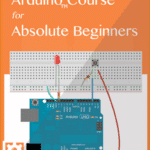
Arduino Projects For Dummies: The Ultimate Beginner-to-Advanced Engineering Guide 🤖⚡
Introduction 🚀
Arduino has transformed the world of electronics, automation, robotics, and embedded engineering. What once required expensive laboratory equipment and advanced engineering knowledge can now be built on a small affordable development board. From students creating their first blinking LED project to professional engineers designing smart automation systems, Arduino has become one of the most powerful learning and prototyping platforms in modern engineering.
The phrase “Arduino Projects For Dummies” does not mean the subject is simple or limited. Instead, it represents a practical and beginner-friendly path toward understanding real engineering systems. Arduino makes engineering approachable by combining hardware and software into one flexible ecosystem.
Today, Arduino is used in:
- Robotics 🤖
- Smart homes 🏠
- Industrial automation 🏭
- Environmental monitoring 🌍
- Medical systems 🏥
- Automotive electronics 🚗
- Aerospace prototypes ✈️
- IoT devices 📡
- Educational laboratories 🎓
- Wearable technology ⌚
Whether you are a student in the USA learning STEM concepts, an engineering hobbyist in the UK building robotics projects, a Canadian developer creating IoT systems, or an Australian electronics enthusiast designing automation circuits, Arduino provides an accessible and professional foundation.
This detailed engineering article explains Arduino from beginner to advanced levels. It covers theory, definitions, project development, diagrams, practical examples, troubleshooting, comparisons, engineering tips, and real-world applications.
By the end of this guide, readers will understand:
- How Arduino works ⚙️
- How to build Arduino projects 🛠️
- How to write Arduino code 💻
- How sensors and actuators interact 📶
- How engineers use Arduino in industry 🏗️
- How to avoid common mistakes ❌
- How to transition from beginner to advanced developer 📈
Background Theory 🔬
What Is Arduino?
Arduino is an open-source electronics platform based on easy-to-use hardware and software. It includes a programmable microcontroller board and an Integrated Development Environment (IDE) used for writing and uploading code.
The Arduino board receives inputs from sensors, processes information, and controls outputs such as motors, LEDs, displays, and communication modules.
In engineering terms, Arduino is an embedded system development platform.
History of Arduino 📜
Arduino was developed in Italy in 2005 at the Interaction Design Institute Ivrea. The goal was to create an affordable and easy-to-program platform for students.
Before Arduino, embedded systems required:
- Expensive programmers
- Complex hardware setup
- Advanced firmware knowledge
- Difficult debugging methods
Arduino simplified the process dramatically.
Over time, Arduino became popular worldwide because of:
- Open-source architecture
- Massive online community
- Affordable hardware
- Easy programming language
- Cross-platform support
Today, millions of Arduino boards are used globally.
Embedded Systems Theory 🧠
Arduino belongs to the field of embedded systems engineering.
An embedded system is a dedicated computer designed to perform specific tasks.
Examples include:
| Device | Embedded System Function |
|---|---|
| Microwave oven | Controls heating cycles |
| Smart thermostat | Controls room temperature |
| Washing machine | Automates washing sequences |
| Car ECU | Manages engine operations |
| Drone controller | Stabilizes flight |
Arduino acts as the controller or “brain” of many embedded systems.
Microcontroller Fundamentals ⚡
A microcontroller is a compact integrated circuit designed to govern a specific operation in an embedded system.
An Arduino board usually contains:
- CPU (processor)
- RAM memory
- Flash memory
- Input/output pins
- Timers
- Communication interfaces
The most popular Arduino Uno uses the ATmega328P microcontroller.
Input-Process-Output Model 🔄
Arduino projects follow the engineering control system model:
Input
Sensors collect information.
Examples:
- Temperature sensor 🌡️
- Light sensor ☀️
- Motion sensor 🚶
- Gas sensor ☁️
Processing
Arduino processes data using programmed instructions.
Output
Outputs respond to commands.
Examples:
- LED 💡
- Motor ⚙️
- Buzzer 🔊
- LCD display 📺
This engineering logic is fundamental to automation systems.
Technical Definition 🧾
Engineering Definition of Arduino
Arduino is an open-source embedded development platform consisting of programmable microcontroller hardware and software tools used for sensing, processing, and controlling electronic systems.
Main Components of an Arduino System
Arduino Board
The physical hardware containing the microcontroller.
Arduino IDE
Software used to write and upload programs.
Sensors
Input devices used to collect environmental data.
Actuators
Output devices that perform actions.
Power Supply
Provides electrical energy.
Communication Interfaces
Allow interaction with external systems.
Examples:
- UART
- SPI
- I2C
- Wi-Fi
- Bluetooth
Arduino Programming Language 💻
Arduino programming is based on simplified C/C++.
Every Arduino program contains two essential functions:
void setup() {

}

void loop() {

}
setup()
Runs once when the board powers on.
loop()
Runs continuously.
This repetitive loop structure is ideal for automation and monitoring systems.
Types of Arduino Boards 🛠️
Arduino Uno
Best for beginners.
Features:
- ATmega328P
- 14 digital pins
- 6 analog pins
- USB interface
Arduino Mega
Used for large projects requiring many I/O pins.
Arduino Nano
Compact and breadboard-friendly.
Arduino Leonardo
Can emulate USB devices.
Arduino Due
32-bit ARM-based advanced board.
Arduino MKR Series
Designed for IoT and cloud connectivity.
Arduino Portenta
Industrial and AI-focused platform.
Step-by-Step Explanation 🧰
Step 1: Understanding Basic Electronics ⚡
Before building Arduino projects, engineers must understand:
- Voltage
- Current
- Resistance
- Power
- Ohm’s Law
Ohm’s Law
V = I × R
Where:
- V = Voltage
- I = Current
- R = Resistance
Understanding this equation prevents component damage.
Step 2: Gather Essential Components 📦
A beginner Arduino kit typically includes:
| Component | Purpose |
|---|---|
| Arduino Uno | Main controller |
| Breadboard | Circuit building |
| LEDs | Output indicators |
| Resistors | Current limiting |
| Jumper wires | Connections |
| Push buttons | User input |
| Sensors | Environmental detection |
| Servo motors | Mechanical movement |
| LCD display | Data visualization |
Step 3: Install Arduino IDE 💻
The Arduino IDE allows:
- Writing code
- Compiling programs
- Uploading firmware
- Serial monitoring
Installation process:
- Download IDE
- Install software
- Connect board via USB
- Select board type
- Select COM port
Step 4: Build First Circuit 💡
The classic beginner project is the blinking LED.
Components Needed
- Arduino Uno
- LED
- 220Ω resistor
- Breadboard
Circuit Diagram
Arduino Pin 13 ---- Resistor ---- LED ---- GND
Step 5: Write First Program 👨💻
void setup() {
  pinMode(13, OUTPUT);
}

void loop() {
  digitalWrite(13, HIGH);
  delay(1000);
  digitalWrite(13, LOW);
  delay(1000);
}
Step 6: Upload the Code ⬆️
Press the Upload button.
If successful:
- LED blinks every second
- Arduino executes commands continuously
Step 7: Experiment and Expand 🔍
After mastering LEDs, engineers can explore:
- Sensors
- Motors
- LCDs
- Wi-Fi modules
- Robotics
- IoT systems
Basic Arduino Projects for Beginners 🌟
LED Blinking Project 💡
Purpose:
Learn digital outputs.
Engineering Concepts:
- Digital signals
- Timing
- Current limiting
Traffic Light System 🚦
Purpose:
Simulate road traffic automation.
Concepts:
- Sequential logic
- Timing control
- State machines
Temperature Monitoring System 🌡️
Purpose:
Measure environmental temperature.
Concepts:
- Analog sensors
- ADC conversion
- Data interpretation
Ultrasonic Distance Meter 📏
Purpose:
Measure object distance.
Concepts:
- Sound wave reflection
- Signal timing
- Sensor interfacing
Servo Motor Control ⚙️
Purpose:
Control angular position.
Concepts:
- PWM signals
- Mechanical motion
- Automation
Advanced Arduino Projects 🚀
Smart Home Automation 🏠
Features:
- App-controlled lights
- Temperature monitoring
- Motion detection
- Security alerts
Technologies:
- Wi-Fi modules
- Relay modules
- Cloud integration
IoT Weather Station 🌦️
Measures:
- Temperature
- Humidity
- Pressure
- Rainfall
Data can be uploaded online.
Line Following Robot 🤖
Uses infrared sensors to follow paths automatically.
Engineering Topics:
- Robotics
- Feedback systems
- Autonomous navigation
Automated Irrigation System 🌱
Controls water supply based on soil moisture.
Applications:
- Agriculture
- Greenhouses
- Smart farming
Industrial Monitoring System 🏭
Monitors:
- Machine vibration
- Temperature
- Voltage
- Energy consumption
Arduino Programming Concepts 💻
Variables
Variables store data.
int temperature = 25;
Data Types
| Type | Example |
|---|---|
| int | 10 |
| float | 3.14 |
| char | A |
| bool | true |
Conditional Statements
if (temperature > 30) {
  digitalWrite(13, HIGH);
}
Loops
for(int i=0; i<10; i++) {
  digitalWrite(13, HIGH);
}
Functions
Functions improve code organization.
void blinkLED() {
  digitalWrite(13, HIGH);
}
Libraries 📚
Libraries simplify complex operations.
Examples:
- Servo library
- LCD library
- Wi-Fi library
Comparison 🔍
Arduino vs Raspberry Pi
| Feature | Arduino | Raspberry Pi |
|---|---|---|
| Type | Microcontroller | Single-board computer |
| OS | No OS | Linux OS |
| Boot Time | Instant | Several seconds |
| Real-time Control | Excellent | Moderate |
| Programming | Simple | Advanced |
| Power Consumption | Low | Higher |
| Best Use | Embedded systems | Computing applications |
Arduino vs ESP32
| Feature | Arduino Uno | ESP32 |
|---|---|---|
| Wi-Fi | External module needed | Built-in |
| Bluetooth | No | Yes |
| Processing Speed | Lower | Higher |
| Cost | Affordable | Affordable |
| IoT Capability | Moderate | Excellent |
Arduino vs PLC
| Feature | Arduino | PLC |
|---|---|---|
| Industrial Use | Educational/Prototype | Industrial automation |
| Reliability | Moderate | Very high |
| Cost | Low | Expensive |
| Programming | Easy | Specialized |
Diagrams & Tables 📊
Basic Arduino Architecture Diagram
+---------------------------+
|        Arduino Board      |
|                           |
|  +-------------------+    |
|  |  Microcontroller  |    |
|  +-------------------+    |
|      |         |          |
|   Inputs     Outputs      |
|      |         |          |
| Sensors     LEDs/Motors   |
+---------------------------+
Sensor Connection Table
| Sensor | Type | Typical Use |
|---|---|---|
| DHT11 | Temperature/Humidity | Weather systems |
| HC-SR04 | Ultrasonic | Distance measurement |
| PIR | Motion | Security systems |
| MQ-2 | Gas | Safety detection |
| LDR | Light | Smart lighting |
Communication Protocols Table
| Protocol | Speed | Usage |
|---|---|---|
| UART | Moderate | Serial communication |
| SPI | High | Fast peripherals |
| I2C | Moderate | Multiple sensors |
| Wi-Fi | Very high | Internet connectivity |
| Bluetooth | Moderate | Wireless control |
Examples 🧪
Example 1: Automatic Street Lighting 🌃
Objective
Turn lights on automatically at night.
Components
- Arduino Uno
- LDR sensor
- Relay module
- LED lamp
Working Principle
- LDR detects darkness.
- Arduino reads sensor value.
- Relay activates lamp.
- Lamp turns ON automatically.
Engineering Importance
- Energy efficiency
- Smart city systems
- Automation fundamentals
Example 2: Smart Door Lock 🔐
Components
- Keypad
- Servo motor
- Arduino
- LCD display
Features
- Password protection
- Lock automation
- Security monitoring
Example 3: Fire Detection System 🔥
Components
- Flame sensor
- Buzzer
- Arduino
- GSM module
Function
Detects fire and sends alerts.
Real World Applications 🌍
Education 🎓
Arduino is widely used in:
- STEM programs
- University laboratories
- Robotics competitions
- Engineering workshops
Industrial Automation 🏭
Engineers use Arduino for:
- Machine monitoring
- Predictive maintenance
- Prototype testing
- Process control
Healthcare 🏥
Applications include:
- Patient monitoring
- Pulse sensors
- Smart medical devices
- Rehabilitation systems
Agriculture 🌱
Arduino powers:
- Smart irrigation
- Soil monitoring
- Livestock tracking
- Greenhouse automation
Automotive Engineering 🚗
Used in:
- Vehicle diagnostics
- Sensor testing
- Engine monitoring
- Smart dashboards
Aerospace ✈️
Arduino is used in educational aerospace prototypes.
Examples:
- Satellite simulations
- Drone systems
- Flight telemetry
Smart Cities 🌆
Applications:
- Traffic control
- Smart parking
- Environmental monitoring
- Intelligent lighting
Common Mistakes ❌
Reversing Power Connections
This can permanently damage components.
Solution
Always verify polarity before powering circuits.
Using Wrong Resistor Values
Incorrect resistor selection may burn LEDs.
Solution
Use Ohm’s Law calculations.
Short Circuits ⚠️
Improper wiring can cause overheating.
Solution
Double-check breadboard connections.
Forgetting Common Ground
Many beginners forget to connect grounds.
Result
Unstable or non-functional circuits.
Upload Errors
Common reasons:
- Wrong COM port
- Incorrect board selection
- Faulty USB cable
Excessive Current Draw
Arduino pins have limited current capacity.
Solution
Use transistors or relays for high-power devices.
Poor Cable Management 🧵
Messy wiring creates debugging difficulties.
Solution
Use color-coded wires.
Challenges & Solutions 🧩
Challenge 1: Noise in Sensor Readings
Electrical noise affects analog measurements.
Solutions
- Add capacitors
- Use shielding
- Apply software filtering
Challenge 2: Limited Memory
Arduino Uno has limited RAM.
Solutions
- Optimize variables
- Use efficient libraries
- Reduce unnecessary strings
Challenge 3: Power Stability ⚡
Unstable power can reset the board.
Solutions
- Use regulated power supplies
- Add decoupling capacitors
- Separate motor power sources
Challenge 4: Communication Errors
Wireless modules may fail.
Solutions
- Verify baud rates
- Improve antenna placement
- Reduce interference
Challenge 5: Overheating 🌡️
High current loads generate heat.
Solutions
- Add heat sinks
- Improve ventilation
- Use external drivers
Case Study 📘
Smart Greenhouse Monitoring System
Project Objective
Develop an automated greenhouse using Arduino.
Engineering Requirements
The system needed to:
- Monitor temperature
- Measure humidity
- Detect soil moisture
- Control fans
- Automate irrigation
- Display real-time data
Hardware Used
| Component | Purpose |
|---|---|
| Arduino Mega | Main controller |
| DHT22 Sensor | Temperature & humidity |
| Soil Moisture Sensor | Soil analysis |
| Relay Module | Pump switching |
| Water Pump | Irrigation |
| LCD Display | Data display |
| Wi-Fi Module | Remote monitoring |
System Operation ⚙️
- Sensors collect environmental data.
- Arduino processes measurements.
- If soil is dry, water pump activates.
- Fans operate if temperature exceeds threshold.
- Data uploads to cloud dashboard.
Engineering Analysis
The project improved:
- Water efficiency
- Crop monitoring
- Automation reliability
- Energy management
Challenges Faced
- Sensor calibration issues
- Power instability
- Moisture sensor corrosion
Final Solutions
- Added regulated power supply
- Used capacitive moisture sensors
- Applied calibration algorithms
Results 📈
The greenhouse achieved:
- Reduced water consumption
- Better crop consistency
- Lower maintenance costs
- Higher automation accuracy
This project demonstrates how Arduino supports practical engineering innovation.
Tips for Engineers 🧠
Start with Simple Projects
Master basics before attempting advanced robotics.
Learn Electronics Fundamentals
Understanding circuits improves troubleshooting.
Read Datasheets 📄
Datasheets contain critical technical information.
Use Modular Design
Break complex projects into smaller systems.
Document Everything ✍️
Professional engineers maintain detailed project documentation.
Practice Soldering Skills
Reliable hardware connections improve system stability.
Use Simulation Software
Programs like Tinkercad help test circuits virtually.
Optimize Code Efficiency
Efficient programming improves performance.
Focus on Safety ⚠️
Avoid unsafe voltage levels and poor insulation.
Join Engineering Communities 🌐
Online forums accelerate learning.
Arduino Engineering Workflow 🔄
Problem Identification
Define the engineering challenge.
Requirement Analysis
Determine:
- Inputs
- Outputs
- Power needs
- Communication requirements
System Design
Create:
- Circuit diagrams
- Flowcharts
- Component lists
Prototype Development
Build initial version.
Testing 🧪
Measure:
- Accuracy
- Stability
- Reliability
- Response time
Debugging
Fix hardware and software issues.
Optimization
Improve efficiency and performance.
Deployment 🚀
Implement final solution.
Sensors in Arduino Projects 📡
Analog Sensors
Produce continuous voltage signals.
Examples:
- Temperature sensors
- Light sensors
- Gas sensors
Digital Sensors
Produce binary signals.
Examples:
- Motion sensors
- Hall effect sensors
- Encoders
Sensor Calibration 🎯
Calibration ensures accurate readings.
Methods include:
- Reference comparison
- Software offset adjustment
- Noise filtering
Actuators in Arduino Projects ⚙️
DC Motors
Provide rotational motion.
Servo Motors
Provide precise angle control.
Stepper Motors
Provide accurate step-by-step movement.
Relays
Control high-voltage devices safely.
Solenoids
Convert electrical energy into linear motion.
Power Management 🔋
Importance of Proper Power Design
Poor power management causes instability.
Voltage Regulation
Arduino boards require stable voltage.
Battery Systems
Portable projects often use:
- Lithium-ion batteries
- AA batteries
- Rechargeable packs
Power Efficiency ⚡
Engineers optimize:
- Sleep modes
- Low-power sensors
- Efficient coding
Communication Systems 📶
Serial Communication
Used for debugging and data transfer.
Bluetooth Communication
Enables smartphone control.
Wi-Fi Connectivity
Supports cloud applications.
GSM Communication 📱
Allows SMS and remote alerts.
LoRa Technology
Supports long-range low-power communication.
Robotics with Arduino 🤖
Robot Components
Typical robotic systems include:
- Sensors
- Motors
- Controllers
- Power systems
- Communication modules
Autonomous Navigation
Robots use sensors to avoid obstacles.
Robotic Arms 🦾
Arduino can control multi-axis robotic systems.
Educational Robotics
Popular in STEM education worldwide.
Internet of Things (IoT) and Arduino 🌐
What Is IoT?
IoT connects devices to the internet.
Arduino in IoT
Arduino collects and transmits data.
Cloud Integration ☁️
Engineers can visualize data remotely.
IoT Security
Security considerations include:
- Encryption
- Authentication
- Secure communication
Engineering Ethics and Safety ⚖️
Electrical Safety
Always avoid dangerous voltage exposure.
Data Privacy
IoT projects must protect user information.
Environmental Responsibility 🌍
Engineers should reduce electronic waste.
Professional Standards
Reliable testing ensures public safety.
Future of Arduino Technology 🔮
Artificial Intelligence Integration
Arduino platforms increasingly support AI.
Edge Computing
Processing data locally reduces latency.
Smart Manufacturing 🏭
Arduino contributes to Industry 4.0.
Renewable Energy Systems ☀️
Used in solar monitoring and energy optimization.
Wearable Electronics ⌚
Arduino powers health and fitness devices.
FAQs ❓
What is the best Arduino board for beginners?
Arduino Uno is considered the best beginner board because it is affordable, easy to program, and widely supported.
Do I need engineering experience to learn Arduino?
No. Beginners can start with basic projects and gradually learn electronics and programming concepts.
Is Arduino used professionally?
Yes. Engineers use Arduino for prototyping, testing, research, automation, and educational systems.
Which programming language does Arduino use?
Arduino primarily uses simplified C/C++.
Can Arduino control motors?
Yes. Arduino can control DC motors, servo motors, and stepper motors using drivers and control circuits.
What is the difference between Arduino and Raspberry Pi?
Arduino is a microcontroller platform for real-time control, while Raspberry Pi is a full computer designed for advanced computing applications.
Can Arduino connect to the internet?
Yes. Wi-Fi, Ethernet, GSM, and Bluetooth modules allow internet connectivity.
How long does it take to learn Arduino?
Basic projects may take days to learn, while advanced engineering mastery can require months or years of practice.
Conclusion 🎯
Arduino has become one of the most important educational and engineering platforms in the modern world. It bridges the gap between theoretical engineering and practical implementation by providing a low-cost, accessible, and powerful embedded systems environment.
For beginners, Arduino offers a simple path into electronics, programming, automation, and robotics. For advanced engineers, it provides a rapid prototyping platform capable of supporting sophisticated real-world systems.
From blinking LEDs to intelligent automation networks, Arduino projects teach:
- Problem-solving
- Circuit design
- Embedded programming
- Sensor integration
- Communication systems
- Engineering creativity
The true value of Arduino lies not only in the hardware itself, but in the engineering mindset it develops. Students gain hands-on technical skills, professionals accelerate innovation, and researchers prototype advanced systems efficiently.
As technology evolves toward automation, AI, smart cities, IoT, and Industry 4.0, Arduino continues to play a major role in engineering education and rapid development.
Whether you are building your first LED circuit 💡 or designing a smart industrial monitoring network 🏭, Arduino provides the tools to transform ideas into reality.
The journey begins with curiosity, experimentation, and continuous learning. Every great engineering system starts with a simple prototype — and for millions of engineers worldwide, that prototype starts with Arduino 🚀🤖⚡.