Introduction
In modern engineering, data is everywhere. Engineers and analysts no longer work only with sensor readings or laboratory experiments. Increasingly, decisions are driven by survey data collected from populations, users, customers, or systems. Governments use surveys to plan infrastructure, companies use them to improve products, and researchers rely on them to validate engineering models.
However, not all survey data is simple. Many real-world surveys use advanced designs such as stratification, clustering, and weighting. These are known as complex surveys, and analyzing them incorrectly can lead to misleading conclusions, wrong engineering decisions, and costly project failures.
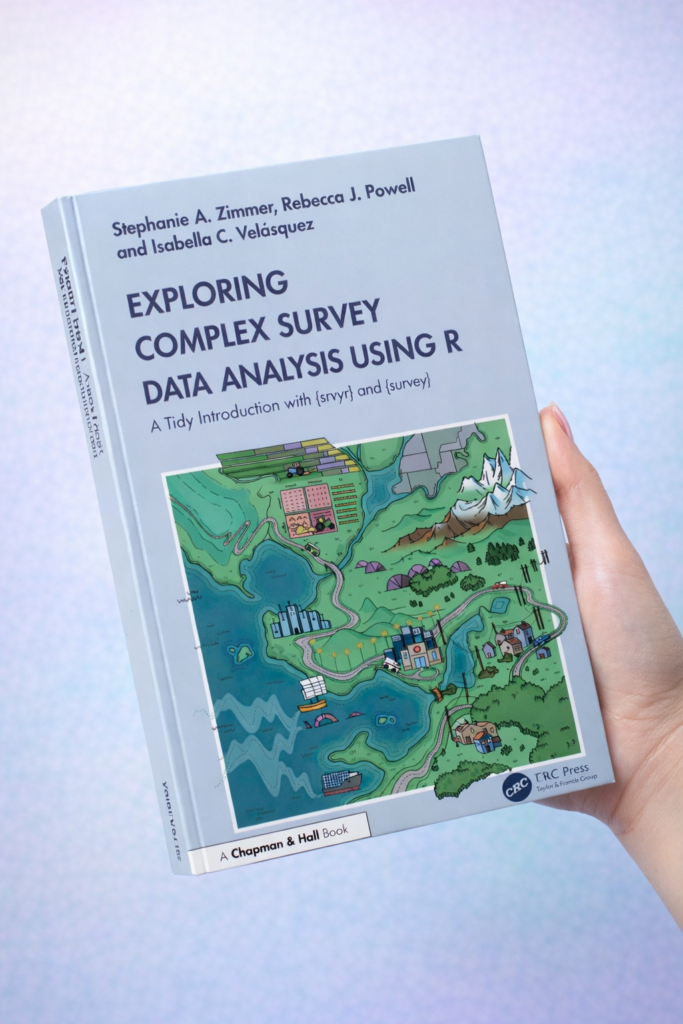
This is where R, a powerful open-source statistical programming language, becomes extremely valuable. R provides specialized tools to handle complex survey designs correctly and efficiently.
This article is written for beginner engineers, students, and professionals who want to understand:
-
What complex survey data is
-
Why traditional analysis methods fail
-
How R helps solve these problems
-
How to apply these techniques in real engineering projects
No prior advanced statistics knowledge is required. Concepts are explained step by step, with practical examples and engineering-oriented thinking.
Background Theory
What Is Survey Data?
Survey data is information collected from a group of people, systems, or entities to represent a larger population. Examples include:
-
Household energy consumption surveys
-
Transportation usage surveys
-
User satisfaction surveys for engineering products
-
Environmental monitoring surveys
In an ideal world, we would collect data from every single unit in the population. But in practice, this is expensive and often impossible. Surveys allow engineers to estimate population characteristics using samples.
Simple vs Complex Surveys
Simple Random Sampling
In simple surveys:
-
Every unit has an equal chance of being selected
-
Data points are independent
-
Standard statistical methods work well
Example: Randomly selecting 1,000 users from a database.
Complex Survey Designs
In real-world engineering and social data, surveys are rarely simple. Instead, they include:
-
Stratification
-
Population is divided into subgroups (strata)
-
Samples are taken from each group
-
Example: Urban vs rural energy usage
-
-
Clustering
-
Groups (clusters) are sampled instead of individuals
-
Example: Selecting households within selected cities
-
-
Unequal Weights
-
Some units represent more people than others
-
Example: One household represents 100 similar households
-
These features break the assumptions of traditional statistical methods.
Technical Definition
Complex Survey Data
Complex survey data refers to data collected using sampling designs that involve:
-
Stratification
-
Clustering (Primary Sampling Units – PSUs)
-
Sampling weights
-
Multistage selection
Mathematically, survey estimators must account for the probability of selection:
wi=πi1
Where:
-
wi is the sampling weight
-
πi is the probability that unit ii is selected
Ignoring these weights leads to biased estimates.
Why R Is Ideal for Survey Analysis
R provides:
-
Open-source statistical computing
-
Reproducible analysis
-
The powerful
surveypackage -
Advanced visualization and modeling tools
R is widely used in engineering research, public policy, and industry analytics.
Step-by-Step Explanation
Step 1: Understanding the Survey Design
Before writing any code, engineers must answer:
-
Was the data weighted?
-
Were clusters used?
-
Were strata defined?
Ignoring these questions is the most common beginner mistake.
Step 2: Installing Required R Packages
Key packages include:
-
survey– core analysis -
tidyverse– data handling -
srvyr– tidy-style survey analysis
Conceptually, these packages allow engineers to define survey structure before analysis.
Step 3: Defining the Survey Object
In R, you do not analyze raw data directly. You first define a survey design object that contains:
-
Dataset
-
Weights
-
Clusters
-
Strata
This object tells R how the data was collected.
Step 4: Estimating Population Parameters
Using the survey design, you can estimate:
-
Means
-
Totals
-
Proportions
-
Ratios
These estimates are design-corrected, meaning they reflect the real population structure.
Step 5: Variance and Confidence Intervals
Unlike simple statistics, variance estimation must consider:
-
Cluster correlation
-
Unequal weights
R automatically applies methods like:
-
Taylor linearization
-
Replication methods (e.g., bootstrap)
Detailed Examples
Example 1: Estimating Average Energy Consumption
Imagine a national electricity survey where:
-
Cities are clusters
-
Households have different weights
-
Urban and rural areas are strata
A naïve average may underestimate urban consumption. Using survey-aware estimation produces a correct national average, preventing underdesign of power infrastructure.
Example 2: Comparing Two Groups
Suppose engineers want to compare:
-
Renewable energy usage in industrial vs residential sectors
Without survey correction:
-
Results may seem statistically significant
With survey-aware analysis:
-
Results may show higher uncertainty due to clustering
This prevents false engineering conclusions.
Example 3: Regression Modeling
Engineers often use regression to predict outcomes:
-
Energy demand
-
Traffic flow
-
Equipment adoption
Survey-weighted regression ensures coefficients reflect the population, not just the sample.
Real World Application in Modern Projects
1. Smart City Engineering
Survey data helps:
-
Estimate traffic behavior
-
Analyze public transport usage
-
Plan sensor deployment
Complex survey analysis ensures accurate urban planning.
2. Renewable Energy Planning
Governments rely on household energy surveys to:
-
Estimate solar adoption
-
Predict future grid demand
Survey-corrected models prevent under- or over-investment.
3. Product Engineering & UX
Engineering teams analyze user surveys to:
-
Improve device usability
-
Reduce failure rates
-
Optimize features
Ignoring survey design can bias user satisfaction metrics.
4. Environmental Engineering
Surveys measure:
-
Water usage
-
Pollution exposure
-
Waste management efficiency
Correct analysis influences regulatory compliance and sustainability goals.
Common Mistakes
-
Ignoring Survey Weights
-
Leads to biased estimates
-
Overrepresents small groups
-
-
Using Standard Functions
-
Functions like simple mean or lm() are incorrect for survey data
-
-
Assuming Independence
-
Clustered data violates independence assumptions
-
-
Overconfidence in Results
-
Confidence intervals are often wider in survey analysis
-
Challenges & Solutions
Challenge 1: Complexity
Survey concepts seem overwhelming.
Solution:
Start simple. Understand weights first, then clusters and strata.
Challenge 2: Large Datasets
Survey datasets can be massive.
Solution:
R is memory-efficient, and survey packages are optimized for large data.
Challenge 3: Interpretation
Results may differ from simple analysis.
Solution:
Trust the design-corrected results—they reflect reality.
Challenge 4: Learning Curve
R syntax may intimidate beginners.
Solution:
Use srvyr for a tidy, readable workflow.
Case Study
National Transportation Survey Analysis
Problem:
An engineering firm needed to estimate average commute time to redesign a metropolitan transit system.
Survey Design:
-
Stratified by region
-
Clustered by city
-
Weighted by population density
Incorrect Approach:
Simple averages underestimated commute time by 15%.
Correct Approach Using R:
-
Defined survey design
-
Used weighted means
-
Estimated design-corrected confidence intervals
Outcome:
Transit capacity was increased appropriately, preventing congestion and saving millions in future upgrades.
Tips for Engineers
-
Always read the survey documentation
-
Visualize weighted distributions
-
Compare naïve vs survey-aware results
-
Use confidence intervals, not just point estimates
-
Document assumptions clearly
-
Collaborate with statisticians when possible
FAQs
1. Do I always need survey analysis?
Yes, if the data comes from a complex sampling design.
2. Can I ignore weights if they are small?
No. Even small weights affect population estimates.
3. Is R better than Python for survey analysis?
R currently has more mature survey-specific tools.
4. Can beginners learn survey analysis easily?
Yes. Start with conceptual understanding, then tools.
5. Are survey regressions reliable?
Yes, when design corrections are applied correctly.
6. What industries use complex surveys?
Energy, transportation, healthcare, UX, environmental engineering.
7. Is survey analysis only for social sciences?
No. It is widely used in modern engineering projects.
Conclusion
Complex survey data analysis is no longer optional for engineers. As systems become larger and more human-centered, survey data plays a critical role in decision-making. However, analyzing such data using traditional methods leads to biased, unreliable results.
R provides a robust, accessible, and professional framework for handling complex survey designs correctly. By understanding survey theory, defining proper survey objects, and using design-aware estimation, engineers can:
-
Make better decisions
-
Reduce risk
-
Improve system performance
-
Align designs with real-world behavior
For beginner engineers and professionals alike, mastering complex survey analysis using R is a high-impact skill that bridges data, engineering, and real-world problem solving.