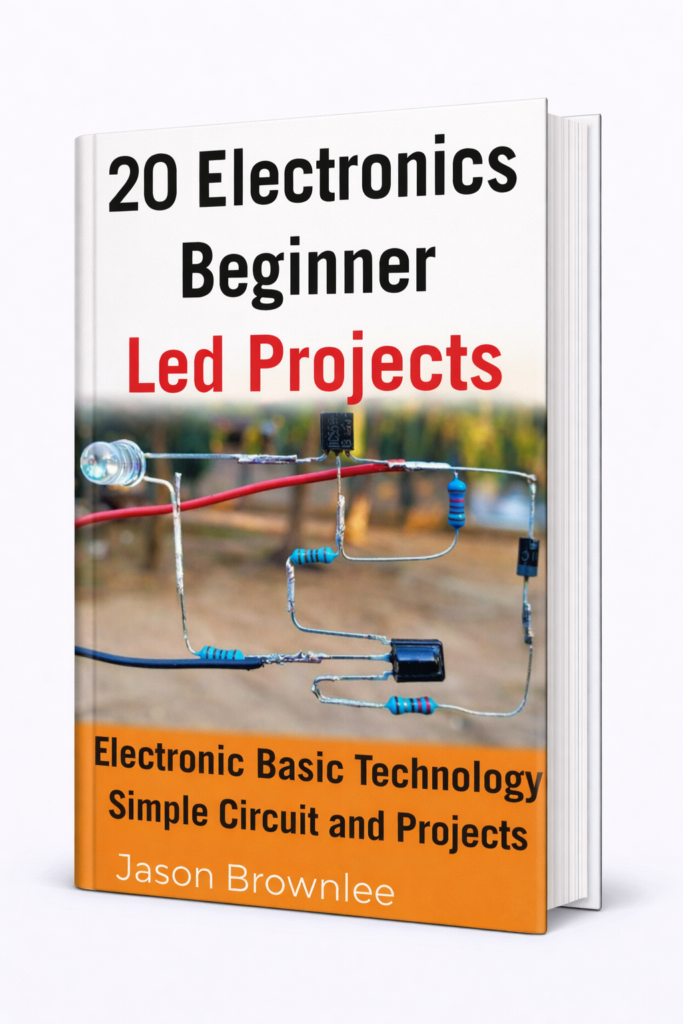
20 Electronics Beginner Led Projects Electronic Basic Technology
🌟 Introduction
Light Emitting Diodes (LEDs) are among the most fundamental components in modern electronics. Whether you are a student just stepping into engineering or a professional brushing up on basics, LED projects provide an excellent foundation for understanding electronic circuits, logic, and design principles.
LED-based projects are widely used in education because they are:
- Low cost
- Safe to handle
- Easy to understand
- Highly versatile
From simple blinking lights to advanced automation systems, LEDs serve as the perfect starting point for hands-on learning. This guide explores 20 beginner LED projects, gradually moving from basic to slightly advanced levels while maintaining clarity for all skill levels.
🔬 Background Theory
⚡ What is an LED?
A Light Emitting Diode (LED) is a semiconductor device that emits light when electric current flows through it. It operates based on the principle of electroluminescence, where energy released from electron movement produces visible light.
⚙️ How LEDs Work
When a voltage is applied:
- Electrons move from the negative terminal (cathode)
- Holes move from the positive terminal (anode)
- Energy is released in the form of photons (light)
🔋 Key Characteristics
| Property | Description |
|---|---|
| Forward Voltage | Typically 1.8V–3.3V |
| Current Requirement | 10–20 mA |
| Polarity | Anode (+), Cathode (-) |
| Efficiency | High compared to bulbs |
📘 Technical Definition
An LED is a p-n junction semiconductor device that emits light when forward biased, converting electrical energy into optical energy through radiative recombination.
🛠️ Step-by-Step Explanation of 20 LED Projects
Below are 20 beginner-friendly LED projects, categorized by difficulty.
🟢 Basic Level Projects
1. Simple LED Circuit
- Components: LED, resistor, battery
- Concept: Ohm’s Law
- Steps:
- Connect resistor to LED anode
- Connect cathode to ground
- Power the circuit
2. LED Polarity Tester
- Detect correct LED orientation
- Useful for beginners
3. Blinking LED with Capacitor
- Uses RC charging/discharging
- No microcontroller needed
4. LED Brightness Control
- Use potentiometer
- Demonstrates variable resistance
5. Series vs Parallel LED Circuit
- Compare brightness and current flow
🟡 Intermediate Level Projects
6. LED Flasher using Transistor
- Uses NPN transistor switching
7. 555 Timer LED Blinker
- Introduces IC-based circuits
- Adjustable blinking speed
8. LED Chaser Circuit
- Sequential lighting pattern
- Uses IC like 4017
9. Music Reactive LED
- LEDs respond to sound signals
10. Light Sensor LED (LDR)
- Turns on in darkness
- Uses Light Dependent Resistor
🔵 Advanced Beginner Projects
11. LED Dimmer using PWM
- Pulse Width Modulation concept
12. RGB LED Controller
- Mix colors using Red, Green, Blue LEDs
13. LED Matrix Display
- Displays patterns or characters
14. Traffic Light System
- Simulates real-world signal system
15. Temperature Controlled LED
- Uses temperature sensor
🔴 Practical Application Projects
16. Automatic Street Light
- Turns on/off based on light conditions
17. Motion Detection LED
- Uses PIR sensor
18. Battery Level Indicator
- LEDs indicate voltage levels
19. Solar Powered LED Light
- Renewable energy application
20. Smart Home LED Control
- Controlled via mobile or remote
⚖️ Comparison: LED vs Traditional Lighting
| Feature | LED | Incandescent Bulb |
|---|---|---|
| Efficiency | High | Low |
| Lifespan | 25,000+ hours | 1,000 hours |
| Power Consumption | Low | High |
| Heat Generation | Minimal | High |
| Cost (Long-term) | Economical | Expensive |
📊 Diagrams & Tables
🔌 Basic LED Circuit Diagram (Text Representation)
🔁 555 Timer LED Blinker
| Pin 3 → LED → Resistor → GND
| Pin 6 & 2 → Capacitor
| Pin 7 → Resistor network
💡 Examples
Example 1: LED Flasher Timing Calculation
Using a 555 Timer:
- R1 = 1kΩ
- R2 = 10kΩ
- C = 100µF
Blinking frequency:
Example 2: Current Calculation
Using Ohm’s Law:
If:
- Supply = 9V
- LED voltage = 2V
- Resistor = 330Ω
Then:
🌍 Real World Applications
LED technology is everywhere:
- 💡 Home lighting systems
- 🚗 Automotive lighting
- 📱 Displays and indicators
- 🏭 Industrial machines
- 🚦 Traffic systems
- 🛰️ Communication devices
❌ Common Mistakes
- No resistor used → LED burns instantly
- Wrong polarity → LED doesn’t light
- Overvoltage supply → damages circuit
- Incorrect wiring → no output
- Ignoring datasheet values
⚠️ Challenges & Solutions
Challenge 1: LED Not Lighting
- ✔️ Check polarity
- ✔️ Verify connections
Challenge 2: Flickering LED
- ✔️ Stabilize power supply
- ✔️ Use proper capacitor
Challenge 3: Uneven Brightness
- ✔️ Use equal resistors
- ✔️ Avoid voltage drops
📚 Case Study: LED Street Lighting System
Problem
High energy consumption in traditional street lights.
Solution
Replace with LED-based automatic lighting system.
Results
- 60% energy savings
- Reduced maintenance cost
- Improved lifespan
🧠 Tips for Engineers
- Always start with simulation tools
- Use breadboards before soldering
- Learn datasheet reading
- Practice circuit debugging
- Document your projects
❓ FAQs
1. Why do LEDs need resistors?
To limit current and prevent damage.
2. Can I connect LEDs directly to a battery?
No, unless voltage and current are perfectly matched.
3. What is PWM in LED control?
A method to control brightness by switching power rapidly.
4. How long do LEDs last?
Typically 25,000 to 50,000 hours.
5. What is an RGB LED?
A combination of Red, Green, and Blue LEDs for color mixing.
6. Are LEDs energy efficient?
Yes, they consume significantly less power.
7. Can LEDs be used in AC circuits?
Yes, but require proper drivers.
🏁 Conclusion
LED projects provide a powerful gateway into the world of electronics. From simple circuits to real-world automation systems, they help build both theoretical knowledge and practical skills.
By working through these 20 beginner LED projects, you gain:
- Hands-on circuit experience
- Understanding of electronic components
- Problem-solving skills
- Confidence to build advanced systems
Whether you’re a student or a professional engineer, mastering LED fundamentals lays a strong foundation for future innovation in electronics and technology.