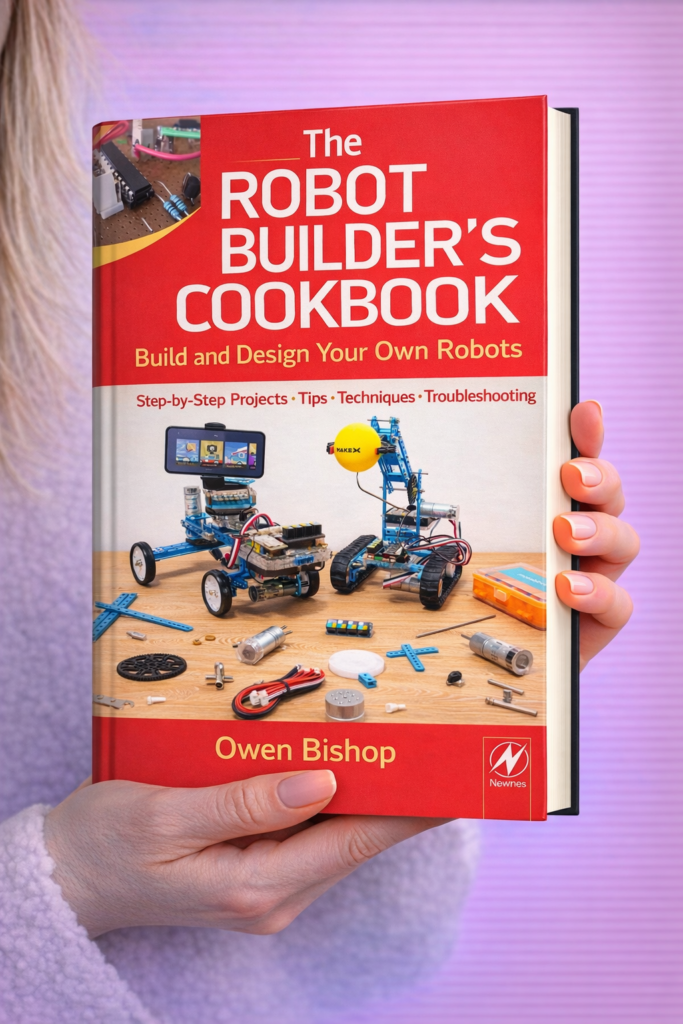
The Robot Builder’s Cookbook
Introduction to The Robot Builder’s Cookbook
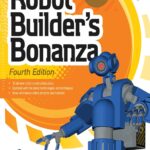
In the ever-evolving field of robotics, enthusiasts and professionals alike seek resources that bridge the gap between theory and practical application. Robot Builder’s Bonanza stands out as a seminal work that offers a hands-on approach to building robots, making it an indispensable guide for anyone interested in the DIY robotics scene.
More than just a book, it serves as a launchpad for creativity, innovation, and technical learning. Whether you’re a total beginner or an experienced tinkerer, work speaks to all levels of interest and experience. The book’s accessible style and wealth of detail have made it a favorite in maker spaces, classrooms, and garages around the world.
Background and Evolution of The Robot Builder’s Cookbook
Origins and Early Editions
First published in 1987, Robot Builder’s quickly gained recognition as one of the first books to make robotics approachable to the average hobbyist. At a time when robots were primarily the domain of research labs and high-tech companies, brought the world of motors, sensors, and control systems into people’s homes.
Revisions and Updates
The book has undergone several revisions to keep pace with technology. The current 4th edition, expanded to 680 pages, reflects the integration of modern tools like Arduino, Raspberry Pi, and other microcontrollers. With each new edition, has refined the content to cover emerging trends and technologies in robotics while retaining a beginner-friendly tone.
What Makes The Robot Builder’s Cookbook Unique
Comprehensive Coverage
One of the book’s standout qualities is its sheer breadth. It doesn’t just tell you what to build—it teaches you how to think like a robot builder. Topics covered include:
Sourcing materials: Where and how to get affordable parts.
Working with various materials: Including wood, plastic, and sheet metal.
Tool safety and usage: How to handle tools responsibly and effectively.
This makes it easy to move from idea to execution, even with limited prior experience.
Hands-On Projects (The Robot Builder’s Cookbook)
Each section includes practical projects that reinforce the concepts being taught. These aren’t just theoretical exercises; they include:
Full parts lists
Construction templates
Wiring diagrams
Step-by-step walkthroughs
The diversity of projects means that readers can pick ones that match their interest and skill level—from basic line-following robots to remote-controlled vehicles and autonomous bots.
Focus on Electronics and Control Systems
A significant portion of the book is dedicated to helping readers understand how to power and control their robots. Key areas covered include:
Battery selection and power distribution
Motors and actuators
Microcontroller integration
Arduino and BASIC Stamp programming
By explaining both the hardware and software sides of robotics, McComb ensures that readers gain a holistic understanding.
Advanced Topics
For those ready to take the next step, the book delves into more sophisticated concepts:
Shape Memory Alloys (SMA)
Using sensors like infrared and ultrasonic for navigation
Basic artificial intelligence behaviors (e.g., obstacle avoidance)
Wireless communication systems
This section makes the book useful not only for beginners but also for intermediate and advanced builders who want to keep learning.
Practical Applications of The Robot Builder’s Cookbook
In Educational Settings
The projects in Robot Builder’s Bonanza make it a valuable tool for educators seeking to enhance STEM instruction. It supports:
Curriculum development in science and technology
Group projects and robotics clubs
Integration into maker-based learning environments
Because of its structured approach, students can incrementally build skills in mechanics, electronics, and programming.
For Hobbyists
DIY enthusiasts will find this book an endless source of ideas and inspiration. The flexible design of the projects allows for experimentation, modification, and personalization—making it ideal for weekend builders or people looking to enter robotics as a hobby.
In Prototyping and Innovation
Engineers and inventors can use Robot Builder’s Bonanza as a low-cost prototyping tool. It’s especially helpful for:
Testing mechanical ideas
Experimenting with control algorithms
Creating proof-of-concept robots for pitches or demonstrations
Its versatility makes it useful for both education and innovation.
Tools and Materials: What You’ll Need
Essential Tools
McComb emphasizes that building robots doesn’t require a high-end lab. Basic tools recommended include:
Screwdrivers and pliers
Soldering iron
Wire strippers and crimpers
Small saws or rotary tools
For advanced projects, a 3D printer or CNC machine can open up new design possibilities, though they’re not required.
Materials and Components (The Robot Builder’s Cookbook)
Depending on the project, you’ll work with:
Acrylic or plastic sheets
Lightweight wood like balsa or plywood
DC motors, wheels, gears
Breadboards, resistors, LEDs
Microcontrollers (e.g., Arduino Uno)
Each chapter guides you through sourcing these components, often offering budget-friendly alternatives.
Challenges and How to Overcome Them
Complexity of Projects
Problem: Some of the more ambitious builds might be too complex for a beginner.
Solution: Start with the simplest projects and master the basics before moving on. Each project builds on previous ones, so there’s a natural learning progression.
Sourcing Materials
Problem: It can be hard to find certain parts, especially in remote areas.
Solution: The book includes a detailed appendix with suppliers. Online platforms like Adafruit, SparkFun, and Amazon are reliable go-to sources.
Electronics Can Be Intimidating
Problem: If you’ve never wired a circuit, it might feel overwhelming.
Solution: McComb provides easy-to-follow tutorials and diagrams. Pair the book with online video tutorials or join local maker spaces for hands-on help.
Case Study: The Basic Bot Project
Overview
One of the standout builds in the book is the BasicBot: a simple two-wheel robot with a ball caster that offers a solid introduction to mobile robotics.
Key Learning Outcomes
Mechanical Design: Learn about chassis layout, motor placement, and how balance affects movement.
Motor Control: Understand how to use H-bridges and PWM (pulse width modulation) to control speed and direction.
Material Handling: Practice cutting, shaping, and assembling a chassis from wood or plastic.
This project is a great benchmark. Once completed, readers are usually ready to take on more complex bots with sensors and automation features.
Tips for Aspiring The Robot Builder’s Cookbook
Start Small
Don’t feel pressured to build an autonomous robot on your first try. Start with a simple light-chasing bot or line follower.
Build a Foundation
Before diving into coding or complex sensors, make sure you understand how electricity flows, how motors work, and what a breadboard does.
Use All Available Resources
Take advantage of:
The appendices in the book
Online tutorials and forums
YouTube channels focused on robotics and Arduino
Connect with the Community
Joining local or online communities can greatly accelerate learning. Consider:
Reddit’s r/robotics
Hackaday.io
Local maker fairs or hackathons
Frequently Asked Questions On The Robot Builder‘s Cookbook
Q1: What skill level is this book aimed at?
A: “The Robot Builder’s Cookbook” is generally aimed at intermediate to advanced hobbyists and roboticists. It assumes you have some basic knowledge of electronics, programming, and mechanical construction. While beginners might be able to follow some recipes, a solid foundation will make the learning process smoother.
Q2: What types of robots can I build using this book?
A: The book typically covers a wide range of robot types and projects. This could include wheeled robots, walking robots (bipedal, quadrupedal, etc.), robotic arms, autonomous vehicles, and even simple sensor-based robots. The specific projects detailed will depend on the edition of the book.
Q3: What programming languages are used in the examples?
A: Many robot builder’s cookbooks often utilize popular languages like Arduino C/C++, Python (especially with libraries like ROS – Robot Operating System), or even more specialized languages or visual programming environments depending on the specific robot platform. The book should clearly state which languages and versions are used.
Q4: What are the key components and tools I’ll need to get started?
A: You’ll typically need a range of components, including microcontrollers (like Arduino or Raspberry Pi), motors, sensors (IR, ultrasonic, encoders, etc.), batteries, and various electronic components (resistors, capacitors, transistors). Essential tools include a soldering iron, multimeter, wire strippers/cutters, and potentially access to a 3D printer or laser cutter for creating custom parts.
Q5: Does the book cover topics like obstacle avoidance and path planning?
A: Many “Robot Builder’s Cookbook” style books include recipes and explanations for common robotic tasks like obstacle avoidance, line following, basic path planning, and sensor fusion. Look for chapters or sections that specifically address these concepts.
Q6: Does the book include CAD drawings or 3D models for the projects?
A: Some books include CAD drawings or 3D models for specific projects. This is very helpful for visualizing and constructing the robot’s mechanical parts. Check the book’s description or table of contents to see if these are included, or if they are available for download online.
Q7: Where can I find the code examples from the book?
A: Typically, the code examples will be available for download from the publisher’s website or a dedicated GitHub repository. The book should provide clear instructions on where to find these resources.
Q8: Is ROS (Robot Operating System) covered in this book?
A: Whether ROS is covered depends on the edition and focus of the book. ROS is more advanced, so it might not be covered in a general “cookbook.” However, some books specializing in autonomous robotics or more complex projects would include ROS. Look for it in the Table of Contents.
Q9: I’m having trouble with a specific project in the book. Is there a forum or online community where I can get help?
A: Many robotics books have associated online forums or communities where readers can ask questions, share their experiences, and get help from other builders. Check the book’s website or the publisher’s website for links to these communities. Also, general robotics forums (like RobotShop forums, Reddit’s r/robotics) can be good resources.
Q10: Does the book cover safety considerations for working with robots?
A: A good robotics book will dedicate a section or chapter to safety. This should cover topics like safe handling of batteries, working with electricity, avoiding pinch points, and ensuring your robot doesn’t pose a hazard to people or its environment. Always prioritize safety when building and operating robots.
Conclusion
Robot Builder’s Bonanza remains one of the most accessible, practical, and comprehensive books on DIY robotics. Whether you’re a student, educator, hobbyist, or an aspiring roboticist, this book offers not just instruction but inspiration. With detailed projects, real-world tips, and a focus on hands-on learning, it’s an essential tool for anyone looking to bring robots to life.