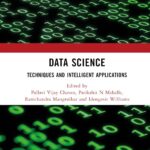
The Data Science Workshop 2nd Edition: Learn how you can build machine learning models
Introduction
In today’s fast-paced digital economy, mastering analytical tools is essential for professional success. Many professionals struggle to turn abstract concepts into functional software. Our comprehensive training program provides the bridge between academic theory and actual industry results.
Participants gain hands-on experience by constructing robust predictive systems from scratch. You will navigate the entire lifecycle of modern intelligence, ensuring your skills remain relevant in a competitive market. Building effective models requires both intuition and technical precision.

This curriculum focuses on actionable insights that solve complex problems. By joining this initiative, you prepare yourself to lead innovation within your organization. Start your journey toward becoming a proficient practitioner today.
Key Takeaways
- Master the end-to-end machine learning lifecycle through hands-on projects.
- Bridge the gap between complex mathematical theory and real-world implementation.
- Develop essential technical skills required by top employers in the United States.
- Learn to deploy scalable models that drive meaningful business outcomes.
- Gain confidence in handling large datasets and refining predictive accuracy.
Understanding the Fundamentals of Machine Learning
The Data Science Workshop provides the perfect environment to explore the essential building blocks of modern AI. By mastering these basics, you gain the confidence to tackle complex problems with precision and clarity.
Core Concepts in Predictive Modeling
At its heart, predictive modeling is about finding patterns in historical data to forecast future outcomes. You are essentially teaching a computer to recognize relationships between input variables and a specific target result.
To succeed in this field, you must understand these key pillars:
- Supervised Learning: Training models on labeled datasets.
- Unsupervised Learning: Discovering hidden structures in unlabeled data.
- Model Validation: Ensuring your predictions hold up against new, unseen information.
The Role of Data Preprocessing in Model Success
Many beginners overlook the importance of data preparation, yet it remains the most critical step in The Data Science Workshop. If your input data is messy or incomplete, your model will struggle to produce accurate results regardless of the algorithm used.
Data cleaning involves removing duplicates, handling missing values, and correcting inconsistencies. When you invest time in refining your dataset, you significantly improve the reliability of your final predictions.
Selecting the Right Algorithms for Your Data
Choosing the correct algorithm depends heavily on the nature of your dataset and the specific problem you aim to solve. Not every model works for every situation, so you must evaluate your options based on performance and complexity.
Consider these factors when making your selection:
- Data Size: Large datasets often require more scalable algorithms.
- Interpretability: Some models offer clear logic, while others act as “black boxes.”
- Accuracy Requirements: High-stakes projects may demand more robust, computationally expensive models.
By applying these principles, you ensure that your work within The Data Science Workshop is both efficient and effective. Taking the time to understand these fundamentals will serve as the foundation for all your future data projects.
Preparing Your Environment for The Data Science Workshop
Success in The Data Science Workshop begins with a well-configured development environment. Establishing a reliable workspace ensures that your focus remains on learning algorithms rather than troubleshooting technical errors. A professional setup is the foundation of every successful project in the field.
Essential Software and Programming Languages
Python remains the industry standard for data science due to its vast ecosystem of specialized tools. You will need a robust code editor or an Integrated Development Environment (IDE) to write and debug your scripts efficiently. Visual Studio Code or PyCharm are excellent choices for managing complex projects.
Beyond the editor, you must ensure your system supports high-performance computing. Most professionals rely on a combination of command-line tools and graphical interfaces to streamline their workflow. Mastering these tools early will significantly boost your productivity during The Data Science Workshop.
Setting Up Python and Jupyter Notebooks
Installing Python is the first technical step toward building your models. We recommend using the official distribution to ensure compatibility with modern data science frameworks. Once installed, you should configure your environment to run Jupyter Notebooks, which allow for interactive data exploration.
Jupyter Notebooks provide a unique interface where you can combine live code, equations, and visualizations in a single document. This format is perfect for documenting your thought process as you experiment with different datasets. You can launch your local server through the terminal to begin coding immediately.
Managing Libraries with Conda and Pip
Data science projects often require dozens of external libraries, which can lead to version conflicts if not managed properly. Conda is a powerful package manager that simplifies the installation of complex dependencies across different operating systems. It creates isolated environments, ensuring that your projects do not interfere with one another.
Alternatively, Pip serves as the standard package installer for Python, offering access to the vast Python Package Index. Many developers use a combination of both tools to maintain a clean and efficient workspace. By mastering these dependency managers, you ensure that your code remains portable and reproducible throughout The Data Science Workshop.
Data Collection and Exploratory Data Analysis
In this part of The Data Science Workshop, we explore how to turn raw, messy data into a reliable asset for your models. Data collection serves as the bedrock for any analytical endeavor, ensuring that your final predictions are based on accurate information.
Sourcing High-Quality Datasets
Finding the right information is the first step toward building a successful project. You should look for reliable repositories like Kaggle, the UCI Machine Learning Repository, or official government open-data portals.
When selecting a dataset, prioritize those with clear documentation and consistent formatting. High-quality data reduces the time you spend on cleaning, allowing you to focus on the actual modeling process within The Data Science Workshop.
Visualizing Data Trends with Matplotlib and Seaborn
Once you have your data, you must understand its underlying patterns. Visualization libraries like Matplotlib and Seaborn allow you to see trends that are not obvious in raw tables.
Using scatter plots and histograms helps you identify correlations between variables quickly. These visual tools are essential for verifying your assumptions before you begin training any machine learning algorithms.
Identifying Outliers and Missing Values
Real-world data is rarely perfect, and you will often encounter missing entries or extreme outliers. Failing to address these issues can lead to biased models that perform poorly on new, unseen data.
You should use statistical methods to detect anomalies and decide whether to remove or impute missing values. Maintaining data integrity is a critical skill that you will refine throughout The Data Science Workshop to ensure your results remain robust and reliable.
Feature Engineering Techniques for Better Performance
In The Data Science Workshop, you will learn how to refine your inputs for better results. Feature engineering is the transformative process of selecting, modifying, and creating new variables from raw data. This step is essential because machine learning algorithms perform best when provided with high-quality, structured information.
Transforming Raw Data into Meaningful Features
Raw data often arrives in formats that are difficult for computers to process directly. By creating new features, you can highlight hidden patterns that might otherwise remain invisible to your model. For example, extracting the day of the week from a timestamp can significantly improve a model’s ability to predict time-sensitive trends.
Handling Categorical Variables and Encoding
Most algorithms require numerical input, yet many datasets contain text-based categories like “City” or “Product Type.” You must convert these labels into a mathematical format to ensure compatibility. Common strategies include One-Hot Encoding, which creates binary columns for each category, or Label Encoding, which assigns a unique integer to each distinct value.
Scaling and Normalizing Numerical Inputs
Numerical features often exist on vastly different scales, such as age ranging from 0 to 100 and income ranging from 20,000 to 200,000. If you do not normalize these inputs, the model may incorrectly prioritize features with larger absolute values. Scaling ensures that every feature contributes equally to the final prediction, leading to faster and more stable model convergence.
| Technique | Primary Use Case | Key Benefit |
|---|---|---|
| One-Hot Encoding | Nominal categories | Prevents false ordinal relationships |
| Min-Max Scaling | Bounded numerical data | Restricts values to a 0-1 range |
| Standardization | Normally distributed data | Centers data around a zero mean |
| Label Encoding | Ordinal categories | Reduces dimensionality efficiently |
Applying these techniques correctly is a hallmark of success in The Data Science Workshop. By carefully preparing your features, you build a stronger foundation for your predictive models.
Building Your First Machine Learning Model
Transitioning from data cleaning to model construction is a pivotal moment in your journey. Within The Data Science Workshop, you will now apply your refined datasets to create functional predictive tools. This phase turns abstract numbers into actionable insights using industry-standard libraries.
Implementing Scikit-Learn for Supervised Learning
The Scikit-Learn library serves as the backbone for most entry-level machine learning projects. It provides a consistent interface for various algorithms, ranging from simple linear regression to complex support vector machines. By utilizing this tool, you can streamline your workflow and focus on understanding the underlying logic of your models.
“The goal is to turn data into information, and information into insight.”
Training and Testing Split Strategies
To ensure your model performs well on new data, you must implement robust training and testing split strategies. Dividing your dataset prevents the model from simply memorizing the input, a common pitfall known as overfitting. By reserving a portion of your data for validation, you gain a realistic view of how your model will behave in real-world scenarios.
In The Data Science Workshop, we emphasize the importance of randomizing these splits to maintain statistical integrity. This practice ensures that your training and testing sets are representative of the overall population. Consistent validation is the hallmark of a professional data scientist.
Evaluating Model Accuracy and Precision
Once your model is trained, you must rigorously evaluate its performance. Accuracy provides a general overview of correct predictions, but it can be misleading if your data is imbalanced. Therefore, we also look at precision to understand the quality of your positive predictions.
Using these metrics allows you to fine-tune your approach and improve your results. Mastering these evaluation techniques is a core requirement for anyone participating in The Data Science Workshop. By analyzing these outputs, you can confidently iterate on your designs to achieve higher performance levels.
Advanced Techniques in Model Optimization
Achieving peak performance in machine learning requires moving beyond basic model creation. Once a baseline is established in The Data Science Workshop, the focus shifts toward refining parameters to unlock the full potential of your algorithms.
Optimization is the bridge between a functional prototype and a reliable, production-ready solution. By systematically adjusting your model’s settings, you ensure that it performs consistently on unseen data.

Hyperparameter Tuning with Grid Search
Hyperparameters are the configuration settings that you define before training begins. Unlike model parameters, these values are not learned from the data itself, making them crucial for overall accuracy.
Grid Search acts as an exhaustive search strategy that evaluates every possible combination of parameters within a specified range. In The Data Science Workshop, you will learn how to automate this process to identify the most effective configuration for your specific dataset.
Preventing Overfitting through Regularization
Overfitting occurs when a model learns the noise in your training data rather than the underlying patterns. This leads to poor performance when the model encounters new, real-world information.
Regularization techniques, such as L1 and L2 penalties, help prevent overfitting by adding a constraint to the model’s complexity. These methods discourage the model from relying too heavily on any single feature, ensuring it remains robust and generalizable.
Cross-Validation Methods for Robust Results
Relying on a single train-test split can sometimes lead to biased performance estimates. Cross-validation provides a more accurate assessment by partitioning your data into multiple subsets and training the model repeatedly.
By rotating these subsets, you gain a clearer picture of how your model behaves across different segments of your data. Implementing these methods within The Data Science Workshop ensures that your final results are statistically sound and ready for deployment.
Deploying Machine Learning Models to Production
Transitioning from experimental code to a scalable production system represents a significant milestone in The Data Science Workshop. While building models in a notebook is excellent for discovery, real-world applications require a more robust infrastructure. This phase ensures your work provides tangible value to users outside of your local development environment.
Converting Models into API Endpoints
To make your model accessible, you must wrap it in an application programming interface (API). Tools like FastAPI or Flask allow you to create endpoints that accept input data and return predictions in real-time. By following the best practices taught in The Data Science Workshop, you can ensure your API is both secure and efficient.
When designing your endpoint, focus on low latency to ensure a smooth user experience. Proper serialization of your model using libraries like pickle or joblib is essential for loading the trained weights into your web service. This setup allows other software components to interact with your model seamlessly.
Containerizing Applications with Docker
Consistency is a major challenge when moving code between different machines. Docker solves this by packaging your model, dependencies, and environment into a single, portable container. This ensures that your application runs exactly the same way on your laptop as it does on a cloud server.
Using Docker within The Data Science Workshop helps you master deployment reliability. By defining a Dockerfile, you explicitly state the environment requirements, which eliminates the “it works on my machine” problem. This approach is a standard industry practice for modern software engineering.
Monitoring Model Performance in Real-World Scenarios
Deployment is not the final step, as models can degrade over time due to changing data patterns. This phenomenon, known as model drift, requires constant vigilance to maintain accuracy. You must implement logging and monitoring systems to track how your model performs against live data.
The Data Science Workshop emphasizes the importance of continuous evaluation to detect when a model needs retraining. By setting up automated alerts, you can proactively address performance drops before they impact your users. Maintaining a high-performing system is a critical skill for any professional data scientist.
Career Paths and Opportunities in Data Science
Mastering machine learning is a significant milestone, but positioning yourself for success in the United States job market is the next vital step. After completing The Data Science Workshop, you possess the technical foundation required to solve complex problems. Now, you must translate those skills into a professional narrative that resonates with hiring managers.

Building a Portfolio of Machine Learning Projects
A strong portfolio serves as tangible proof of your capabilities. Employers want to see how you apply the concepts learned in The Data Science Workshop to messy, real-world datasets. Focus on documenting your process clearly on platforms like GitHub, ensuring your code is clean and well-commented.
Include projects that demonstrate a full lifecycle, from data cleaning to model deployment. Quality over quantity is the golden rule here. A single, well-executed project that solves a specific business problem is far more valuable than several incomplete tutorials.
Networking within the United States Data Science Community
Technical skills are essential, but networking often unlocks the hidden job market. Engaging with the United States data science community allows you to learn about industry trends and unadvertised roles. Attend local meetups, join professional organizations, or participate in hackathons to expand your circle.
Platforms like LinkedIn are powerful tools for connecting with peers and mentors. By sharing your progress from The Data Science Workshop, you establish yourself as an active learner. Authentic engagement with others in the field often leads to referrals and collaborative opportunities.
Preparing for Technical Interviews and Assessments
Securing a role requires rigorous preparation for technical screenings. Many companies use coding challenges to test your proficiency in Python and your understanding of algorithms. Practice solving problems on sites like LeetCode or HackerRank to build your speed and confidence.
Beyond coding, be ready to explain the logic behind your models during whiteboarding sessions. You should be able to articulate why you chose specific features or how you handled overfitting. Preparing for these assessments ensures that you can demonstrate the full value of your training from The Data Science Workshop under pressure.
FAQs
What is the primary focus of The Data Science Workshop?
Which programming languages and tools will I use during the workshop?
Why is data preprocessing emphasized in the curriculum?
How does the workshop approach data visualization?
What is the importance of feature engineering in the modeling process?
Which library is used for building supervised learning models?
How can I ensure my machine learning models are robust and not overfitted?
Does the workshop cover the deployment of models to production?
How does The Data Science Workshop help with career advancement in the United States?
Conclusion
Transforming raw data into actionable insights defines the modern professional landscape. You now possess the technical foundation to navigate complex algorithms and deploy robust models. The Data Science Workshop provided the roadmap for this transition, bridging the gap between theoretical concepts and real-world implementation.
Success in this field relies on your ability to iterate and refine your approach. You have moved beyond basic coding to understand the nuances of feature engineering and model optimization. These skills remain vital for any analyst or engineer working within the competitive United States technology sector.
Continue to sharpen your expertise by tackling unique datasets and contributing to open-source projects. Consistent practice turns these lessons into second nature. The Data Science Workshop serves as your starting point for a long and impactful career. Apply these methods to solve the problems that matter most to you. Your path toward becoming a proficient data scientist begins with the very next project you choose to build.