Introduction
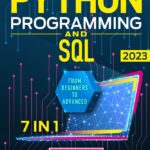
In the modern engineering world, programming skills are no longer optional. Whether you are a student preparing for your first technical job or a professional engineer aiming to upgrade your skills, understanding Python Programming and SQL is a powerful combination. The concept of “Python Programming and SQL – 5 Books in 1” represents an integrated learning approach that covers multiple core topics in a single structured resource.
Python is known for its simplicity, flexibility, and wide adoption across engineering fields such as software development, data engineering, artificial intelligence, automation, and scientific computing. SQL (Structured Query Language), on the other hand, is the backbone of data storage and retrieval, enabling engineers to work efficiently with relational databases.
This article is written for both beginners and advanced engineers. Beginners will find clear explanations and step-by-step guidance, while professionals will benefit from deeper insights, real-world applications, and best practices. By the end of this guide, you will understand how Python and SQL work individually and together, and why combining them into a “5 Books in 1” learning model is highly effective.
Background Theory
The Evolution of Python in Engineering
Python was created in the late 1980s with the goal of being readable, simple, and powerful. Over time, it became a dominant language in engineering disciplines due to its extensive libraries, cross-platform support, and strong community.
From mechanical simulations to electrical signal processing, and from web development to data analysis, Python allows engineers to focus on problem-solving rather than syntax complexity. Libraries such as NumPy, Pandas, Matplotlib, TensorFlow, and SciPy have transformed Python into a core engineering tool.
The Role of SQL in Data-Driven Engineering
SQL was designed to manage and query relational databases. Almost every modern system—web applications, IoT platforms, enterprise software, and analytics systems—relies on SQL databases such as MySQL, PostgreSQL, SQL Server, or Oracle.
For engineers, SQL provides:
- Structured data storage
- Fast and reliable querying
- Data integrity through constraints
- Scalability for large systems
Why Combine Python and SQL?
The real power comes when Python and SQL are used together. Python handles logic, automation, analysis, and visualization, while SQL manages structured data efficiently. This integration is critical in modern engineering projects such as:
- Data engineering pipelines
- Machine learning systems
- Automation tools
- Backend services
The “5 Books in 1” concept reflects a modular learning structure that covers Python basics, advanced Python, SQL fundamentals, advanced SQL, and Python–SQL integration.
Technical Definition
Python Programming
Python is a high-level, interpreted programming language designed for readability and efficiency. It supports multiple programming paradigms, including procedural, object-oriented, and functional programming.
Key technical characteristics:
- Dynamic typing
- Automatic memory management
- Extensive standard library
- Strong third-party ecosystem
SQL (Structured Query Language)
SQL is a domain-specific language used to manage and manipulate relational databases. It allows engineers to create, read, update, and delete data using standardized commands.
Core SQL components:
- 🛡️Data Definition Language (DDL)
- 🛡️Data Manipulation Language (DML)
- Data Control Language (DCL)
- Transaction Control Language (TCL)
“5 Books in 1” Concept
From an engineering education perspective, Python Programming and SQL – 5 Books in 1 can be technically defined as:
A unified learning framework that integrates foundational theory, practical implementation, advanced techniques, real-world applications, and optimization strategies for Python and SQL.
Step-by-Step Explanation
Step 1: Learning Python Fundamentals
This step focuses on:
- Variables and data types
- Conditional statements
- Loops
- Functions
- Basic error handling
Beginners should focus on writing simple scripts and understanding program flow.
Step 2: Intermediate and Advanced Python
Once fundamentals are clear, engineers move to:
- Object-oriented programming (OOP)
- File handling
- Modules and packages
- Virtual environments
- Performance optimization
Step 3: SQL Basics
At this stage, learners study:
- Tables and schemas
- SELECT, INSERT, UPDATE, DELETE
- WHERE conditions
- Sorting and filtering
- Basic joins
Step 4: Advanced SQL Concepts
Advanced topics include:
- Complex joins
- Subqueries
- Indexing
- Views and stored procedures
- Query optimization
Step 5: Python and SQL Integration
The final step combines both tools:
- Connecting Python to databases
- Executing SQL queries from Python
- Data extraction and transformation
- Automation and reporting
Detailed Examples
Example 1: Python Data Processing
An engineer may use Python to process sensor data collected from a manufacturing system. Python scripts can clean, normalize, and analyze the data efficiently.
Example 2: SQL Data Retrieval
Using SQL, the same engineer can retrieve historical sensor readings from a relational database using optimized queries.
Example 3: Python + SQL Workflow
Python connects to the SQL database, executes queries, and processes the results for visualization or reporting. This workflow is common in analytics dashboards and monitoring systems.
Real World Application in Modern Projects
Software Engineering Projects
Backend systems often use Python frameworks while relying on SQL databases to store user data, logs, and transactions.
Data Engineering and Analytics
Python handles data transformation, while SQL ensures efficient querying of large datasets.
Automation and DevOps
Engineers automate database maintenance, reporting, and monitoring using Python scripts connected to SQL databases.
Artificial Intelligence and Machine Learning
Training data is usually stored in SQL databases, while Python is used for model development and evaluation.
Common Mistakes
Ignoring Database Design
Many beginners focus only on queries and ignore proper table design, leading to poor performance.
Writing Inefficient SQL Queries
Unoptimized queries can slow down entire systems.
Mixing Logic Between Python and SQL
Placing too much logic in SQL or too much in Python can reduce maintainability.
Lack of Error Handling
Failing to handle database connection errors is a common professional mistake.
Challenges & Solutions
Challenge 1: Learning Curve
Solution: Follow a structured “5 Books in 1” approach instead of random tutorials.
Challenge 2: Performance Issues
Solution: Use indexing in SQL and efficient data structures in Python.
Challenge 3: Security Risks
Solution: Use parameterized queries and secure database connections.
Case Study
Project Overview
A mid-sized engineering firm needed an automated reporting system for production data.
Tools Used
- Python for automation and data processing
- SQL database for data storage
Implementation
Python scripts queried the SQL database daily, processed the data, and generated reports automatically.
Results
- Reduced manual work by 70%
- Improved data accuracy
- Faster decision-making
Tips for Engineers
- Learn Python and SQL together, not separately
- Practice with real datasets
- Focus on clean, readable code
- Optimize queries early
- Keep security in mind
FAQs
Q1: Is Python enough without SQL?
No. Python is powerful, but SQL is essential for structured data management.
Q2: Can beginners learn both together?
Yes. A structured approach makes it easier.
Q3: Which industries use Python and SQL the most?
Software, data engineering, finance, healthcare, and manufacturing.
Q4: Do I need advanced math skills?
Basic logic and problem-solving skills are sufficient.
Q5: How long does it take to master both?
Foundations can be learned in months; mastery takes continuous practice.
Q6: Is this combination future-proof?
Yes. Python and SQL remain core technologies in modern engineering.
Conclusion
Python Programming and SQL – 5 Books in 1 represents a comprehensive and practical learning pathway for modern engineers. By combining theory, step-by-step practice, real-world examples, and professional insights, engineers can build strong, future-proof skills.
For students, this approach builds a solid foundation. For professionals, it enhances efficiency, performance, and career growth. Mastering Python and SQL together is not just an advantage—it is a necessity in today’s engineering-driven world.
https://www.amazon.com/Python-Programming-Hands-Step-Step-ebook/dp/B0CSMFCY4K/ref=tmm_kin_swatch_0