🤖 Learn Robotics: A Complete Engineering Guide to Making Robots Work Efficiently in Your Factory
🚀 Introduction
Robotics has become one of the most transformative technologies in modern industry. Factories around the world are increasingly integrating robots into their production lines to improve efficiency, reduce costs, increase safety, and enhance product quality. What once seemed like futuristic technology is now an essential component of modern manufacturing systems.
Industrial robots are no longer limited to large automobile factories. Today, robotics systems are used in electronics manufacturing, food production, pharmaceuticals, logistics, and even small workshops. With advances in artificial intelligence, machine vision, and control systems, robots are becoming more intelligent, flexible, and accessible.
For engineering students and professionals, learning robotics is no longer optional—it is becoming a fundamental skill in modern manufacturing engineering. Understanding how robots work, how to integrate them into factory environments, and how to optimize their performance is crucial for staying competitive in today’s industrial landscape.
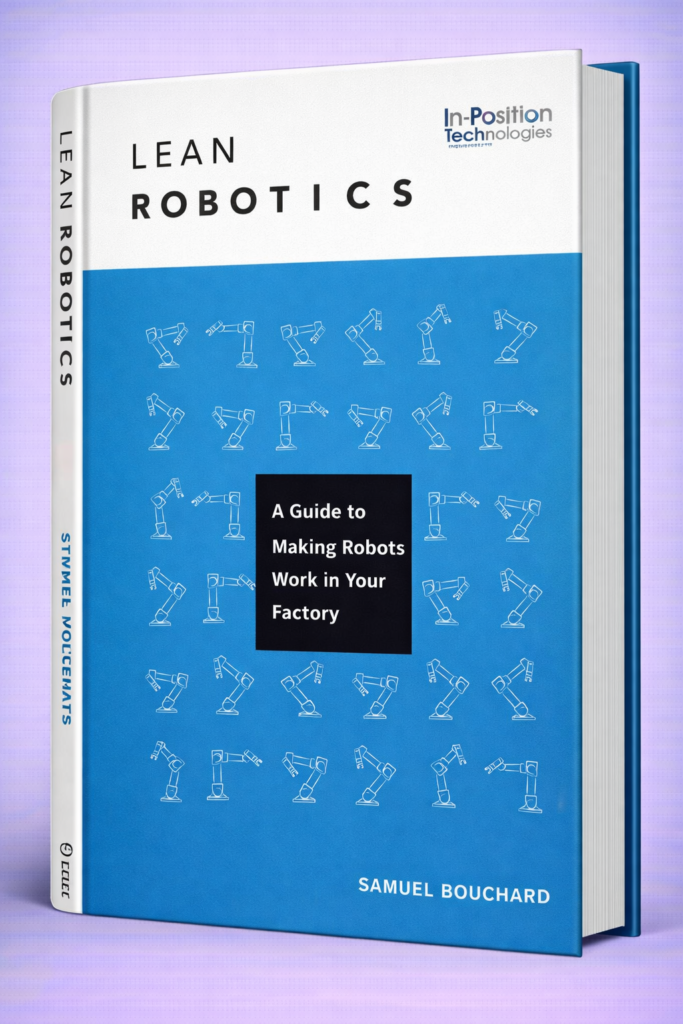
This guide provides a comprehensive explanation of robotics in manufacturing environments. It covers the fundamental theory, engineering principles, implementation processes, real-world applications, challenges, and best practices that engineers must understand when deploying robots in factories.
Whether you are a beginner starting your journey in robotics or an experienced engineer looking to expand your knowledge, this guide will help you understand how to design, implement, and manage robotic systems in industrial settings.
⚙️ Background Theory
🔧 The Evolution of Industrial Robotics
The development of robotics in manufacturing began in the mid-20th century when the first programmable robotic arm was introduced. Early industrial robots were simple machines capable of repeating fixed motions such as welding or assembling parts.
Over the decades, robotics technology has evolved dramatically due to advancements in:
- Computer control systems
- Sensors and machine vision
- Artificial intelligence algorithms
- Mechanical design and materials engineering
Modern robots are capable of complex tasks such as object recognition, adaptive assembly, precision machining, and collaborative work with human operators.
🧠 Key Engineering Disciplines Behind Robotics
Robotics is an interdisciplinary field combining multiple areas of engineering.
Mechanical Engineering
Mechanical engineers design the robot’s physical structure including:
- Robot arms
- Joints and actuators
- End effectors
- Structural frames
These components determine the robot’s range of motion, strength, and durability.
Electrical Engineering
Electrical engineers design systems responsible for:
- Power supply
- Motor drivers
- Sensors
- Control circuits
These components ensure that robots operate accurately and efficiently.
Computer Engineering
Computer engineers focus on:
- Programming algorithms
- Motion planning
- Data processing
- Human-machine interfaces
These systems control robot behavior and decision-making.
Control Systems Engineering
Control systems engineers develop mathematical models that allow robots to perform precise movements using feedback from sensors.
🤖 Technical Definition
🔹 What is a Robot?
A robot is a programmable electromechanical machine capable of performing tasks automatically through controlled movements and sensory feedback.
According to industrial standards, a robot typically includes the following components:
- Mechanical structure
- Actuation system
- Sensors
- Control unit
- End-effector
🔹 Industrial Robot Definition
An industrial robot is defined as a programmable, multi-axis machine designed to perform manufacturing tasks such as welding, painting, assembly, inspection, and material handling.
Industrial robots typically operate in structured environments such as factories or production lines.
🔹 Main Components of a Robot
Mechanical Structure
The mechanical structure includes links and joints that allow the robot to move.
Actuators
Actuators provide movement through motors or hydraulic systems.
Types include:
- Electric motors
- Pneumatic actuators
- Hydraulic actuators
Sensors
Sensors allow robots to perceive their environment.
Common sensors include:
- Vision cameras
- Force sensors
- Position encoders
- Proximity sensors
Control System
The control system processes sensor data and sends commands to actuators.
End Effectors
The end effector is the tool attached to the robot arm that interacts with objects.
Examples include:
- Grippers
- Welding torches
- Spray painting nozzles
- Cutting tools
🛠 Step-by-Step Explanation: Implementing Robotics in a Factory
Step 1: Identify Automation Opportunities
The first step is analyzing factory operations to identify tasks suitable for robotic automation.
Ideal tasks include:
- Repetitive processes
- Hazardous operations
- Precision assembly
- Heavy material handling
Step 2: Define System Requirements
Engineers must determine:
- Robot payload capacity
- Required accuracy
- Speed requirements
- Workspace dimensions
Step 3: Select the Appropriate Robot Type
Different robots are designed for different applications.
Common industrial robot types include:
- Articulated robots
- SCARA robots
- Cartesian robots
- Delta robots
- Collaborative robots
Step 4: Design the Production Layout
Engineers must integrate the robot into the factory floor while considering:
- Safety zones
- Conveyor systems
- Workstations
- Maintenance access
Step 5: Program the Robot
Programming can be done through:
- Teach pendants
- Offline programming software
- AI-based motion planning
Step 6: Install Sensors and Vision Systems
Sensors enable robots to:
- Detect objects
- Adjust movements
- Avoid collisions
Step 7: Test and Optimize
Engineers perform multiple test cycles to ensure:
- Precision
- Efficiency
- Safety compliance
⚖️ Comparison of Different Industrial Robots
| Robot Type | Best Use | Advantages | Limitations |
|---|---|---|---|
| Articulated Robot | Welding, assembly | High flexibility | Complex control |
| SCARA Robot | Electronics assembly | High speed | Limited motion |
| Cartesian Robot | CNC machining | High precision | Large footprint |
| Delta Robot | Packaging | Extremely fast | Low payload |
| Collaborative Robot | Human interaction | Safe operation | Lower speed |
📊 Diagrams & Tables
Typical Industrial Robot Architecture
| Component | Function |
|---|---|
| Controller | Brain of robot |
| Sensors | Collect environment data |
| Actuators | Produce movement |
| End Effector | Interacts with objects |
| Power System | Supplies energy |
Robotic Production Line Example
🧪 Examples of Robotics in Factories
Automotive Manufacturing
Robots are widely used for:
- Spot welding
- Painting
- Assembly
Robotic arms can perform thousands of welds per day with high precision.
Electronics Manufacturing
Robots assemble delicate components such as:
- Circuit boards
- Microchips
- Sensors
High precision is essential in these applications.
Food Processing
Robots handle tasks such as:
- Packaging
- Sorting
- Palletizing
Food-grade robotic systems maintain hygiene standards.
🌍 Real World Applications
Industrial robotics is transforming many sectors.
Automotive Industry
Robots improve production speed and safety in car manufacturing plants.
Pharmaceutical Manufacturing
Robots ensure sterile production environments and accurate medication packaging.
Logistics and Warehousing
Robots automate order picking and warehouse transportation.
Aerospace Manufacturing
Robots assist in assembling aircraft components with extremely high precision.
❌ Common Mistakes When Implementing Robotics
Poor Planning
Many companies purchase robots without properly analyzing workflow requirements.
Ignoring Workforce Training
Employees must understand how to operate and maintain robotic systems.
Over-Automation
Not all processes benefit from automation.
Inadequate Safety Measures
Robotic systems require strict safety protocols.
⚠️ Challenges & Solutions
High Initial Investment
Robotic systems can be expensive.
Solution:
Use phased automation to spread costs over time.
Integration Complexity
Integrating robots into existing systems can be challenging.
Solution:
Use modular robotics platforms.
Maintenance Requirements
Robots require periodic maintenance.
Solution:
Implement predictive maintenance using sensors.
📚 Case Study: Robotic Automation in an Electronics Factory
A mid-sized electronics manufacturing company decided to automate its assembly process.
Problem
The factory faced issues with:
- High labor costs
- Production delays
- Quality inconsistencies
Implementation
Engineers installed:
- SCARA robots for assembly
- Vision systems for inspection
- Conveyor automation
Results
After automation:
- Production increased by 60%
- Defects decreased by 40%
- Labor costs reduced significantly
The investment paid for itself within two years.
🧠 Tips for Engineers
- Start automation with simple processes
- Design flexible robotic cells
- Use simulation software before installation
- Always prioritize safety
- Keep systems modular for future upgrades
- Monitor robot performance data regularly
❓ FAQs
1. What programming languages are used in robotics?
Common languages include Python, C++, and proprietary robot languages such as RAPID and KRL.
2. How much does an industrial robot cost?
Costs vary widely but typically range from $25,000 to $150,000 depending on capabilities.
3. Can small factories use robotics?
Yes. Collaborative robots are designed for small and medium-sized manufacturers.
4. How long do industrial robots last?
Most robots operate effectively for 10–15 years with proper maintenance.
5. Are robots replacing human workers?
Robots usually replace repetitive tasks while humans focus on supervision, programming, and complex problem solving.
6. What industries benefit most from robotics?
Industries such as automotive, electronics, food processing, pharmaceuticals, and logistics benefit greatly from robotics.
🎯 Conclusion
Robotics is rapidly transforming the global manufacturing landscape. From improving productivity and precision to enhancing safety and reducing operational costs, robotic systems provide enormous benefits for modern factories.
Understanding robotics requires knowledge of mechanical design, control systems, electronics, and computer programming. Engineers must also consider factory layout, system integration, workforce training, and long-term maintenance strategies.
For students and professionals, learning robotics opens the door to one of the fastest-growing fields in engineering. Factories around the world are moving toward automation, smart manufacturing, and intelligent robotics systems.
By mastering robotics principles and implementation strategies, engineers can help design the factories of the future—facilities that are smarter, faster, safer, and more efficient than ever before.
The future of manufacturing belongs to those who understand how humans and robots can work together to achieve extraordinary productivity and innovation. 🤖⚙️