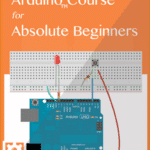
🚀🔧 Getting Started with Arduino (Make: Projects) – A Complete Engineering Guide for Students & Professionals
🌍 Introduction
Arduino has revolutionized the world of embedded systems, electronics prototyping, and hands-on engineering education. Whether you’re a student in the USA building your first robotics project, an engineering professional in the UK designing IoT systems, or a hobbyist in Australia experimenting with automation, Arduino provides an accessible and powerful platform for innovation.
In today’s fast-evolving technological landscape, the demand for engineers who understand hardware–software integration is growing rapidly. From smart cities in Europe to agricultural automation in Canada, microcontroller-based systems are everywhere. Arduino acts as the gateway into this exciting world.
This comprehensive engineering guide will take you step-by-step through:
-
Background theory of microcontrollers
-
Technical definitions and architecture
-
Circuit diagrams and tables
-
Practical examples
-
Real-world applications
-
Challenges and solutions
-
A detailed case study
-
Expert-level engineering tips
This article is designed for both beginners and advanced engineers, providing foundational knowledge and deep technical insight.
⚙️ Background Theory
To understand Arduino properly, we must first understand embedded systems and microcontrollers.
🔬 What Is an Embedded System?
An embedded system is a dedicated computing system designed to perform specific tasks. Unlike a desktop computer, it is optimized for:
-
Low power consumption
-
Real-time performance
-
Specific input/output tasks
-
Compact size
Examples include:
-
Smart thermostats
-
Automotive control systems
-
Medical devices
-
Industrial automation controllers
Arduino belongs to the embedded systems category.
🧠 What Is a Microcontroller?
A microcontroller is a small computer on a single integrated circuit (IC). It typically contains:
-
CPU (Central Processing Unit)
-
RAM (Memory)
-
Flash memory
-
Input/Output pins
-
Timers
-
Analog-to-Digital Converter (ADC)
Arduino boards use microcontrollers such as the ATmega328P (in classic boards).
⚡ Basic Electronics Concepts Required
Before using Arduino, you must understand:
🔹 Voltage (V)
Electrical potential difference.
🔹 Current (I)
Flow of electrical charge.
🔹 Resistance (R)
Opposition to current flow.
Ohm’s Law:
V = I × R
🔹 Digital vs Analog Signals
-
Digital: 0 or 1 (LOW or HIGH)
-
Analog: Continuous range (e.g., 0–5V)
Arduino handles both types.
🛠️ Technical Definition
Arduino is an open-source microcontroller-based development platform consisting of:
-
A programmable hardware board
-
An integrated development environment (IDE)
-
A simplified programming language based on C/C++
📦 Core Components of Arduino Board
🔌 Power Section
-
USB power (5V)
-
External power (7–12V recommended)
🧮 Microcontroller Unit (MCU)
The “brain” of the board.
🔘 Digital Pins
Used for:
-
LED control
-
Relay control
-
Button reading
🎛️ Analog Pins
Used for:
-
Temperature sensors
-
Light sensors
-
Potentiometers
🕒 Clock Oscillator
Maintains timing accuracy.
🧾 Software Architecture
Arduino programs (called sketches) include:
-
setup()→ Runs once -
loop()→ Runs continuously
Example structure:
🪜 Step-by-Step Explanation: Getting Started
🧰 Step 1: Gather Required Hardware
You need:
-
Arduino board
-
USB cable
-
Breadboard
-
LEDs
-
Resistors
-
Jumper wires
💻 Step 2: Install Arduino IDE
-
Download IDE
-
Install
-
Connect board
-
Select board type
-
Select COM port
🔗 Step 3: Connect First Circuit (Blink LED)
🔹 Circuit Diagram
▶️ Step 4: Upload Program
Click:
-
Verify
-
Upload
LED should blink.
📈 Step 5: Expand to Sensor Input
Example: Reading temperature sensor
-
Connect sensor to analog pin
-
Read using
analogRead() -
Convert to voltage
📊 Comparison
🔍 Arduino vs Raspberry Pi
| Feature | Arduino | Raspberry Pi |
|---|---|---|
| Type | Microcontroller | Single Board Computer |
| OS | No OS | Linux |
| Real-Time | Yes | Limited |
| Boot Time | Instant | ~30 sec |
| Cost | Low | Medium |
| Ideal For | Control systems | Multimedia & networking |
🔍 Arduino vs Traditional Microcontroller Development
| Feature | Arduino | Bare Metal MCU |
|---|---|---|
| Ease of Use | Very Easy | Complex |
| Learning Curve | Low | High |
| Cost | Moderate | Low |
| Libraries | Extensive | Manual coding |
📐 Diagrams & Tables
🔌 Pin Layout Table
| Pin Type | Quantity | Function |
|---|---|---|
| Digital | 14 | ON/OFF control |
| Analog | 6 | Sensor input |
| PWM | 6 | Motor control |
| Power | 5V, 3.3V | Supply |
🧠 System Block Diagram
🔍 Detailed Examples
💡 Example 1: Automatic Light System
Objective:
Turn on LED when room is dark.
Components:
-
LDR
-
10k resistor
-
Arduino
Logic:
🌡️ Example 2: Temperature Monitoring
Read LM35 sensor and print to serial monitor.
Applications:
-
HVAC systems
-
Server rooms
-
Greenhouses
🚗 Example 3: Parking Sensor System
Use ultrasonic sensor to measure distance.
Steps:
-
Trigger pulse
-
Receive echo
-
Calculate distance
Distance = Time × Speed of Sound / 2
🌎 Real World Application in Modern Projects
Arduino is widely used in:
🏠 Smart Home Automation (USA & Europe)
-
Motion detection
-
Energy monitoring
-
Smart lighting
🚜 Precision Agriculture (Canada & Australia)
-
Soil moisture sensors
-
Automated irrigation
🏭 Industrial Prototyping (UK & Germany)
-
Machine monitoring
-
Conveyor belt control
🛰️ Research & Education
Universities use Arduino for:
-
Robotics labs
-
Mechatronics
-
Control systems
❌ Common Mistakes
🔥 1. Incorrect Voltage Supply
Never exceed 5V logic.
🔌 2. No Current Limiting Resistor
LED burns without resistor.
🔁 3. Wrong Pin Mode
Forgetting:
pinMode(pin, OUTPUT);
🧩 4. Floating Inputs
Use pull-up or pull-down resistors.
⚠️ Challenges & Solutions
🧠 Memory Limitations
Solution:
-
Optimize code
-
Use PROGMEM
🔋 Power Instability
Solution:
-
Use external regulated supply
-
Add capacitors
📶 Noise in Sensors
Solution:
-
Shield cables
-
Use filtering algorithms
🏗️ Scaling to Production
Solution:
-
Design custom PCB
-
Replace Arduino with MCU
🏗️ Case Study: Smart Greenhouse System
🎯 Objective
Automate irrigation and climate control.
🔧 System Components
-
Arduino
-
Soil moisture sensor
-
Temperature sensor
-
Relay module
-
Water pump
⚙️ Working Principle
-
Measure soil moisture
-
If dry → activate pump
-
Monitor temperature
-
Log data
📈 Results
-
30% water savings
-
Improved crop yield
-
Low cost implementation
🎯 Tips for Engineers
🛠️ For Beginners
-
Start with simple projects
-
Learn basic electronics
-
Read datasheets
🧑💻 For Advanced Engineers
-
Explore interrupts
-
Use timers
-
Optimize memory
-
Integrate IoT modules
📘 Documentation Practice
Always:
-
Draw circuit diagrams
-
Comment code
-
Maintain version control
❓ FAQs
❓ 1. Is Arduino good for professional engineering?
Yes. It is excellent for prototyping and proof-of-concept development.
❓ 2. Can Arduino handle industrial projects?
For small-scale systems yes, but production systems require custom boards.
❓ 3. Do I need advanced math?
Basic electronics and logic are sufficient.
❓ 4. What programming language is used?
C/C++ based simplified language.
❓ 5. Can Arduino connect to the internet?
Yes, using:
-
WiFi modules
-
Ethernet shields
❓ 6. Is Arduino suitable for robotics?
Absolutely. It is widely used in robotics education.
❓ 7. What is the cost range?
Typically $10–$40 depending on model.
🎓 Conclusion
Arduino is more than just a beginner-friendly development board. It is a powerful engineering platform that bridges theory and real-world implementation. From academic laboratories in the USA to industrial prototypes in Europe, Arduino enables innovation at low cost and high efficiency.
By understanding the background theory, hardware architecture, software programming, and real-world challenges, engineers can leverage Arduino for:
-
Rapid prototyping
-
Educational development
-
Research projects
-
Industrial experimentation
Whether you are just starting your engineering journey or are an experienced professional looking to build smart systems quickly, Arduino offers a flexible, scalable, and globally adopted solution.
The key to mastery lies in experimentation, continuous learning, and applying engineering principles systematically.
🚀 Start building. Start experimenting. Start innovating.