📘 Fundamentals of Structural Analysis 5th Edition – A Complete Beginner-to-Advanced Engineering Guide
🌍 Introduction – Why Structural Analysis Matters 🏗️
Structural analysis is the backbone of civil, structural, and construction engineering. Whether you are designing a residential building, a high-rise tower, a bridge, or an industrial plant, every safe structure begins with correct structural analysis.
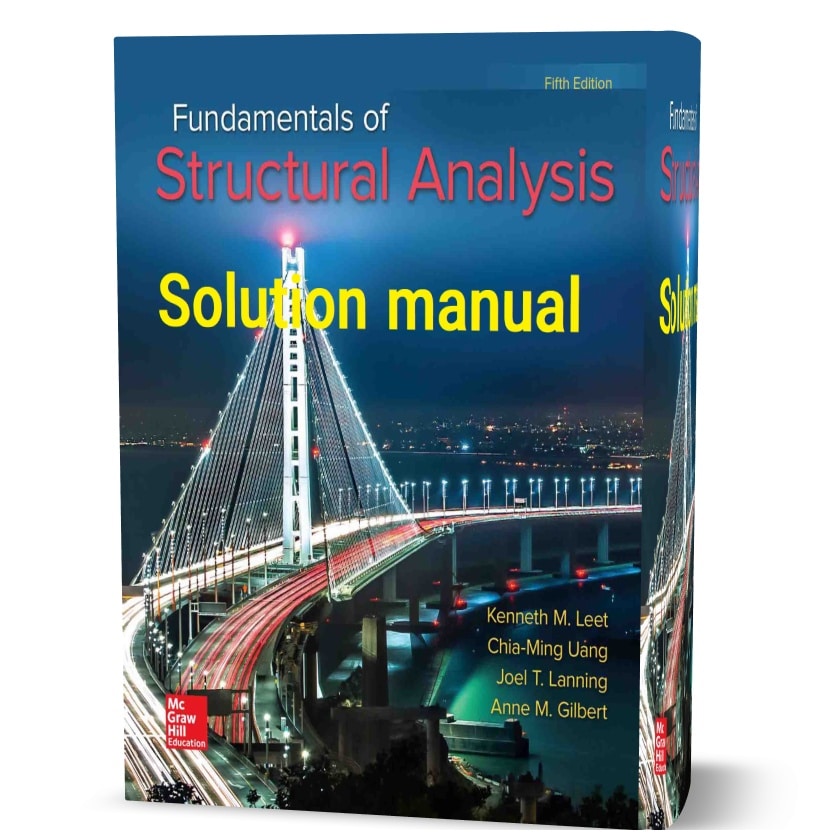
The Fundamentals of Structural Analysis (5th Edition) represents a modern, refined approach to understanding how structures behave under different loads and conditions. It blends classical theory, engineering intuition, and real-world practice, making it valuable for:
🎓 Engineering students
👷 Practicing structural and civil engineers
🏢 Consultants and designers
🧑💼 Project managers with technical backgrounds
This article is written to serve both beginners and advanced engineers, using simple explanations first, then gradually moving into deeper technical understanding—perfect for audiences in the USA, UK, Canada, Australia, and Europe.
🧩 Background Theory of Structural Analysis 🧱
🔹 What Is Structural Analysis?
Structural analysis is the process of determining how structures respond to loads, including:
Forces
Moments
Stresses
Strains
Deflections
The goal is to ensure:
Safety
Serviceability
Economy
Durability
🔹 Historical Development 🕰️
Structural analysis evolved through several key stages:
| Era | Key Contribution |
|---|---|
| 17th Century | Newton’s laws of motion |
| 18th Century | Euler–Bernoulli beam theory |
| 19th Century | Elasticity theory |
| 20th Century | Matrix methods & FEM |
| 21st Century | Computer-based simulation & BIM |
The 5th Edition approach integrates classical methods with modern computational thinking.
🔹 Core Assumptions in Structural Analysis ⚙️
Most traditional methods assume:
Linear elastic behavior
Small deformations
Homogeneous materials
Static loading
These assumptions simplify calculations while remaining accurate for most engineering projects.
📐 Technical Definition of Structural Analysis 🧮
Structural analysis is the engineering discipline that calculates internal forces, stresses, strains, and displacements in structures subjected to external loads.
Key Technical Outputs:
Axial forces (N)
Shear forces (V)
Bending moments (M)
Deflections (Δ)
Support reactions
🛠️ Step-by-Step Explanation of Structural Analysis 🧭
🔹 Step 1: Idealize the Structure 🏗️
Convert the real structure into a simplified model:
Beams
Columns
Trusses
Frames
🔹 Step 2: Identify Loads 📦
Common load types:
Dead loads
Live loads
Wind loads
Seismic loads
Snow loads
🔹 Step 3: Apply Boundary Conditions 🔗
Define:
Fixed supports
Hinges
Rollers
🔹 Step 4: Choose an Analysis Method 📊
Determinate structures → equilibrium equations
Indeterminate structures → compatibility + material laws
🔹 Step 5: Solve for Reactions and Internal Forces ✏️
Use:
Free body diagrams
Equilibrium equations
Matrix methods (for complex systems)
🔹 Step 6: Check Deflections & Serviceability 📐
Ensure limits are within code requirements.
⚖️ Comparison of Structural Analysis Methods 🔍
🔹 Determinate vs Indeterminate Structures
| Aspect | Determinate | Indeterminate |
|---|---|---|
| Equations | Statics only | Statics + compatibility |
| Complexity | Low | High |
| Accuracy | Moderate | High |
| Redundancy | None | Present |
🔹 Classical vs Computer-Based Methods 💻
| Classical | Software-Based |
|---|---|
| Hand calculations | FEM, SAP2000, ETABS |
| Limited complexity | High complexity |
| Educational value | Professional efficiency |
🧪 Detailed Examples for Better Understanding 📘
📌 Example 1: Simply Supported Beam
Load: Uniformly distributed load
Output: Reactions, shear force diagram, bending moment diagram
📌 Example 2: Truss System
Method of joints
Zero-force members identification
📌 Example 3: Portal Frame
Wind load analysis
Moment distribution method
Each example demonstrates load flow, which is a central concept in the 5th Edition approach.
🏙️ Real-World Applications in Modern Projects 🌉
Structural analysis is applied in:
🏢 Buildings
High-rise towers
Residential housing
Commercial complexes
🌉 Bridges
Cable-stayed bridges
Beam bridges
Arch bridges
🏭 Industrial Structures
Power plants
Oil & gas facilities
Warehouses
🌍 Infrastructure
Tunnels
Dams
Offshore platforms
Modern software applies the same fundamental principles taught in structural analysis theory.
❌ Common Mistakes in Structural Analysis ⚠️
Ignoring load combinations
Incorrect boundary conditions
Over-reliance on software
Poor modeling assumptions
Neglecting serviceability limits
👉 Most failures are modeling errors, not calculation errors.
🚧 Challenges & Practical Solutions 🔧
🔹 Challenge 1: Complex Geometry
Solution: Break structure into sub-systems
🔹 Challenge 2: Indeterminacy
Solution: Use stiffness or matrix methods
🔹 Challenge 3: Dynamic Loads
Solution: Modal analysis & time-history methods
🔹 Challenge 4: Software Black-Box Effect
Solution: Always verify results with hand checks
📊 Case Study – High-Rise Office Building 🏢
Project Overview:
Location: Canada
Height: 40 stories
Structure: Reinforced concrete frame
Analysis Process:
Load modeling
FEM-based analysis
Drift and deflection checks
Code compliance verification
Result:
Optimized member sizes
Reduced material cost by 12%
Improved seismic performance
This case demonstrates how fundamental theory guides advanced design.
💡 Tips for Engineers (Students & Professionals) 🧠
Always draw free body diagrams ✍️
Understand before using software
Learn load paths visually
Keep checking assumptions
Stay updated with codes
Combine theory + experience
❓ FAQs – Fundamentals of Structural Analysis 🤔
1️⃣ Is structural analysis difficult to learn?
No. With strong fundamentals and practice, it becomes intuitive.
2️⃣ Do I need advanced math?
Basic calculus and linear algebra are sufficient.
3️⃣ Can software replace structural engineers?
No. Software is a tool, not a decision-maker.
4️⃣ What is the most important concept?
Load path understanding.
5️⃣ Is structural analysis different by country?
Principles are universal; codes vary.
6️⃣ Is this topic useful for non-civil engineers?
Yes—mechanical, aerospace, and marine engineers also use it.
🎯 Conclusion – Mastering the Fundamentals 🔚
The Fundamentals of Structural Analysis (5th Edition) represent more than equations—it is a way of thinking like an engineer.
By mastering:
Load behavior
Structural response
Analysis methods
Practical applications
You build the foundation for:
Safer structures
Smarter designs
Successful engineering careers
Whether you are a student preparing for exams or a professional working on real projects, strong fundamentals will always be your greatest asset. 🏗️✨