⚡🔧 Electronic Projects for Beginners: A Complete Engineering Guide from Basics to Real-World Applications
🚀 Introduction
Electronics is one of the most exciting and practical branches of engineering. Whether you’re a student stepping into the world of circuits for the first time or a professional looking to revisit fundamentals, building electronic projects is the fastest way to understand how theory meets reality.
Electronic projects for beginners are not just simple experiments—they are foundational experiences that develop critical thinking, problem-solving skills, and design intuition. From blinking LEDs to smart home automation, each project represents a building block toward advanced systems.
This article is designed to serve both beginners and experienced engineers. It bridges the gap between theory and practice by offering a structured approach to learning electronics through hands-on projects. It includes technical explanations, comparisons, diagrams, real-world applications, and expert tips—all written in a clear, engaging, and practical style.
📚 Background Theory
Before diving into projects, it’s essential to understand the fundamental principles of electronics. These concepts form the backbone of all electronic systems.
🔋 Basic Electrical Concepts
Voltage (V)
Voltage is the potential difference between two points. It acts like pressure in a water pipe, pushing electrons through a circuit.
Current (I)
Current is the flow of electrons, measured in amperes (A). It represents how much charge is moving through a conductor.
Resistance (R)
Resistance opposes the flow of current. It is measured in ohms (Ω).
Ohm’s Law
Ohm’s Law defines the relationship between voltage, current, and resistance:
V=I×R
This formula is fundamental in designing and analyzing circuits.
🔌 Circuit Types
Series Circuit
- Components connected in a single path
- Same current flows through all components
Parallel Circuit
- Components connected across the same voltage source
- Current divides among branches
⚙️ Key Electronic Components
Resistors
Control current flow
Capacitors
Store and release energy
Diodes
Allow current to flow in one direction only
Transistors
Act as switches or amplifiers
Integrated Circuits (ICs)
Miniaturized electronic circuits
💡 Digital vs Analog Electronics
| Feature | Analog Systems | Digital Systems |
|---|---|---|
| Signal Type | Continuous | Discrete (0 & 1) |
| Example | Audio amplifier | Microcontroller |
| Complexity | Medium | High |
🧠 Technical Definition
Electronic projects for beginners refer to small-scale, hands-on circuit-based implementations designed to teach fundamental concepts such as voltage control, signal processing, and system design using basic electronic components.
These projects typically involve:
- Low voltage systems (5V–12V)
- Simple components (resistors, LEDs, sensors)
- Basic programming (for microcontroller-based systems)
- Breadboard prototyping
They serve as the foundation for advanced domains like embedded systems, robotics, IoT, and automation.
🛠️ Step-by-Step Explanation of a Beginner Project
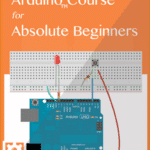
Let’s walk through a classic beginner project: LED Blinking Circuit using a Microcontroller
🔧 Components Required
- Microcontroller (e.g., Arduino)
- LED
- Resistor (220Ω)
- Breadboard
- Jumper wires
- USB cable
🧩 Circuit Setup
- 🎯 Connect LED anode to digital pin
- 🎯 Connect cathode to resistor
- Connect resistor to ground
- Power the microcontroller via USB
💻 Code Example
pinMode(13, OUTPUT);
}
void loop() {
digitalWrite(13, HIGH);
delay(1000);
digitalWrite(13, LOW);
delay(1000);
}
🔍 Working Principle
- The microcontroller sends HIGH signal → LED ON
- Delay of 1 second
- Sends LOW signal → LED OFF
- Repeats continuously
🧠 Learning Outcome
- Digital output control
- Timing functions
- Circuit assembly basics
⚖️ Comparison of Beginner Projects
| Project Type | Difficulty | Components Needed | Learning Outcome |
|---|---|---|---|
| LED Blinker | Easy | Few | Basic programming |
| Light Sensor | Easy | Medium | Analog input |
| Temperature Monitor | Medium | Medium | Sensor integration |
| Line Following Robot | Hard | Many | Automation + control |
📊 Diagrams & Tables
🔌 Basic LED Circuit Diagram
📡 Sensor-Based System Flow
🧪 Examples of Beginner Projects
💡 1. Automatic Night Light
- Uses LDR (Light Dependent Resistor)
- Turns ON light in darkness
🌡️ 2. Temperature Display System
- Uses temperature sensor
- Displays value on LCD
🚨 3. Motion Detector Alarm
- Uses PIR sensor
- Activates buzzer on motion
🚗 4. Obstacle Avoiding Robot
- Uses ultrasonic sensor
- Changes direction automatically
🌍 Real World Applications
Electronic projects are not just academic—they have real-world significance.
🏠 Smart Homes
- Automated lighting systems
- Security alarms
🚗 Automotive Industry
- Sensor-based safety systems
- Engine control units
🏥 Healthcare
- Patient monitoring systems
- Wearable devices
🏭 Industrial Automation
- PLC-based control systems
- Robotics
⚠️ Common Mistakes
❌ Incorrect Wiring
- Leads to circuit failure or damage
❌ Ignoring Polarity
- Especially critical for diodes and capacitors
❌ Wrong Resistor Values
- Can burn components
❌ Poor Soldering
- Leads to unstable connections
❌ Skipping Testing
- Always test step-by-step
🧩 Challenges & Solutions
⚡ Challenge 1: Component Identification
Solution: Use color codes and datasheets
🔌 Challenge 2: Power Issues
Solution: Check voltage ratings and connections
💻 Challenge 3: Programming Errors
Solution: Debug step-by-step
🧠 Challenge 4: Understanding Circuits
Solution: Simulate before building
📖 Case Study: Building a Smart Temperature Monitoring System
🎯 Objective
Design a system to monitor room temperature and display it.
🔧 Components
- Temperature sensor
- Microcontroller
- LCD display
⚙️ Process
- Read sensor data
- Convert analog to digital
- Display on screen
📈 Results
- Accurate temperature readings
- Real-time monitoring
🧠 Key Learnings
- Sensor calibration
- Data processing
- Display interfacing
💡 Tips for Engineers
🛠️ Start Simple
Build basic circuits before complex ones
📚 Read Datasheets
Understand component specifications
🔍 Debug Systematically
Check one part at a time
💻 Use Simulation Tools
Reduce hardware errors
🤝 Join Communities
Learn from others
❓ FAQs
1. What is the best first electronic project?
LED blinking circuit is the easiest and most recommended starting point.
2. Do I need programming skills?
Not always, but basic programming helps with microcontroller projects.
3. What tools are essential?
- Multimeter
- Breadboard
- Power supply
4. How do I avoid damaging components?
Check voltage, polarity, and connections before powering.
5. Are simulations useful?
Yes, they help understand circuits before building.
6. How long does it take to learn electronics?
Basic skills can be learned in weeks, mastery takes years.
7. Can beginners build robots?
Yes, starting with simple kits is recommended.
🎯 Conclusion
Electronic projects for beginners are the gateway to mastering engineering skills. They provide a hands-on approach that transforms theoretical knowledge into practical expertise. From simple LED circuits to sensor-based systems, each project builds confidence and competence.
For students, these projects enhance learning and career readiness. For professionals, they serve as a refresher and innovation tool. Regardless of your level, the key is consistency, curiosity, and experimentation.
The journey into electronics is not just about circuits—it’s about creativity, problem-solving, and shaping the future through technology.