Data Science and Machine Learning for Non-Programmers: A Beginner-to-Professional Guide 🚀📊🤖
Introduction 🌍📊
Data Science and Machine Learning have become two of the most influential technologies of the modern digital world. From recommending movies on streaming platforms to helping doctors diagnose diseases, these technologies are transforming industries worldwide.
The good news? You don’t have to be a programmer to understand them. 🎯
Many people believe coding is a requirement before learning Data Science or Artificial Intelligence. While programming certainly helps in building models, understanding the concepts, business applications, and decision-making process does not require advanced coding knowledge.
This guide is designed for:
- 🎓 Engineering students
- 📈 Business analysts
- 🏭 Industry professionals
- 🔬 Researchers
- 👨💼 Managers
- 📚 Beginners interested in AI
By the end of this article, you’ll understand how Data Science and Machine Learning work, when to use them, their strengths, limitations, and how non-programmers can start learning them confidently.


Understanding the Background Theory 🧠
Before computers could learn patterns, humans had to manually analyze enormous amounts of data.
Traditional statistics helped us answer questions like:
- What happened?
- Why did it happen?
Modern Data Science extends these capabilities to answer:
- What will happen next?
- What should we do?
- Can computers learn automatically?
The explosion of digital information—from smartphones, social media, IoT devices, sensors, healthcare records, and online shopping—created datasets far too large for manual analysis.
This challenge led to the development of:
- Data Science
- Big Data Analytics
- Artificial Intelligence
- Machine Learning
- Deep Learning
Together, these fields enable organizations to discover hidden insights and make data-driven decisions.
What is Data Science? 📈
Data Science is the process of collecting, cleaning, analyzing, visualizing, and interpreting data to solve real-world problems.
A Data Scientist combines knowledge from:
- Mathematics
- Statistics
- Business
- Artificial Intelligence
- Data Visualization
- Domain Expertise
The ultimate goal is to transform raw data into meaningful knowledge.
What is Machine Learning? 🤖
Machine Learning is a branch of Artificial Intelligence that enables computers to learn patterns from historical data without being explicitly programmed for every task.
Instead of writing thousands of rules, the computer identifies relationships automatically.
For example:
Instead of programming every possible email spam rule, a machine learning model learns from millions of spam and non-spam emails.
The Data Science Lifecycle 🔄


Every Data Science project generally follows the same process.
Problem Identification 🎯
Everything begins with a business question.
Examples include:
- Will customers leave?
- Which product should we recommend?
- Is this transaction fraudulent?
Without a clear objective, even the best data has little value.
Data Collection 📥
Data comes from multiple sources:
- Databases
- Excel files
- APIs
- Sensors
- IoT devices
- Social media
- Customer surveys
- Websites
The quality of analysis depends heavily on the quality of collected data.
Data Cleaning 🧹
Real-world data is rarely perfect.
Cleaning includes:
- Removing duplicates
- Handling missing values
- Correcting errors
- Standardizing formats
- Eliminating inconsistencies
Many professionals spend over half their project time preparing data.
Data Exploration 🔍
Analysts search for:
- Trends
- Relationships
- Outliers
- Patterns
- Seasonal behavior
Visualization tools make exploration much easier.
Feature Engineering ⚙️
Features are the variables used by machine learning models.
Examples include:
- Age
- Income
- Temperature
- Purchase history
- Product ratings
Better features usually produce better predictions.
Model Building 🤖
A machine learning algorithm learns from historical data.
Popular algorithms include:
- Decision Trees
- Linear Regression
- Random Forest
- Support Vector Machines
- Neural Networks
Model Evaluation 📊
Performance is measured using metrics such as:
- Accuracy
- Precision
- Recall
- F1 Score
- Mean Squared Error
Testing ensures the model performs well on new, unseen data.
Deployment 🚀
The finished model is integrated into real applications.
Examples include:
- Banking apps
- Healthcare systems
- Online stores
- Recommendation engines
Types of Machine Learning 📚
Supervised Learning 🎓
The computer learns from labeled data.
Examples:
- House price prediction
- Disease diagnosis
- Spam detection
Unsupervised Learning 🔍
The data has no labels.
The algorithm discovers hidden structures automatically.
Examples:
- Customer segmentation
- Market basket analysis
- Clustering
Reinforcement Learning 🎮
The computer learns through rewards and penalties.
Applications include:
- Robotics
- Video games
- Autonomous vehicles
Data Science vs Machine Learning ⚖️
| Feature | Data Science | Machine Learning |
|---|---|---|
| Primary Goal | Extract insights | Make predictions |
| Scope | Very broad | Specialized subset |
| Programming | Helpful | Often required for advanced work |
| Statistics | Extensive | Moderate |
| Visualization | Essential | Limited |
| Business Focus | Strong | Medium |
| Output | Reports, dashboards, models | Predictive models |
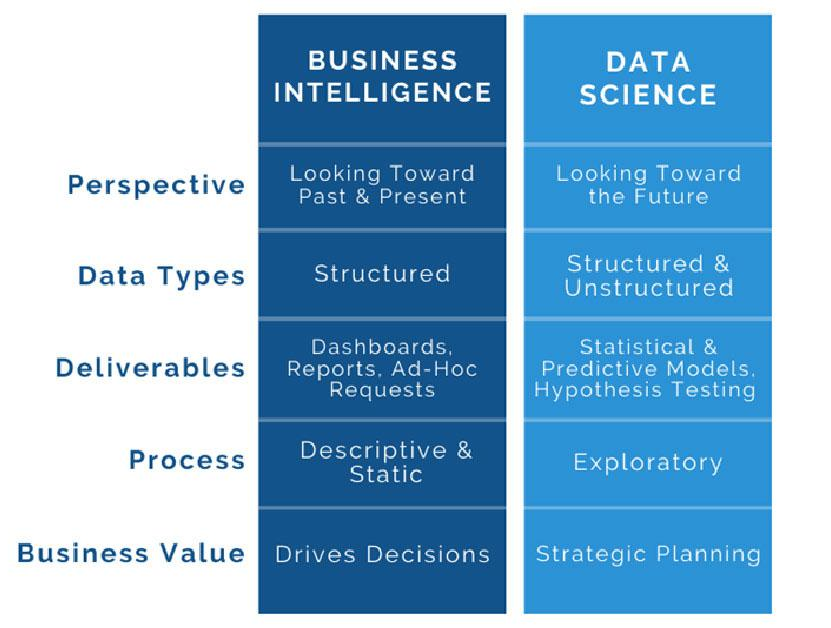
Visual Comparison 📊




Step-by-Step Example: Predicting House Prices 🏠
Imagine a real estate company wants to estimate house prices.
Step 1
Collect previous sales records.
Step 2
Gather property information.
Examples:
- Bedrooms
- Bathrooms
- Location
- Garage
- Age
- Square footage
Step 3
Clean incorrect records.
Step 4
Train the machine learning model.
Step 5
Evaluate prediction accuracy.
Step 6
Predict prices for new homes.
This entire process can be performed using visual no-code platforms, allowing non-programmers to build predictive models with drag-and-drop interfaces.
Examples 📖
Healthcare 🏥
Predict diseases from patient records.
Banking 💳
Detect fraudulent transactions instantly.
Retail 🛒
Recommend products based on customer behavior.
Manufacturing 🏭
Predict machine failures before breakdowns.
Agriculture 🌾
Forecast crop production using weather data.
Transportation 🚗
Optimize delivery routes.
Education 🎓
Predict student performance.
Real-World Applications 🌎
Today’s industries rely heavily on Data Science.
| Industry | Application |
|---|---|
| Healthcare | Disease prediction |
| Banking | Credit scoring |
| Insurance | Risk analysis |
| Manufacturing | Predictive maintenance |
| Retail | Customer recommendations |
| Government | Public planning |
| Transportation | Route optimization |
| Telecommunications | Network optimization |
| Energy | Demand forecasting |
| Agriculture | Smart farming |
Useful Tools for Non-Programmers 🛠️
Many modern platforms allow users to build analytical workflows with minimal or no coding.
| Tool | Primary Purpose | Coding Required |
|---|---|---|
| Microsoft Excel | Basic analytics | No |
| Power BI | Dashboards | Minimal |
| Tableau | Visualization | No |
| KNIME | Data workflows | No |
| Orange Data Mining | Machine Learning | No |
| RapidMiner | Predictive analytics | Very little |
Common Mistakes ❌
Many beginners encounter avoidable pitfalls.
Expecting Instant Results
Learning takes consistent practice.
Ignoring Data Quality
Poor data leads to poor predictions.
Overcomplicating Problems
Simple models often outperform complex ones.
Believing AI is Magic
Machine learning finds statistical patterns—it does not “think” like humans.
Forgetting Business Objectives
A technically accurate model that doesn’t solve the business problem has little value.
Challenges and Solutions ⚡
| Challenge | Solution |
|---|---|
| Missing data | Clean and preprocess datasets |
| Small datasets | Collect more data or use augmentation |
| Biased data | Improve data diversity |
| Poor accuracy | Tune model parameters |
| High complexity | Start with simpler algorithms |
| Lack of domain knowledge | Collaborate with subject experts |
Case Study 🏥
Hospital Readmission Prediction
A hospital wanted to reduce patient readmissions.
Problem
Many patients returned shortly after discharge, increasing costs and reducing care quality.
Data Used
- Age
- Medical history
- Blood pressure
- Medications
- Previous admissions
- Laboratory results
Solution
A machine learning model identified patients with a high risk of readmission.
Outcome
- Earlier interventions
- Better patient care
- Reduced hospital costs
- More efficient resource allocation
This example demonstrates how combining quality data with predictive analytics can improve outcomes without replacing human expertise.
Essential Tips 💡
- 📖 Learn statistics before advanced AI.
- 📊 Practice interpreting charts and dashboards.
- 🎯 Focus on solving real business problems.
- 🧹 Never underestimate data cleaning.
- 📚 Build domain knowledge alongside technical skills.
- 🤝 Collaborate with programmers and subject experts.
- 📈 Learn visualization techniques to communicate insights effectively.
- 🚀 Start with no-code tools before exploring programming languages like Python or R.
Frequently Asked Questions ❓
Do I need programming to learn Data Science?
No. You can understand concepts, analyze data, create dashboards, and use many no-code tools without programming. Coding becomes more valuable as you move into advanced modeling and automation.
Is mathematics difficult?
Basic statistics, algebra, and logical reasoning are usually enough to begin. More advanced mathematics becomes useful for specialized machine learning techniques.
Can I get a job without coding?
Yes. Roles such as Business Analyst, Data Analyst, and BI Analyst often emphasize analytical thinking, visualization, and communication, though learning some programming can expand career opportunities.
Which industries use Machine Learning?
Healthcare, finance, manufacturing, retail, logistics, education, agriculture, energy, telecommunications, marketing, and many others.
Is Data Science the same as Artificial Intelligence?
No. Data Science focuses on extracting insights from data, while Artificial Intelligence is a broader field that includes systems designed to perform tasks requiring human-like intelligence. Machine Learning is one of the techniques used within AI.
How long does it take to learn?
With regular study and hands-on practice, many beginners develop a solid foundation within a few months. Mastery is an ongoing process that grows through real projects.
Which tool should beginners start with?
Many beginners start with Excel for data handling, then move to visualization tools such as Power BI or Tableau, followed by no-code machine learning platforms before learning programming languages if needed.
Conclusion 🎯
Data Science and Machine Learning are no longer exclusive to software developers. Thanks to intuitive tools, accessible learning resources, and no-code platforms, students, engineers, analysts, managers, and professionals from many backgrounds can understand and apply these technologies to real-world problems.
Success in this field depends less on writing code and more on asking meaningful questions, understanding data, communicating insights, and making informed decisions. By building a strong foundation in data literacy, statistics, visualization, and business thinking, non-programmers can confidently contribute to data-driven projects and prepare for a future where AI and analytics play an increasingly important role across every industry.
Whether your goal is to improve business performance, enhance engineering processes, support scientific research, or simply understand the technology shaping the modern world, learning Data Science and Machine Learning is a valuable investment that opens the door to countless opportunities. 🚀📊