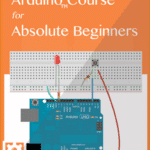
🚀 Arduino Starter Kit Manual: Complete Engineering Guide for Students & Professionals
🔰 Introduction
The Arduino Starter Kit is one of the most powerful entry points into embedded systems engineering, electronics prototyping, and hardware programming. Whether you are a high school student in the USA, a university engineering student in the UK, a robotics enthusiast in Canada, an IoT developer in Australia, or an automation engineer in Europe, the Arduino platform provides a practical and accessible foundation for understanding real-world electronics.
This engineering guide goes far beyond a basic manual. It explains the theoretical background, technical definitions, wiring procedures, comparisons with other platforms, real-world applications, professional challenges, and advanced engineering insights.
This article is designed for:
🎓 Students (beginner to advanced)
🧑💻 Engineers and developers
🏭 Automation professionals
🤖 Robotics enthusiasts
🌍 Global engineering community
By the end of this guide, you will understand not only how to use the Arduino Starter Kit — but also why it works and how to apply it in professional engineering environments.
⚙️ Background Theory
🔬 What Is Embedded Systems Engineering?
An embedded system is a specialized computing system that performs dedicated functions within a larger mechanical or electrical system. Unlike general-purpose computers, embedded systems are optimized for:
Real-time control
Low power consumption
Reliability
Specific application tasks
Examples include:
Car engine control units
Medical monitoring systems
Smart thermostats
Industrial PLC controllers
Arduino is a simplified development platform for embedded systems learning and prototyping.
⚡ Fundamentals of Electricity
Before using the Arduino Starter Kit, understanding basic electrical theory is essential.
🔹 Ohm’s Law
V=I×R
Where:
V = Voltage (Volts)
I = Current (Amperes)
R = Resistance (Ohms)
This law governs how resistors, LEDs, and sensors behave in circuits.
🔹 DC Circuits
Arduino operates primarily on 5V DC.
Core components:
Power supply (USB or external adapter)
Ground reference (GND)
Digital & analog signals
🧠 Microcontroller Theory
The Arduino board is based on a microcontroller (typically ATmega328P in standard kits).
A microcontroller contains:
CPU
RAM
Flash memory
Input/Output pins
Timers
ADC (Analog-to-Digital Converter)
Unlike a full computer, it runs one program repeatedly in a loop.
🧩 Technical Definition
📘 What Is the Arduino Starter Kit?
The Arduino Starter Kit is a complete educational and prototyping package containing:
Arduino board
USB cable
Breadboard
Resistors
LEDs
Push buttons
Potentiometer
Servo motor
DC motor
Temperature sensor
LCD display
Jumper wires
Instruction manual
It enables users to build and program electronic circuits without soldering.
🏗️ Core Technical Components
🔹 Arduino Board
Main features:
14 Digital I/O Pins
6 Analog Inputs
16 MHz clock
5V operating voltage
USB programming interface
🔹 Breadboard
A solderless prototyping board that allows temporary circuit construction.
🔹 Digital vs Analog Pins
Digital Pins:
HIGH (5V)
LOW (0V)
Analog Pins:
Measure voltage between 0–5V
10-bit resolution (0–1023 values)
🛠 Step-by-Step Explanation
🖥 Step 1: Install Arduino IDE
Download from official website
Install on Windows/macOS/Linux
Connect Arduino via USB
Select correct board & port
💡 Step 2: First Circuit – Blinking LED
Components Needed:
Arduino
LED
220Ω resistor
Jumper wires
Circuit Concept:
Code Structure:
setup() → runs once
loop() → runs continuously
Basic logic:
Set pin as OUTPUT
Turn LED ON
Wait 1 second
Turn LED OFF
Repeat
🔘 Step 3: Push Button Input
Add a button to control LED.
Engineering concept:
Input pin reads HIGH/LOW
Internal pull-up resistor may be used
🌡 Step 4: Analog Sensor Reading
Using temperature sensor:
Connect sensor output to analog pin
Use analogRead()
Convert voltage to temperature
This introduces ADC concepts.
🔄 Step 5: Motor Control
Using transistor driver for DC motor:
Arduino controls base
Transistor switches motor power
External power recommended
Engineering lesson:
Never power motors directly from Arduino pin.
⚖️ Comparison
🆚 Arduino vs Raspberry Pi
| Feature | Arduino | Raspberry Pi |
|---|---|---|
| Type | Microcontroller | Single-board computer |
| OS | No | Linux |
| Real-time control | Excellent | Limited |
| Power consumption | Very low | Higher |
| Ideal for | Embedded control | Multimedia & networking |
🆚 Arduino vs PLC
| Feature | Arduino | Industrial PLC |
|---|---|---|
| Cost | Low | High |
| Industrial reliability | Moderate | Very high |
| Ease of programming | Easy | Moderate |
| Used in factories | Rare | Common |
Arduino is ideal for prototyping before PLC deployment.
📊 Diagrams & Tables
🖥 Arduino Pin Layout (Simplified)
Analog Pins: A0 – A5
Power: 5V, 3.3V, GND, VIN
🔌 Typical LED Circuit Table
| Component | Value |
|---|---|
| Resistor | 220Ω |
| Supply | 5V |
| LED Current | ~20mA |
🔍 Detailed Examples
Example 1: Smart Temperature Monitor
Components:
Arduino
LCD
Temperature sensor
Process:
Read analog value
Convert to Celsius
Display on LCD
Used in HVAC systems.
Example 2: Automated Plant Watering System
Logic:
Read soil moisture
If dry → activate pump
If wet → stop pump
This project introduces:
Sensors
Relay modules
Decision logic
Example 3: Motion Detection Alarm
Using PIR sensor:
Detect movement
Activate buzzer
Turn on LED
Application: Security systems.
🏗 Real World Application in Modern Projects
🌐 Internet of Things (IoT)
Arduino + WiFi module used for:
Smart homes
Remote monitoring
Environmental tracking
🚗 Automotive Prototyping
Used for:
Sensor testing
ECU concept models
Data logging
🏭 Industrial Automation
Engineers use Arduino for:
Proof-of-concept
Small machine control
Academic research
🧪 Research Laboratories
Used in:
Biomedical monitoring
Data acquisition systems
Robotics development
❌ Common Mistakes
⚠️ 1. Powering High Loads Directly
Never connect motors or relays directly to Arduino pins.
⚠️ 2. Ignoring Ground Connections
All components must share common ground.
⚠️ 3. Wrong Resistor Values
Incorrect resistor may burn LED.
⚠️ 4. Not Checking Voltage Limits
Max input voltage typically 5V.
🧗 Challenges & Solutions
🔧 Challenge 1: Noise in Analog Signals
Solution:
Use capacitors
Shielded wires
Averaging code
🔥 Challenge 2: Overheating
Solution:
Use heat sinks
Avoid short circuits
Check current ratings
🌍 Challenge 3: Scaling to Industrial Level
Solution:
Move to industrial microcontrollers
Add isolation circuits
Use certified hardware
📘 Case Study
🏢 University Engineering Lab – Smart Energy Monitoring
Problem:
Students needed low-cost energy monitoring system.
Solution:
Arduino
Current sensor
LCD display
Outcome:
Reduced lab energy usage by 15%
Provided real-time data for research
Lessons:
Prototyping reduces cost
Open-source ecosystem accelerates innovation
🧑🔧 Tips for Engineers
💡 1. Master the Datasheet
Always read component datasheets.
💡 2. Design Before Building
Draw circuit schematic first.
💡 3. Test in Modules
Break large systems into smaller parts.
💡 4. Use Serial Monitor
For debugging sensor values.
💡 5. Document Everything
Maintain engineering logbook.
❓ FAQs
1️⃣ Is Arduino suitable for professional engineering?
Yes, especially for prototyping and research.
2️⃣ Can Arduino replace PLC?
Not fully. It lacks industrial certifications.
3️⃣ Is coding difficult?
No. Language is based on simplified C++.
4️⃣ What voltage does Arduino operate on?
Typically 5V.
5️⃣ How long does it take to learn?
Basic projects in weeks; advanced systems in months.
6️⃣ Can it be used in IoT projects?
Yes, with WiFi/Ethernet modules.
7️⃣ Is Arduino safe for beginners?
Yes, when proper voltage limits are respected.
🎯 Conclusion
The Arduino Starter Kit is more than an educational tool — it is a gateway into embedded systems engineering, robotics, automation, and IoT development.
For students across the USA, UK, Canada, Australia, and Europe, it offers a practical hands-on learning experience. For professionals, it serves as a rapid prototyping platform that reduces development time and cost.
By mastering both the theoretical foundation and practical applications described in this guide, you can transition from beginner-level projects to advanced engineering solutions.
Arduino is not just about blinking LEDs — it is about engineering innovation, rapid development, and creative problem-solving.
The future of embedded engineering starts with experimentation — and the Arduino Starter Kit is one of the best places to begin. 🚀