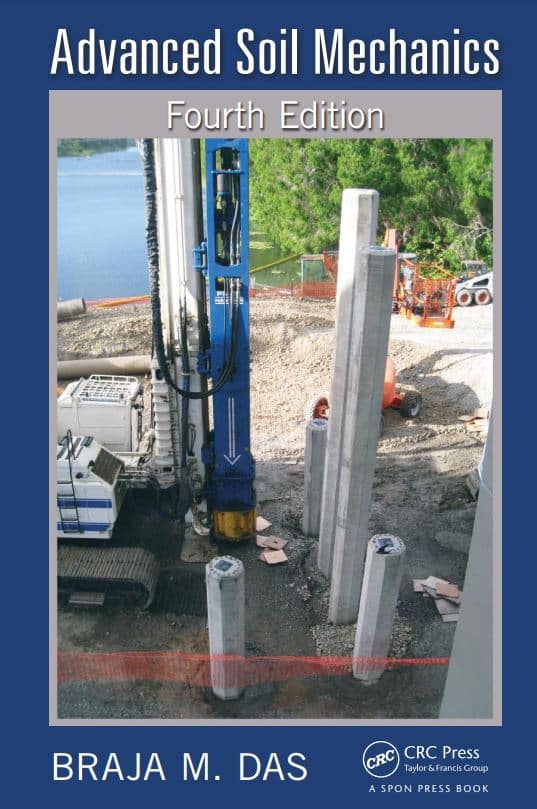
Advanced Soil Mechanics 3rd Edition
Introduction
Soil mechanics is the backbone of geotechnical engineering, influencing the design and stability of structures globally. Advanced soil mechanics takes this foundational knowledge to the next level, exploring complex soil behavior, testing techniques, and innovative applications. This article delves into the essentials of advanced soil mechanics and how it shapes modern engineering projects. Engineers must understand soil properties, stress-strain relationships, and the interaction between soil and structures to develop safe and sustainable infrastructure.
Table of Contents
- What is Advanced Soil Mechanics?
- Principles of Advanced Soil Mechanics
- Common Testing Methods
- Applications in Geotechnical Engineering
- Key Challenges in Advanced Soil Mechanics
- Future Trends in Soil Mechanics
- FAQs
- Conclusion
What is Advanced Soil Mechanics?
Advanced soil mechanics is a specialized branch of geotechnical engineering that extends beyond basic soil mechanics to understand complex soil behaviors and their impact on construction projects. Engineers analyze soil responses to different loading conditions, predict long-term stability, and optimize foundation designs for various geotechnical applications.
Key Aspects of Advanced Soil Mechanics:
- Stress-Strain Relationships: Examining how soil deforms under different stress conditions.
- Consolidation and Settlement Analysis: Predicting how soil compresses over time due to external loads.
- Soil-Structure Interaction: Understanding how structures influence soil behavior and vice versa.
- Seepage and Permeability: Studying how water moves through soil and its effects on stability.
This field equips engineers with the tools to analyze and predict soil performance under various conditions, enabling safer and more cost-effective construction solutions.
Principles of Advanced Soil Mechanics
Understanding the fundamental principles of soil mechanics is essential for applying advanced techniques. Some key principles include:
Effective Stress
The total stress in soil minus pore water pressure. This concept is crucial for understanding soil stability and predicting how soil will react under loads.
Shear Strength
The soil’s ability to resist shearing forces, which is essential for analyzing slope stability, foundation design, and retaining structures. The Mohr-Coulomb failure criterion is commonly used to describe shear strength.
Consolidation
The process of soil volume reduction due to the expulsion of water under sustained loading. It directly affects settlement predictions and long-term foundation performance.
Critical State Soil Mechanics
A framework for understanding soil deformation under long-term loading conditions. This principle helps in designing structures that can withstand stress without excessive deformation.
Liquefaction
A phenomenon where saturated soil loses its strength and stiffness due to rapid loading, such as during an earthquake. Understanding liquefaction potential is crucial for designing earthquake-resistant structures.
Common Testing Methods
To assess soil properties accurately, engineers rely on a variety of laboratory and field tests. These tests help in determining soil strength, permeability, compressibility, and other essential characteristics.
Laboratory Tests
- Triaxial Compression Test: Measures the strength and stress-strain behavior of soil samples under controlled conditions.
- Oedometer Test: Evaluates consolidation and compressibility, providing insight into settlement predictions.
- Direct Shear Test: Assesses shear strength under controlled loading conditions.
Field Tests
- Cone Penetration Test (CPT): Provides in-situ soil properties, helping in geotechnical design and risk assessment.
- Standard Penetration Test (SPT): Determines soil density and strength by measuring resistance to penetration.
- Plate Load Test: Measures bearing capacity and settlement behavior of soil under applied loads.
- Permeability Test: Determines how easily water flows through soil, influencing drainage and stability.
Applications in Geotechnical Engineering
Advanced soil mechanics plays a pivotal role in various engineering applications. Key areas include:
Foundation Design
- Ensuring stability and minimizing settlement for buildings and infrastructure.
- Designing deep foundations (piles, piers) for soft or unstable soils.
Slope Stability Analysis
- Preventing landslides and ensuring safety in hilly terrains.
- Using reinforcement techniques such as retaining walls and geotextiles.
Earth Retaining Structures
- Designing walls and embankments to withstand lateral soil pressure.
- Applications in basement construction, bridge abutments, and waterfront structures.
Tunnel and Underground Construction
- Managing soil-structure interactions in subsurface engineering.
- Using numerical modeling to predict tunnel stability and mitigate risks.
Soil Improvement Techniques
- Methods such as soil stabilization, compaction, and grouting to enhance soil properties.
- Reducing settlement risks and increasing load-bearing capacity.
Key Challenges in Advanced Soil Mechanics
Despite technological advancements, several challenges persist in geotechnical engineering:
- Soil Variability and Unpredictability: Natural soil deposits vary significantly, making precise analysis difficult.
- Complex Soil-Structure Interactions: Understanding the dynamic relationship between structures and the soil they rest on.
- Limited Data in Certain Terrains or Depths: Inaccessible areas make soil investigation challenging.
- High Costs of Advanced Testing Techniques: Laboratory and in-situ testing can be expensive and time-consuming.
- Environmental Impact: Soil disturbances during construction can lead to erosion, instability, or groundwater contamination.
Future Trends in Soil Mechanics
The field of soil mechanics continues to evolve with advancements in technology and materials. Emerging trends include:
Numerical Modeling
- Enhanced computer simulations for precise soil behavior analysis.
- Finite element analysis (FEA) tools for complex geotechnical problems.
Sustainable Practices
- Eco-friendly materials and methods in soil stabilization.
- Reducing environmental impact through green engineering solutions.
Artificial Intelligence and Machine Learning
- Predicting soil behavior using AI-powered data analysis.
- Automating site investigations and geotechnical design processes.
Nanotechnology
- Improving soil properties at a microscopic level.
- Using nano-clays and polymers to enhance soil stability and reduce permeability.
Smart Geotechnical Sensors
- Real-time monitoring of soil movements and underground stress changes.
- Enhancing safety in critical infrastructure projects.
FAQs On Advanced Soil Mechanics 3rd Edition
Q1: Why is advanced soil mechanics important?
Advanced soil mechanics provides insights into complex soil behaviors, ensuring safe and efficient engineering designs.
Q2: What are the most critical principles?
Effective stress, shear strength, and consolidation are foundational principles that guide analysis and design.
Q3: How do engineers test soil for advanced mechanics?
Tests like triaxial compression, oedometer, and CPT are commonly used to measure advanced soil properties.
Q4: What industries benefit from this knowledge?
Construction, mining, transportation, and environmental engineering are key beneficiaries.
Q5: How is technology influencing soil mechanics?
Innovations like AI, numerical modeling, and nanotechnology are transforming soil analysis and applications.
8. Conclusion
Advanced soil mechanics is a cornerstone of geotechnical engineering, enabling the construction of safe, sustainable, and resilient structures. By mastering its principles and methodologies, engineers can address complex challenges and contribute to the future of infrastructure development. Whether you’re a professional or a student, understanding advanced soil mechanics opens doors to exciting opportunities in the engineering world.