📘 – The Ultimate Engineering Guide 🚀
🧠 Introduction
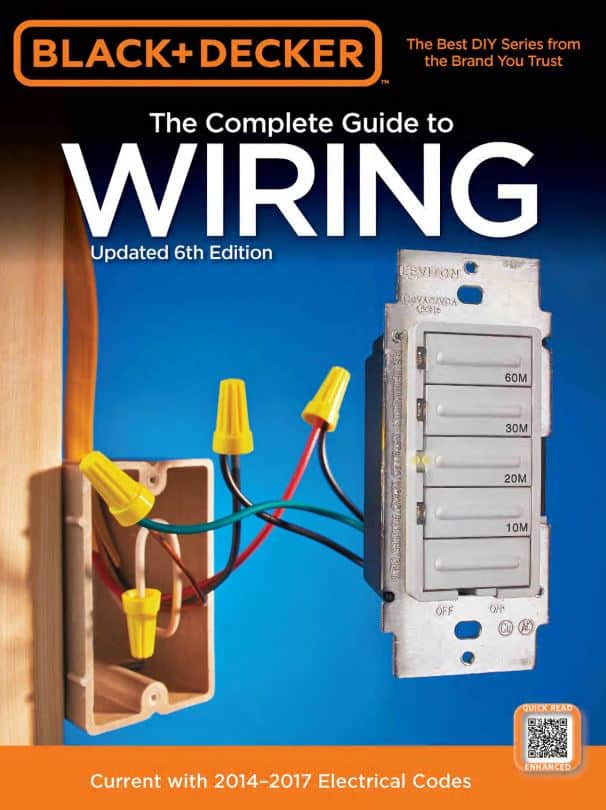
Electricity powers our world—from the simplest desk lamp to sprawling industrial complexes. Whether you’re a student embarking on your first hands‑on project ⚡, a professional engineer looking to brush up on practical skills 🛠️, or a DIY enthusiast aiming to rewire your home safely 🏡, Black & Decker The Complete Guide to Wiring Updated 7th Edition is a cornerstone reference.
This comprehensive guide bridges the gap between textbook theory and field‑ready application. It’s celebrated across the USA, UK, Canada, Australia, and Europe for its clarity, updated electrical codes, and step‑by‑step instructions suitable for both beginners and seasoned engineers.
In this article, we’ll break down the essence of this guide—its background, technical definitions, practical approaches, detailed examples, common pitfalls, and how professionals use it in real modern projects. Let’s flip the switch! 🔌
📚 Background Theory
Before touching a wire, it’s essential to grasp why things work the way they do. The Updated 7th Edition builds on fundamental electrical theory and blends it with practical wiring strategies seen in modern engineering work.
⚡ Electricity Fundamentals
Electricity involves the movement of electrons through conductors—usually metals like copper or aluminum. Here are key concepts you’ll encounter:
-
Voltage (V): The electric potential difference that causes current to flow.
-
Current (I): The rate of electron flow, measured in amperes (amps).
-
Resistance (R): Opposition to current flow, measured in ohms (Ω).
-
Power (P): The rate of energy transfer, measured in watts (W).
👉 Formula: P = V × I
🔍 Understanding these basics prepares you for wiring circuits safely and efficiently.
🧪 Electrical Code Standards
Across countries—whether NFPA/NEC in the USA, BS 7671 in the UK and Europe, or CSA standards in Canada and Australia—codes govern safe electrical practices. The Black & Decker guide explains how to apply these in real installations.
📘 Technical Definition
So, what exactly is Black & Decker The Complete Guide to Wiring Updated 7th Edition?
📖 Technical Definition:
A comprehensive instructional manual covering principles, tools, procedures, safety standards, best practices, diagrams, and code‑compliant wiring techniques for residential, commercial, and light industrial electrical systems.
This book is not just a “DIY hobbyist” manual—its updated editions reflect current engineering practices and regulatory requirements.
🪛 Step‑by‑Step Explanation
Let’s break down typical wiring procedures covered in the guide. These steps form the backbone of safe electrical installations:
🧰 Step 1 – Planning the Circuit
-
Assess load requirements
-
Choose wire size based on current and distance
-
Determine protection devices (breakers/fuses)
🔎 Always start with a plan—blueprints and circuit diagrams help prevent costly mistakes.
🪜 Step 2 – Selecting Tools and Materials
Equip yourself with essentials:
-
Wire strippers & cutters ✂️
-
Multimeter 🧪
-
Conduit and fittings 🔩
-
Electrical boxes 📦
-
Cable connectors
Safety gear is equally important:
-
Insulated gloves 🧤
-
Safety glasses 👓
-
Voltage tester 🔌
🧩 Step 3 – Running Conduit and Cable
-
Measure accurately and minimize sharp bends
-
Label cables for future maintenance
-
Ensure box fill calculations meet code
⚙️ Step 4 – Making Connections
Proper terminations ensure reliability:
-
Strip insulation correctly
-
Use wire nuts or mechanical connectors
-
Tighten screws to code‑specified torque
🔌 Step 5 – Testing and Commissioning
Use a multimeter and circuit tester to verify:
-
Continuity
-
Polarity
-
Grounding
-
Load performance
Never power a circuit without completing all tests!
⚖️ Comparison — Traditional vs. Updated 7th Edition Wiring Methods
| Feature | Traditional Wiring Guides | Black & Decker 7th Edition |
|---|---|---|
| Diagrams | Basic and Limited | Detailed with color visuals 📊 |
| Safety Emphasis | Moderate | Extensive with latest codes 🔐 |
| Beginners | Harder to Interpret | Beginner‑friendly explanations 👍 |
| Code Updates | Often outdated | Includes modern updates (NEC, BS7671, CSA) 🌍 |
| Industry Relevance | Less Practical | Field‑tested professional techniques 🛠️ |
📌 Detailed Examples
🏡 Example 1 — Residential Lighting Circuit
🔍 Planning:
-
Room: Living area
-
Load: 2 ceiling fixtures
-
Switch: Single pole
Steps
-
Determine Wire Size:
Typical 15 A lighting circuit → 14 AWG wire -
Run Cable:
Route NM cable from panel to switch box to fixtures -
Make Connections:
Connect neutrals together, hot to switch, and load to fixture -
Test:
Check continuity and polarity
✅ Result: Safe, code‑compliant lighting circuit.
🏭 Example 2 — Industrial Motor Wiring
Industrial wiring emphasizes durability and protection:
-
Use armored cable
-
Install conduit with proper bend radius
-
Use motor starters and overload protection
-
Follow lock‑out/tag‑out (LOTO) procedures
Note: This example highlights professional engineering requirements beyond basic household wiring.
🌍 Real World Applications in Modern Projects
The wiring guide is widely used in:
🏢 Commercial Buildings
Modern office complexes require integrated lighting, security, HVAC controls, and data networks.
-
Surge protection
-
Emergency lighting
-
Power distribution
🏠 Smart Homes
Integrating smart switches, sensors, and home automation platforms requires clear wiring plans and low‑voltage knowledge.
🔋 Renewable Energy Systems
From solar arrays to battery storage, electrical engineers must understand AC/DC conversions and safe interconnections.
❗ Common Mistakes
Even experienced practitioners can slip—here are common errors the guide helps you avoid:
❌ Poor Wire Sizing
Undersized wire overheats and fails prematurely.
❌ Improper Grounding
Grounding faults lead to shock hazards.
❌ Ignoring Code Requirements
Installations not following local electrical codes risk safety and legal repercussions.
🧗 Challenges & Solutions
| Challenge | Solution |
|---|---|
| Tight spaces | Use flexible conduit and tools designed for confined areas |
| Multicircuit panels | Label all circuits clearly |
| Cross‑cultural codes | Reference local sections in the guide |
🧪 Case Study — Rewiring a Heritage Home
Background
A 1920s heritage home in Melbourne required electrical upgrades for modern living while preserving structural integrity.
Approach
-
Assessment:
Checked existing knob & tube wiring (outdated and unsafe) -
Design:
Customized wire routing to avoid damaging historic plaster -
Installation:
Used non‑metallic sheathed cable (where allowed) and updated panel -
Verification:
Completed thorough testing before commissioning
Outcome
Safe, modern electrical system ⚡ integrated with heritage preservation standards.
🎯 Tips for Engineers
⭐ Always start with a safety mindset.
🔌 Know local codes before you begin.
📐 Double‑check measurements and load calculations.
📋 Document every step for future maintenance.
🛠️ Stay updated — technology and standards evolve!
❓ FAQs (5 – 8 Questions & Answers)
1. Who should read the Black & Decker Wiring Guide?
Both beginners and experienced engineers benefit, because the book covers fundamentals and advanced applications.
2. Does the guide cover current electrical codes?
Yes—Updated 7th Edition includes the latest code updates relevant to multiple regions.
3. Can this guide replace formal electrical training?
It’s a powerful reference, but hands‑on training and certifications are recommended for professional licensing.
4. Does the book include diagrams and visuals?
Absolutely—clear visuals help simplify complex wiring tasks.
5. Is the guide useful for international standards?
Yes—it explains principles applicable across USA, UK, Canada, Australia, and Europe.
6. Does it cover smart home wiring?
Modern systems and low‑voltage wiring concepts are included with practical tips.
7. Is safety emphasized?
Safety is a core theme—with detailed guidance on PPE, lockout/tagout, and code compliance.
8. How does the guide handle troubleshooting?
It includes common fault scenarios and diagnostic procedures.
🏁 Conclusion
📘 Black & Decker The Complete Guide to Wiring Updated 7th Edition is more than just a book—it’s a roadmap for safe, efficient, and code‑compliant electrical installations 🌍. Its blend of theory, practical steps, real world examples, and professional insights makes it indispensable for students, electricians, engineers, and DIYers alike.
Whether you’re wiring your first circuit or designing complex systems, this guide empowers you to understand electrical systems with confidence and precision. ⚙️🔧
Let this guide be your trusted companion in mastering the world of wiring—one connection at a time! 🔌💡