Introduction
Passing the Civil PE Structural exam is a major milestone for civil engineers aiming to advance their careers, gain professional licensure, and earn industry recognition. This exam is not just a test of memory—it is a rigorous evaluation of your engineering judgment, problem-solving skills, and ability to apply theory under time pressure.
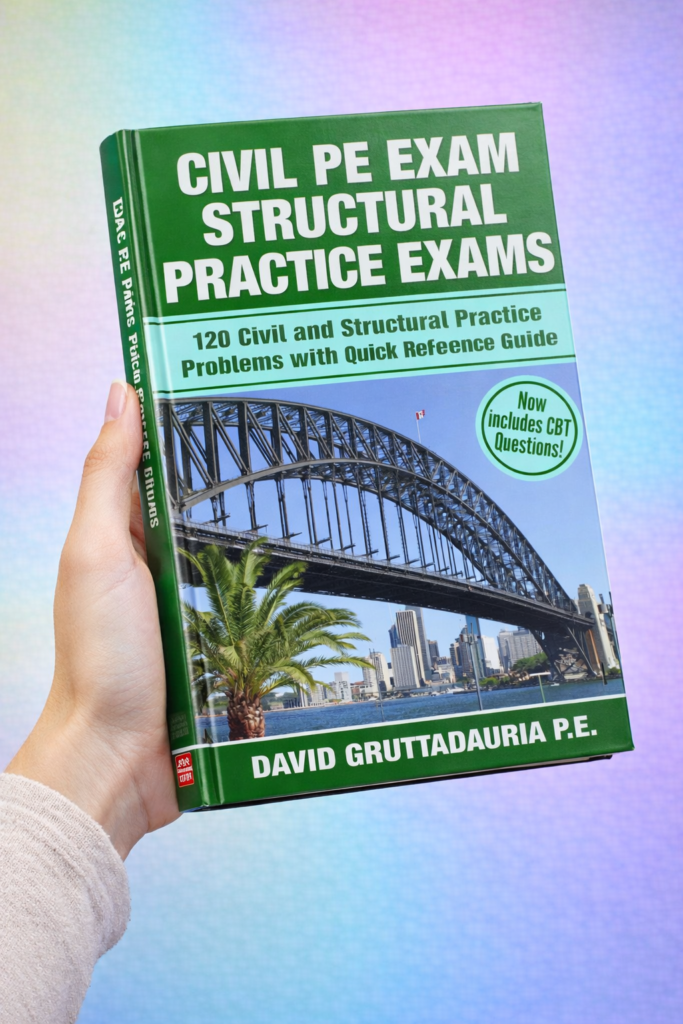
One of the most effective preparation strategies is practicing with high-quality practice exams, especially those that include a balanced mix of civil breadth problems and structural depth problems. That is where the concept of “40 Civil and 80 Structural Practice Problems” becomes extremely valuable. It mirrors the real exam structure and helps engineers develop confidence, speed, and accuracy.
This article provides a comprehensive engineering guide to Civil PE Structural practice exams. Whether you are a beginner engineering student or an experienced professional, you will gain a deep understanding of:
The theory behind structural PE problems
How practice exams are structured
Step-by-step problem-solving methods
Real-world applications
Common mistakes and challenges
A realistic case study
Practical tips to maximize your exam score
Background Theory
What Is the Civil PE Structural Exam?
The Professional Engineer (PE) Civil Structural Exam is designed to test an engineer’s ability to analyze and design structural systems safely and efficiently. It focuses on real-world engineering scenarios rather than abstract academic theory.
The exam typically evaluates knowledge in:
Structural analysis
Steel design
Reinforced concrete design
Geotechnical engineering
Load calculations
Codes and standards (ACI, AISC, ASCE, etc.)
Why Practice Exams Matter
Engineering is a skill-based profession. Reading textbooks alone is insufficient. Practice exams:
Simulate real exam conditions
Reinforce theoretical understanding
Improve time management
Identify weak areas early
A set of 40 civil breadth problems and 80 structural depth problems provides sufficient coverage to build both conceptual clarity and computational speed.
Technical Definition
Civil PE Structural Practice Exams
A Civil PE Structural Practice Exam is a structured collection of engineering problems designed to replicate the difficulty, format, and scope of the official PE Structural exam.
Key Characteristics
Civil Breadth Problems (40):
Cover general civil engineering topics such as construction, materials, geotechnical basics, and structural fundamentals.Structural Depth Problems (80):
Focus deeply on advanced structural analysis and design using codes and real-world constraints.
Technical Objective
The technical goal of these practice exams is to test:
Load path understanding
Stress–strain behavior
Structural stability
Code-based design decisions
Step-by-Step Explanation
Step 1: Understand the Exam Blueprint
Before solving problems, engineers must understand what is tested. Practice exams help align your preparation with the exam specification.
Key focus areas include:
Dead, live, wind, and seismic loads
Bending, shear, and axial stress
Serviceability and strength checks
Step 2: Review Fundamental Theory
Each problem is rooted in theory. Engineers should revise:
Statics and mechanics of materials
Structural analysis methods
Material behavior (steel, concrete, soil)
Step 3: Apply Engineering Codes
Most PE problems are code-driven. Practice exams train you to:
Locate code clauses quickly
Apply correct load combinations
Avoid overdesign or unsafe assumptions
Step 4: Solve Under Time Constraints
Time pressure is a major challenge. Practicing full-length exams helps engineers:
Allocate time per question
Skip and return to difficult problems
Reduce calculation errors
Step 5: Analyze Mistakes
The real value of practice exams lies in post-exam analysis:
Why was the answer wrong?
Was it a conceptual or calculation error?
Was the code misapplied?
Detailed Examples
Example 1: Structural Analysis Problem
Problem:
A simply supported beam of span 6 m carries a uniform load of 12 kN/m. Find the maximum bending moment.
Solution:
Mmax=wL2/8
Mmax=12×62/8=54 kN\cdotpm
Engineering Insight:
This type of problem tests basic structural mechanics, frequently included in both civil and structural sections.
Example 2: Reinforced Concrete Design
Problem:
Design a rectangular concrete beam subjected to bending using ACI principles.
Steps:
Calculate factored moment
Select beam dimensions
Determine required steel area
Check serviceability
Outcome:
Practice exams help engineers systematically apply design steps instead of guessing.
Real-World Application in Modern Projects
Structural Practice Problems in Industry
The skills gained from PE practice exams directly apply to:
High-rise buildings
Bridges and flyovers
Industrial structures
Residential and commercial projects
Practical Scenarios
Determining beam sizes to avoid excessive deflection
Designing columns for combined axial and bending loads
Verifying foundation bearing capacity
Engineers who regularly practice exam-style problems make fewer on-site errors and produce more economical designs.
Common Mistakes
1. Ignoring Units
Mixing SI and US customary units is a frequent mistake.
2. Misreading the Problem
Small wording differences can completely change the required solution.
3. Over-Reliance on Memory
Engineering judgment matters more than memorized formulas.
4. Poor Time Management
Spending too long on one problem can cost multiple easy questions.
Challenges & Solutions
Challenge 1: Information Overload
Solution:
Use structured practice exams to filter essential concepts.
Challenge 2: Weak Structural Fundamentals
Solution:
Revisit practice problems that focus on core mechanics and load behavior.
Challenge 3: Code Interpretation
Solution:
Practice navigating codes repeatedly until it becomes second nature.
Case Study
Case Study: PE Exam Preparation for a Structural Engineer
Background:
A mid-level structural engineer with 5 years of experience struggled with passing the PE exam.
Approach:
Solved 40 civil and 80 structural practice problems
Simulated exam conditions every weekend
Reviewed mistakes systematically
Results:
Improved problem-solving speed by 35%
Reduced careless errors
Passed the PE Structural exam on the next attempt
Key Lesson:
Consistent practice with realistic problems is more effective than passive study.
Tips for Engineers
Start practice exams early in your preparation
Focus on understanding, not memorization
Simulate real exam conditions
Keep a personal error log
Practice both easy and difficult problems
FAQs
1. Are 40 civil and 80 structural problems enough for PE preparation?
Yes, if they are high-quality and well-structured, they provide strong coverage.
2. Should beginners attempt full practice exams?
Yes, but with theory review alongside problem-solving.
3. How often should I take practice exams?
At least once every 1–2 weeks during preparation.
4. Do practice exams replace textbooks?
No, they complement theoretical study.
5. Are structural problems harder than civil ones?
Generally yes, due to deeper analysis and code usage.
6. How important is time management in the PE exam?
Extremely important—practice exams help master it.
Conclusion
The Civil PE Structural Practice Exams with 40 Civil and 80 Structural Practice Problems are an essential tool for engineers aiming to pass the PE exam confidently. They bridge the gap between theory and real-world engineering, sharpen problem-solving skills, and build exam readiness.
Whether you are a student preparing for licensure or a professional engineer advancing your career, consistent practice using structured exams will significantly improve your performance. Engineering success is not about intelligence alone—it is about practice, discipline, and applied understanding.
Invest in practice, trust the process, and approach the PE exam with confidence.