Practical Python Design Patterns _ Pythonic Solutions to Common Problems: A Beginner-Friendly Engineering Guide
Introduction
In modern software engineering, writing code that works is no longer enough. Engineers are expected to write code that is readable, reusable, maintainable, and scalable. This is where design patterns play a critical role.
Design patterns are proven solutions to common software design problems. They are not ready-made code snippets, but conceptual templates that guide engineers toward better architectural decisions. In Python, design patterns are especially powerful because the language itself is flexible, expressive, and supports multiple programming paradigms such as object-oriented, functional, and procedural programming.
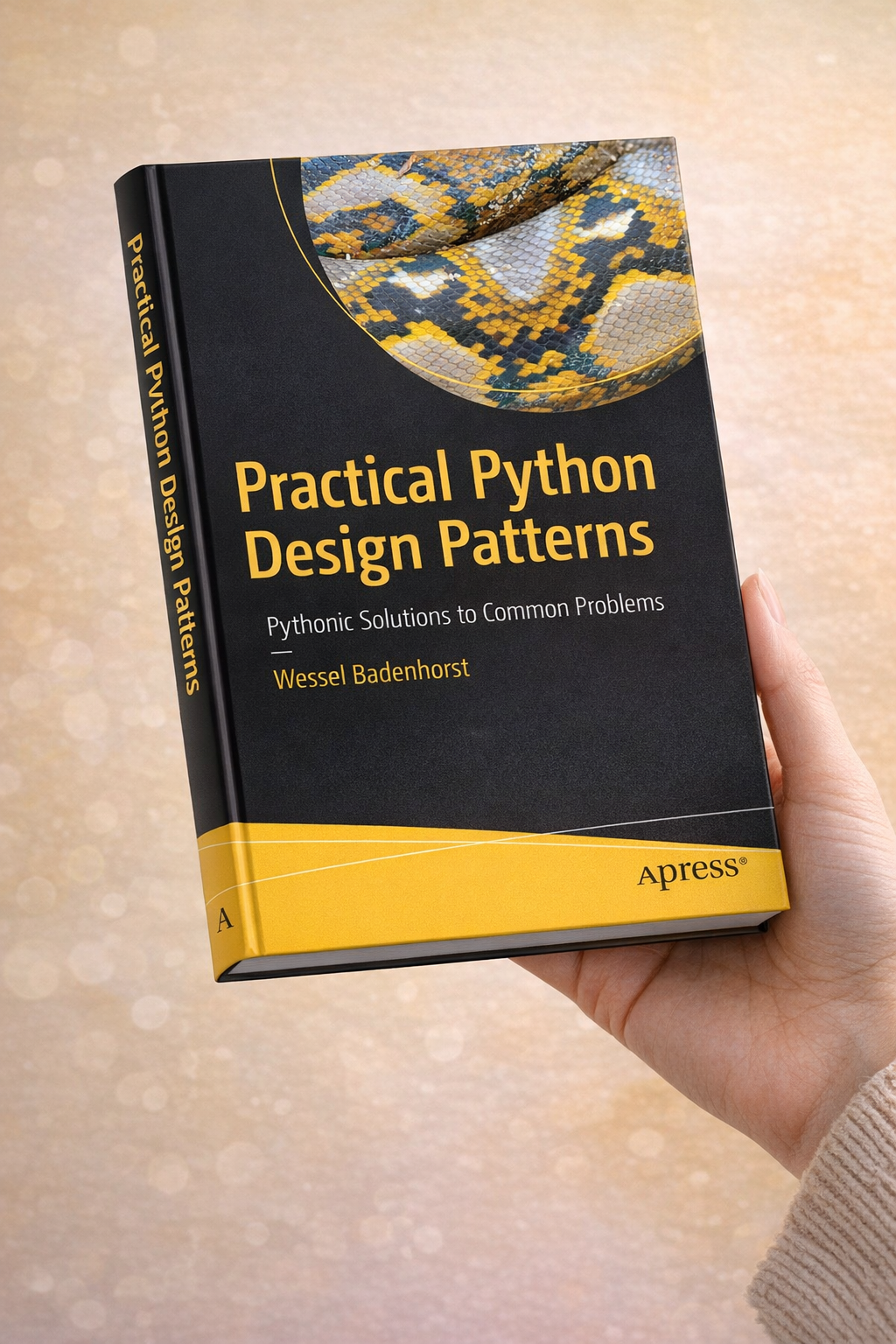
This article focuses on Practical Python Design Patterns, meaning:
Patterns you will actually use
Clear explanations for beginners
Real-world applications in modern projects
Simple and readable Python examples
Whether you are a student learning software engineering, a junior developer, or a professional engineer transitioning to Python, this guide will help you understand why, when, and how to use design patterns effectively.
Background Theory
What Are Design Patterns?
Design patterns are generalized solutions to recurring problems in software design. They were popularized by the famous book “Design Patterns: Elements of Reusable Object-Oriented Software” by the Gang of Four (GoF).
Instead of reinventing the wheel every time, engineers rely on patterns that:
Have been tested in real systems
Improve communication between developers
Reduce technical debt
Make systems easier to extend
Why Design Patterns Matter in Python
Python allows developers to write code quickly. However, without structure, Python projects can become messy as they grow.
Design patterns help by:
Enforcing clear responsibilities
Reducing tight coupling
Improving code readability
Supporting team collaboration
Python’s dynamic typing and simplicity make patterns lighter and more flexible compared to languages like Java or C++.
Technical Definition
A Python Design Pattern is a reusable software design solution implemented using Python’s language features such as:
Classes and objects
Functions and decorators
Modules and packages
Inheritance and composition
Design patterns are commonly categorized into three groups:
1. Creational Patterns
Focus on object creation.
Singleton
Factory
Builder
2. Structural Patterns
Focus on object composition.
Adapter
Decorator
Facade
3. Behavioral Patterns
Focus on object interaction.
Observer
Strategy
Command
In this article, we will focus on practical patterns that engineers use daily.
Step-by-Step Explanation of Key Python Design Patterns
1. Singleton Pattern
Concept
Ensures that only one instance of a class exists in the entire application.
Why Use It
Database connections
Logging systems
Configuration managers
Step-by-Step
Prevent multiple instances
Provide a global access point
Reuse the same object
Python Example
2. Factory Pattern
Concept
Creates objects without specifying the exact class.
Why Use It
When object creation logic becomes complex
When the type of object depends on input
Step-by-Step
Define a common interface
Create different implementations
Let the factory decide which one to create
Python Example
3. Decorator Pattern
Concept
Adds new behavior to objects without modifying their code.
Why Use It
Logging
Authentication
Performance monitoring
Step-by-Step
Create a base function
Wrap it with a decorator
Extend behavior dynamically
Python Example
4. Observer Pattern
Concept
Defines a one-to-many dependency where changes in one object notify others.
Why Use It
Event systems
Notifications
UI updates
Step-by-Step
Create a subject
Register observers
Notify observers on state change
Python Example
5. Strategy Pattern
Concept
Allows selecting an algorithm at runtime.
Why Use It
Payment systems
Sorting methods
Compression algorithms
Python Example
Detailed Examples
Example: Logging System
Instead of hardcoding logging everywhere:
Use Singleton for logger
Use Decorator to log function execution
This approach:
Reduces duplicated code
Improves debugging
Centralizes logging behavior
Real World Application in Modern Projects
Web Development
Django middleware uses Decorator & Chain patterns
Factory pattern for serializers and views
Data Engineering
Strategy pattern for data processing pipelines
Observer pattern for event-driven workflows
DevOps & Automation
Singleton for configuration loaders
Command pattern for task execution
AI & Machine Learning
Factory for model selection
Strategy for optimization algorithms
Common Mistakes
Overusing Patterns
Not every problem needs a pattern
Forcing Patterns
Simpler code is often better
Ignoring Pythonic Style
Python supports simpler alternatives
Copying Without Understanding
Always understand the problem first
Challenges & Solutions
Challenge 1: Pattern Complexity
Solution: Start simple and refactor later
Challenge 2: Performance Overhead
Solution: Use patterns only where flexibility is required
Challenge 3: Team Misunderstanding
Solution: Document patterns clearly in the project
Case Study: Payment Processing System
Problem
A system supports multiple payment methods and keeps growing.
Solution
Strategy pattern for payment methods
Factory for payment object creation
Result
Easy to add new payment types
Cleaner and more testable code
Reduced maintenance cost
Tips for Engineers
Learn patterns by problem, not by name
Prefer composition over inheritance
Keep patterns lightweight
Write tests for pattern-based code
Use Python features like decorators and duck typing
FAQs
1. Are design patterns mandatory in Python?
No. They are optional tools to improve code structure.
2. Are design patterns only for large projects?
Mostly yes, but small projects can benefit too.
3. Which pattern should beginners learn first?
Singleton, Factory, and Decorator.
4. Can design patterns hurt performance?
Yes, if overused unnecessarily.
5. Do frameworks already use design patterns?
Yes. Most frameworks are built on patterns.
6. Are Python patterns different from Java patterns?
Conceptually same, implementation is simpler in Python.
Conclusion
Design patterns are engineering wisdom distilled into reusable solutions. In Python, they become even more powerful due to the language’s flexibility and simplicity.
By understanding Practical Python Design Patterns, beginners can:
Write cleaner code
Think like software architects
Build systems that scale gracefully
Remember, design patterns are not rules — they are guides. Use them wisely, adapt them to Pythonic practices, and always prioritize clarity over complexity.
Mastering these patterns will significantly improve your journey as a Python engineer, whether you are building web applications, data pipelines, or large-scale systems.