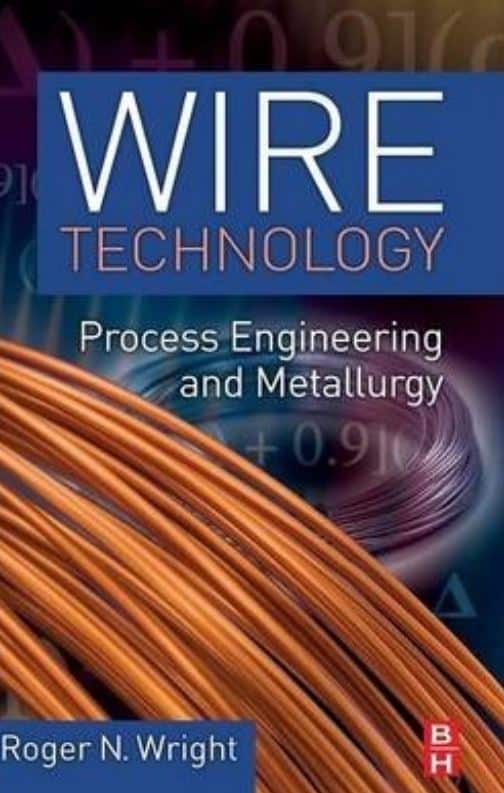
Wire Technology Process Engineering and Metallurgy: A Beginner-Friendly Guide to Materials, Manufacturing, and Applications
Introduction
Wire technology is one of the most fundamental yet often overlooked areas of engineering. From electrical cables and suspension bridges to medical devices and microelectronics, engineered wire products form the backbone of modern infrastructure and technology. Behind every wire lies a complex combination of process engineering and metallurgy, ensuring that the wire has the correct strength, conductivity, flexibility, and durability.
For engineering students and professionals, understanding wire technology is essential because it connects materials science, mechanical engineering, manufacturing processes, and quality control. Even at a beginner level, learning how raw metal transforms into high-precision wire provides insight into industrial optimization, failure prevention, and product innovation.
This article presents a complete, beginner-friendly explanation of Wire Technology Process Engineering and Metallurgy, starting from basic theory and definitions, moving step by step through manufacturing processes, and ending with real-world applications, challenges, and case studies. No advanced background is required—only curiosity and an interest in how materials shape the world.
Background Theory
What Is Wire in Engineering Terms?
In engineering, a wire is a long, slender metal product with a circular or shaped cross-section, produced by mechanical deformation (mainly drawing). Unlike bulk metal products, wires are characterized by:
High length-to-diameter ratio
Controlled microstructure
Specific mechanical and electrical properties
Wire technology focuses not just on shape, but on performance.
Role of Metallurgy in Wire Technology
Metallurgy is the science of metals, including:
Physical metallurgy (structure, phases, grain size)
Mechanical metallurgy (strength, ductility, fatigue)
Process metallurgy (melting, casting, forming)
In wire manufacturing, metallurgy determines:
📌How easily a metal can be drawn
📌How much deformation it can withstand
How its properties change during processing
Why Process Engineering Matters
Process engineering ensures that wire production is:
Repeatable
Efficient
Economical
High quality
Small changes in speed, temperature, or lubrication can significantly affect wire performance.
Technical Definition
Wire Technology Process Engineering
📌Wire Technology Process Engineering is the systematic design, control, and optimization of manufacturing processes used to convert metallic raw materials into wires with precise mechanical, electrical, and surface properties.
Wire Metallurgy
Wire Metallurgy studies how chemical composition, microstructure, and thermomechanical processing influence wire behavior during manufacturing and service life.
Step-by-Step Explanation of Wire Manufacturing Process
Step 1: Raw Material Selection
Common metals used in wire technology include:
Copper (Cu)
Aluminum (Al)
Steel (low, medium, high carbon)
Stainless steel
Nickel alloys
Precious metals (gold, silver)
Key selection criteria:
Electrical conductivity
Tensile strength
Corrosion resistance
Cost
Step 2: Melting and Casting
The metal is melted in furnaces and cast into:
Rods
Billets
Continuous cast bars
This stage defines chemical homogeneity and removes impurities.
Step 3: Hot Working (Rod Rolling)
The cast metal is hot rolled to reduce cross-sectional area.
Benefits:
Breaks down coarse grains
Improves ductility
Reduces casting defects
Step 4: Pickling and Surface Cleaning
Surface oxides and scale are removed using:
Acid pickling
Mechanical brushing
Shot blasting
Clean surfaces are critical for smooth drawing.
Step 5: Wire Drawing Process
Wire drawing is the core process in wire technology.
Principle of Wire Drawing
Wire is pulled through a die, reducing diameter while increasing length.
A0×L0=A1×L1
Where:
A = cross-sectional area
L = length
Step 6: Lubrication
Lubricants reduce:
Friction
Heat generation
Die wear
Types:
Dry lubricants (soap, powder)
Wet lubricants (oil, emulsions)
Step 7: Intermediate Annealing
As wire is drawn, it becomes work hardened.
Annealing:
Restores ductility
Refines grain structure
Reduces residual stress
Step 8: Final Drawing and Finishing
Final operations may include:
Precision drawing
Coating (zinc, tin, polymer)
Spooling
Quality inspection
Detailed Examples
Example 1: Copper Electrical Wire
Material: Electrolytic copper
Process: Continuous casting → multi-stage drawing → annealing
Key property: High conductivity (>99.9% purity)
Used in:
Power cables
Electronics
Motors
Example 2: High-Carbon Steel Wire
Material: 0.6–0.9% carbon steel
Process: Patenting → drawing → heat treatment
Key property: High tensile strength
Used in:
Springs
Piano wires
Suspension cables
Example 3: Stainless Steel Medical Wire
Material: 316L stainless steel
Process: Cold drawing → annealing → polishing
Key property: Corrosion resistance and biocompatibility
Used in:
Surgical tools
Implants
Guide wires
Real-World Applications in Modern Projects
Electrical and Power Engineering
Transmission lines
Renewable energy systems
Electric vehicle wiring
Civil and Structural Engineering
Prestressed concrete cables
Suspension bridges
Reinforced structures
Automotive and Aerospace
Control cables
Safety systems
High-temperature alloys
Medical and Biomedical Engineering
Stents
Orthopedic implants
Surgical wires
Electronics and Microtechnology
Semiconductor bonding wires
Sensors
Precision connectors
Common Mistakes
1. Ignoring Material Microstructure
Focusing only on chemical composition leads to unexpected failures.
2. Excessive Drawing Reduction
Over-reduction causes:
Wire breakage
Surface cracking
3. Poor Lubrication
Results in:
Die damage
High energy consumption
4. Skipping Annealing
Leads to brittle wire and reduced service life.
Challenges & Solutions
Challenge 1: Wire Breakage During Drawing
Cause:
Excessive stress
Surface defects
Solution:
Optimize reduction ratio
Improve surface preparation
Challenge 2: Inconsistent Mechanical Properties
Cause:
Non-uniform annealing
Solution:
Controlled heat treatment
Real-time temperature monitoring
Challenge 3: Surface Defects
Cause:
Die wear
Contamination
Solution:
Regular die maintenance
Clean lubrication systems
Challenge 4: Energy Efficiency
Cause:
High friction and heat losses
Solution:
Advanced lubricants
Process automation
Case Study: High-Strength Steel Wire for Suspension Bridges
Project Background
A large infrastructure project required steel wires capable of withstanding extreme loads and environmental exposure.
Engineering Approach
Selected high-carbon steel
Applied controlled patenting heat treatment
Multi-stage cold drawing
Zinc coating for corrosion protection
Results
Tensile strength > 1800 MPa
Extended service life
Reduced maintenance costs
Lessons Learned
Metallurgy and process control are equally important
Small process deviations lead to major performance changes
Tips for Engineers
Always connect process parameters with material behavior
Monitor microstructure, not just dimensions
Document every process stage
Invest in proper lubrication systems
Use data analytics for quality control
Understand end-use requirements before design
Never underestimate surface quality
FAQs
Q1: What is the most important process in wire technology?
Wire drawing is the most critical because it defines final dimensions and properties.
Q2: Why is annealing necessary in wire production?
Annealing restores ductility and prevents brittle failure due to work hardening.
Q3: Can all metals be drawn into wire?
No. Metals must have sufficient ductility and proper microstructure.
Q4: What determines wire strength?
Chemical composition, drawing reduction, grain size, and heat treatment.
Q5: How does metallurgy affect wire life?
Proper metallurgy improves fatigue resistance, corrosion resistance, and durability.
Q6: Is wire technology still relevant today?
Yes. It is essential for renewable energy, electronics, transportation, and medicine.
Q7: What software tools are used in wire process engineering?
Finite Element Analysis (FEA), process simulation, and quality monitoring systems.
Conclusion
Wire Technology Process Engineering and Metallurgy form a powerful intersection between materials science and manufacturing engineering. From raw metal selection to final application, every step influences performance, reliability, and cost. For beginners, understanding these fundamentals builds a strong foundation for careers in mechanical, electrical, civil, and materials engineering.
In a world moving toward smarter infrastructure, electric mobility, and advanced medical devices, wire technology remains as relevant as ever. By mastering its principles, engineers gain the ability to design safer, stronger, and more efficient systems that shape modern life.