Civil Engineer’s Handbook of Professional Practice: A Practical Guide for Students and Professionals
Introduction
Civil engineering is more than designing structures, roads, bridges, foundations, and water systems. It is a professional discipline that combines technical knowledge, project management, communication, safety, ethics, documentation, and practical decision-making. A successful civil engineer must understand not only how to design something, but also why a particular solution is appropriate and how it can be delivered safely, economically, and sustainably.
A Civil Engineer’s Handbook of Professional Practice can therefore be viewed as a practical bridge between academic engineering theory and the realities of professional work. Students may learn structural analysis, geotechnical engineering, surveying, transportation, and construction methods at university, while practicing engineers must additionally deal with clients, contractors, regulations, budgets, schedules, inspections, contracts, and unexpected site conditions.


Modern civil engineering projects also involve digital technologies such as Building Information Modeling (BIM), drones, geographic information systems (GIS), digital surveying, structural monitoring, cloud documentation, and computer-aided design. These technologies have changed how engineering teams plan, communicate, and manage projects.
For students and professionals in the USA, UK, Canada, Australia, and Europe, professional practice also requires awareness of local codes, standards, procurement systems, environmental requirements, and professional responsibilities.


This guide presents an original overview of professional civil engineering practice, from project initiation and design through construction, inspection, documentation, and completion.
Background Theory
From Engineering Theory to Professional Practice
Engineering education provides the technical foundation needed to solve problems. However, professional engineering requires the ability to apply that knowledge within real-world constraints.
A university assignment may provide complete information about soil properties, material strengths, loads, geometry, and environmental conditions. A real project is rarely so convenient.
A professional engineer may receive:
- Incomplete site information
- Conflicting project requirements
- Limited budgets
- Tight deadlines
- Changing client expectations
- Uncertain ground conditions
- Environmental restrictions
- Construction limitations
- Regulatory requirements
- Multiple stakeholders
Professional practice is therefore based on engineering judgment as well as technical calculation.
The Professional Engineering Mindset
A strong civil engineer continuously asks:
Is it safe? 🦺
Is it technically appropriate? 🔧
Is it constructible? 🏗️
Is it economically reasonable? 💰
Is it environmentally responsible? 🌱
Can the decision be properly documented? 📋
These questions help transform engineering theory into responsible professional action.
Definition
What Is Civil Engineering Professional Practice?
Civil engineering professional practice is the application of engineering knowledge, professional standards, ethical principles, management skills, and technical judgment to the planning, design, construction, operation, maintenance, and evaluation of infrastructure.
It covers a wide range of activities, including:
- Site investigation
- Engineering surveys
- Concept development
- Preliminary design
- Detailed design
- Specifications
- Cost estimation
- Tender documentation
- Construction management
- Site inspection
- Quality control
- Health and safety
- Contract administration
- Environmental management
- Asset maintenance
- Project closeout
Why Professional Practice Matters
A technically correct design can still fail professionally if the engineer ignores communication, constructability, safety, documentation, or regulatory obligations.
Professional practice creates a framework for making engineering decisions that are defensible, traceable, practical, and beneficial to society.
Step-by-Step Professional Engineering Process
Step 1: Understand the Project Brief
Every project begins with a need.
The engineer should establish:
- What needs to be built or improved?
- Who is the client?
- Who will use the facility?
- 🏗️ What is the expected service life?
- What budget is available?
- 🏗️ What deadlines exist?
- What regulations apply?
- 🏗️ What environmental restrictions exist?
A poorly defined project brief can create problems throughout the project lifecycle.
Step 2: Collect Site Information
Before developing a detailed solution, engineers need reliable information about the project environment.
Depending on the project, this may involve:
- Topographic surveys
- Geotechnical investigations
- Existing utility surveys
- Hydrological information
- Traffic studies
- Environmental assessments
- Existing structure inspections
- Historical records
The quality of the final design depends heavily on the quality of the information used to develop it.


Step 3: Develop Alternative Solutions
Professional engineers should avoid immediately selecting the first possible solution.
Several alternatives can be evaluated according to:
- Safety
- Cost
- Construction duration
- Maintenance requirements
- Environmental impact
- Material availability
- Site constraints
- Long-term performance
The preferred option should provide an appropriate balance between these factors.
Step 4: Prepare the Design
Once the concept has been selected, the engineering team develops detailed drawings, specifications, schedules, models, and technical documentation.
Depending on the discipline, this may include:
- Structural drawings
- Road layouts
- Drainage plans
- Foundation details
- Reinforcement drawings
- Earthwork plans
- Utility layouts
- BIM models
- Technical specifications
Step 5: Review and Verify
Design review is one of the most important professional activities.
A review may identify:
⚠️ Missing information
⚠️ Conflicting dimensions
🏗️ Coordination problems
⚠️ Incorrect assumptions
⚠️ Constructability problems
🏗️ Inadequate documentation
Independent checking can be particularly valuable for critical engineering work.
Step 6: Procurement and Contracting
The engineering team may assist with tender documents, technical specifications, contractor questions, bid evaluation, and contract administration.
Engineers should understand the distinction between technical responsibility and contractual responsibility.
Step 7: Construction
During construction, engineers may perform inspections, respond to technical queries, review submittals, assess proposed changes, and monitor compliance with approved documents.
Construction is where design assumptions meet physical reality.
Step 8: Inspection, Testing, and Handover
Before completion, the project should be inspected and documented.
Typical activities include:
- Quality inspections
- Material testing
- Defect identification
- Commissioning
- As-built documentation
- Final records
- Operation and maintenance information
Step 9: Post-Construction Evaluation
Professional responsibility does not necessarily end when construction is complete.
Engineers can learn valuable lessons by evaluating:
- Performance
- Maintenance requirements
- Defects
- User feedback
- Construction problems
- Design assumptions
This creates a continuous improvement cycle.
Comparison: Academic Engineering vs Professional Engineering
| Area | Academic Environment | Professional Environment |
|---|---|---|
| Information | Usually complete | Often incomplete |
| Problems | Clearly defined | Frequently ambiguous |
| Time | Flexible | Schedule-driven |
| Cost | Often secondary | Major consideration |
| Communication | Mostly academic | Clients, contractors, authorities, public |
| Regulations | Studied conceptually | Must be actively followed |
| Documentation | Assignment-focused | Legally and professionally important |
| Safety | Theoretical consideration | Fundamental responsibility |
| Decision-making | Instructor-guided | Professional judgment |
| Consequences | Grades | Safety, cost, reputation, and liability |
Engineer vs Contractor
An engineer generally focuses on design intent, technical requirements, verification, and professional judgment, while the contractor focuses on means and methods of construction, workforce, equipment, sequencing, and delivery.
Successful projects require both sides to communicate effectively.
Diagrams and Professional Workflow
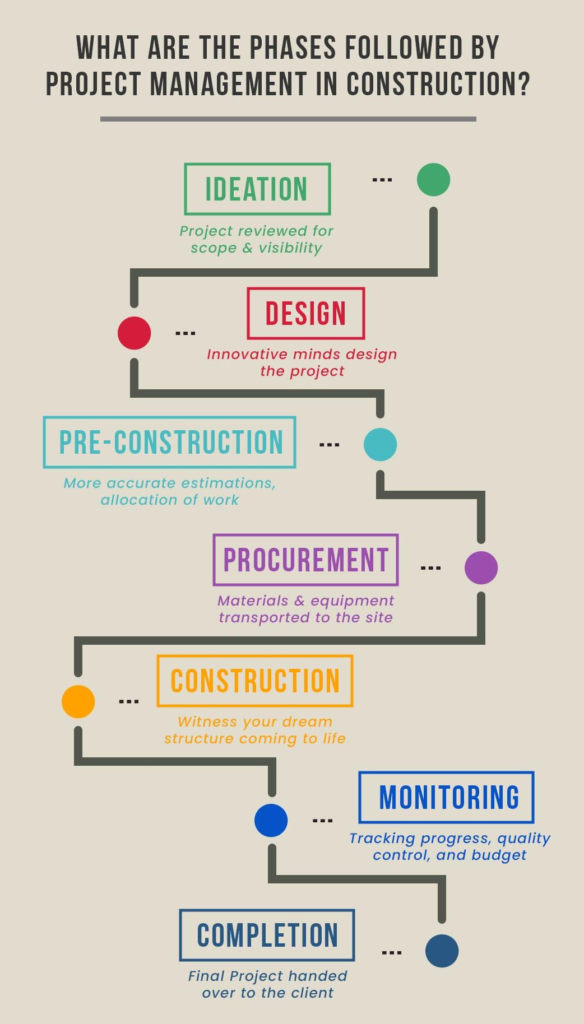
Civil Engineering Project Lifecycle
Project Need
     ↓
Project Brief
     ↓
Site Investigation
     ↓
Concept Development
     ↓
Option Evaluation
     ↓
Detailed Design
     ↓
Design Review
     ↓
Tender / Procurement
     ↓
Construction
     ↓
Inspection & Testing
     ↓
Handover
     ↓
Operation & Maintenance
     ↓
Performance Evaluation
This lifecycle demonstrates that civil engineering is not a single design activity. It is a continuous process involving multiple professional decisions.




Core Professional Responsibilities
| Responsibility | Main Objective |
|---|---|
| Technical design | Produce safe and functional solutions |
| Documentation | Maintain accurate project records |
| Quality | Ensure specified requirements are achieved |
| Safety | Reduce risks to workers and the public |
| Cost awareness | Deliver value within financial constraints |
| Communication | Coordinate stakeholders |
| Ethics | Protect public interest |
| Sustainability | Reduce long-term environmental impact |
| Risk management | Identify and control uncertainties |
Practical Examples
Example 1: Urban Road Improvement
A municipality wants to improve an existing urban road.
The civil engineering team first examines traffic conditions, drainage, utilities, pavement condition, pedestrian requirements, and available space.
Instead of simply widening the road, the engineers may evaluate several options involving:
- Pavement rehabilitation
- Drainage improvements
- Pedestrian facilities
- Intersection modifications
- Utility relocation
- Traffic management
The best solution is not necessarily the largest construction project. It is the solution that addresses the actual transportation problem while considering cost, safety, construction disruption, and future maintenance.
Example 2: Building Foundation Project
A building project may initially appear straightforward. However, the engineering team must consider soil conditions, groundwater, nearby structures, excavation constraints, construction access, and long-term settlement behavior.
A site investigation can reveal information that significantly changes the preferred foundation approach.
This illustrates an important professional principle:
Good engineering decisions depend on good information.
Example 3: Construction Quality Problem
Suppose a contractor reports that a specified construction detail is difficult to execute.
The engineer should not automatically reject the contractor’s concern.
Instead, the team can evaluate:
- The purpose of the original detail
- Safety implications
- Performance requirements
- Alternative construction methods
- Inspection requirements
- Cost and schedule effects
A revised solution may be acceptable if it maintains the required engineering performance and follows the appropriate approval process.
Real-World Applications
Infrastructure Development
Professional civil engineers contribute to:
🏙️ Urban development
🌉 Bridges
🛣️ Highways
🚇 Transportation systems
💧 Water infrastructure
🏢 Buildings
🏭 Industrial facilities
🌊 Flood-control systems
🚰 Wastewater networks
⚡ Infrastructure supporting energy facilities
Sustainable Engineering
Sustainability has become increasingly important in engineering practice.
Engineers can support sustainable infrastructure through:
- Efficient material selection
- Reduced construction waste
- Water conservation
- Energy-conscious design
- Durable materials
- Adaptation to climate risks
- Reuse and rehabilitation of existing assets
- Environmentally responsible construction practices
The objective is not simply to construct something today, but to consider how it will perform over decades.
Common Mistakes
Ignoring the Project Brief
Engineers sometimes focus heavily on technical details while losing sight of the client’s actual objective.
Using Unverified Information
Old drawings, uncertain survey data, or incomplete utility information can create serious design and construction problems.
Poor Documentation
Verbal decisions that are not properly recorded can become difficult to verify later.
Failing to Coordinate Disciplines
Structural, civil, architectural, mechanical, electrical, geotechnical, and environmental requirements can overlap.
Poor coordination can result in clashes and redesign.
Treating Safety as Someone Else’s Responsibility
Even when a dedicated safety professional is involved, engineers must recognize hazards associated with their technical decisions.
Overlooking Constructability
A design can be theoretically excellent but difficult, expensive, or unsafe to construct.
Challenges and Solutions
| Challenge | Practical Solution |
|---|---|
| Incomplete site data | Conduct appropriate investigations |
| Design changes | Use controlled revision procedures |
| Stakeholder conflict | Establish clear communication |
| Budget pressure | Compare lifecycle value rather than initial cost alone |
| Schedule delays | Identify critical activities and risks early |
| Construction defects | Strengthen inspection and quality processes |
| Coordination problems | Use multidisciplinary reviews and BIM where appropriate |
| Environmental constraints | Integrate environmental considerations early |
| Documentation overload | Use structured digital document management |
Managing Uncertainty
Uncertainty is unavoidable in civil engineering.
Instead of pretending that uncertainty does not exist, professionals should identify it, assess its potential impact, and establish appropriate controls.
This is the foundation of engineering risk management.
Case Study: Improving a Municipal Drainage Project
Project Background
Consider a hypothetical urban drainage improvement project in a rapidly developing city.
The existing drainage system frequently experiences flooding during intense rainfall. The municipality initially proposes simply increasing the size of several drainage pipes.
Engineering Investigation
The engineering team conducts:
- Topographic surveying
- Drainage network inspection
- Catchment assessment
- Existing infrastructure mapping
- Hydraulic investigation
- Road-level analysis
- Community consultation
The investigation reveals that the problem is not caused by pipe capacity alone. Several locations have poor surface drainage, blocked inlets, insufficient maintenance access, and development that has altered runoff patterns.
Professional Solution
Instead of focusing exclusively on larger pipes, the team develops an integrated solution involving:
- Improved drainage inlets
- Selective network upgrades
- Surface-flow improvements
- Maintenance access
- Local storage measures
- Better inspection procedures
- Updated asset records
Key Lesson
The most important lesson is that professional engineering begins with understanding the problem rather than immediately designing a solution.
This principle applies to almost every civil engineering discipline.
Essential Tips for Civil Engineering Students
Build Strong Technical Foundations
Understand the principles behind structural, geotechnical, transportation, environmental, hydraulic, and construction engineering.
Learn to Read Drawings
Engineering drawings communicate technical information more efficiently than long explanations.
Develop Communication Skills
A professional engineer must communicate with people who may not have an engineering background.
Understand Codes and Standards
Always identify the standards and regulations applicable to the project and jurisdiction.
Learn Digital Tools
Familiarity with CAD, BIM, GIS, surveying technologies, spreadsheets, project management systems, and engineering software can significantly improve productivity.
Document Decisions
A short, clear record of an engineering decision can become extremely valuable months or years later.
Think About Constructability
Ask yourself:
Can this actually be built as designed? 🏗️
Consider the Whole Lifecycle
Do not focus only on construction. Think about:
Design → Construction → Operation → Maintenance → Renewal
Protect Professional Integrity
Engineering decisions can affect public safety and substantial financial investments. Professional integrity should therefore remain central to every decision.
FAQs
What is a Civil Engineer’s Handbook of Professional Practice?
It is a practical reference concept covering the knowledge, procedures, responsibilities, and professional skills civil engineers use when working on real projects.
Is professional practice important for civil engineering students?
Yes. Students who understand professional workflows can transition more effectively from academic study to engineering employment.
What skills does a professional civil engineer need?
A combination of technical knowledge, communication, project management, problem-solving, documentation, teamwork, risk awareness, and ethical judgment.
Why is documentation important in civil engineering?
Documentation provides a reliable record of decisions, calculations, drawings, approvals, inspections, changes, and project communications.
How does BIM help civil engineers?
BIM can improve coordination, visualization, information management, clash detection, and collaboration across project disciplines.
What is the difference between design and construction engineering?
Design engineering focuses primarily on developing and documenting technical solutions, while construction engineering is heavily involved with translating those solutions into safe and practical physical work.
Why is engineering ethics important?
Civil infrastructure can directly affect public safety, property, communities, and the environment. Ethical engineering helps ensure that professional decisions prioritize appropriate responsibilities rather than short-term convenience.
Can professional practice principles be applied internationally?
Yes, many fundamental principles are transferable, but engineers must always comply with the specific laws, codes, standards, licensing requirements, and professional rules applicable to the project location.
Conclusion
A Civil Engineer’s Handbook of Professional Practice represents much more than a collection of technical procedures. It reflects the broader professional responsibility of engineers to transform scientific and engineering knowledge into infrastructure that is safe, reliable, economical, constructible, maintainable, and sustainable.
For students, professional practice provides a roadmap for understanding how classroom concepts become real engineering decisions. For practicing engineers, it reinforces the importance of documentation, communication, risk management, quality, ethics, and continuous learning.
The modern civil engineer must be both a technical problem solver and a professional decision-maker. 🏗️🌍
Whether working on a highway in the USA, a rail project in the UK, a bridge in Canada, a water system in Australia, or a sustainable infrastructure project in Europe, the fundamental objective remains similar: use engineering knowledge responsibly to create infrastructure that serves people and performs reliably throughout its intended life.
The strongest civil engineers therefore do not simply ask, “Can we design it?”
They also ask:
“Is it safe?”
“Is it practical?”
“Can it be built?”
“Can it be maintained?”
“What are the risks?”
“What will its impact be over the long term?”
That combination of technical competence, professional judgment, ethical responsibility, and practical thinking is the foundation of excellent civil engineering practice.