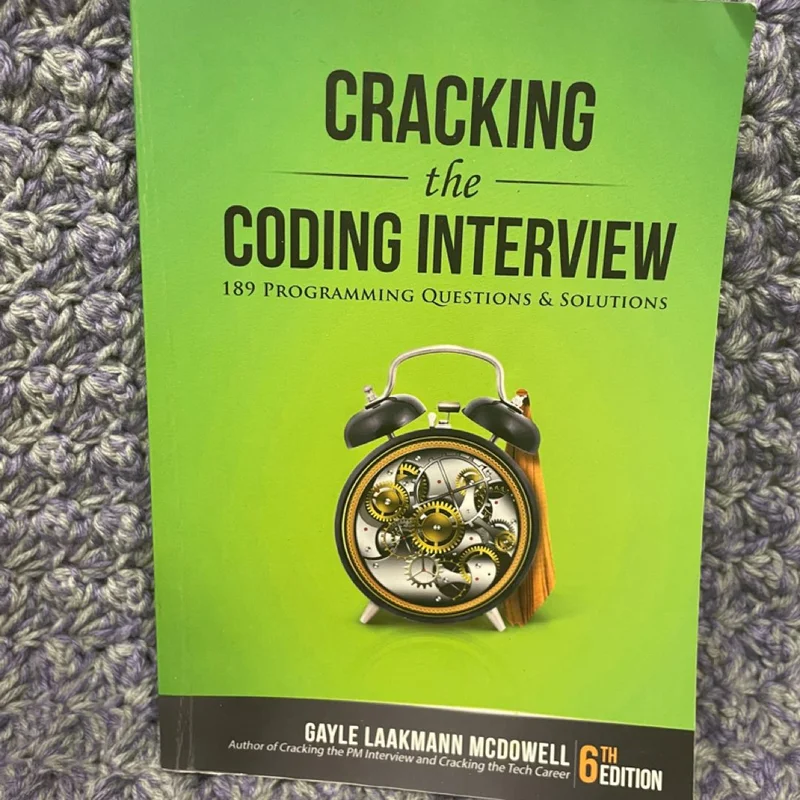
🚀 Cracking the Coding Interview: 189 Programming Questions and Solutions – The Complete Engineering Guide for Technical Interview Mastery
🌍 Introduction
In the competitive technology markets of the USA, UK, Canada, Australia, and Europe, software engineering interviews have evolved into rigorous technical evaluations. From startups to global giants, candidates are tested on data structures, algorithms, system design, and problem-solving under pressure.
One book that has become nearly synonymous with technical interview preparation is Cracking the Coding Interview by Gayle Laakmann McDowell.
But this guide is more than just a summary of a book.
This article provides:
-
A deep engineering analysis of its methodology
-
Background theory behind coding interviews
-
Step-by-step problem-solving frameworks
-
Comparisons with other preparation methods
-
Diagrams and structured tables
-
Real-world engineering applications
-
A detailed case study
-
Practical tips for students and professionals
Whether you’re a computer science student or a senior engineer aiming for FAANG-level roles, this guide bridges beginner understanding with advanced engineering depth.
🧠 Background Theory: Why Coding Interviews Exist
🔎 The Evolution of Technical Interviews
In early software hiring practices, interviews were informal. Today, companies use structured technical interviews to assess:
-
Analytical thinking
-
Data structure knowledge
-
Algorithmic efficiency
-
Communication skills
-
Code quality
Large tech firms like Google, Amazon, Microsoft, and Meta use algorithm-based interviews to evaluate reasoning under constraints.
📊 Engineering Assessment Principles
Coding interviews typically evaluate:
| Skill Area | Purpose |
|---|---|
| Data Structures | Evaluate memory modeling |
| Algorithms | Measure logical efficiency |
| Complexity Analysis | Assess scalability |
| Debugging | Evaluate systematic thinking |
| Communication | Measure clarity |
The theoretical backbone includes:
-
Big-O Notation
-
Recursion
-
Dynamic Programming
-
Graph Theory
-
Memory Management
Understanding these foundations is essential before attempting the 189 problems.
📘 Technical Definition
What Is “Cracking the Coding Interview”?
It is a structured engineering preparation framework that provides:
-
189 coding questions
-
Step-by-step solutions
-
Interview strategies
-
Behavioral preparation guidance
-
Resume advice
Technically, it is:
A systematic algorithmic problem-solving compendium designed to simulate real-world software engineering interviews.
🛠 Step-by-Step Engineering Problem-Solving Framework
The book teaches a powerful structured methodology. Let’s break it down in engineering terms.
🧩 Step 1: Clarify the Problem
Before coding:
-
Ask constraints
-
Confirm input format
-
Ask about edge cases
Example:
📐 Step 2: Brute Force First
Engineers often overcomplicate.
Start simple.
Example:
-
Two Sum problem
-
First try nested loops → O(n²)
⚙ Step 3: Optimize with Data Structures
Replace brute force with:
-
Hash maps → O(n)
-
Two pointers
-
Sliding window
-
Stack or queue
📈 Step 4: Analyze Complexity
Use Big-O:
-
Time Complexity
-
Space Complexity
Example Table:
| Approach | Time | Space |
|---|---|---|
| Brute Force | O(n²) | O(1) |
| Hash Map | O(n) | O(n) |
🔍 Step 5: Test Edge Cases
Common edge cases:
-
Empty input
-
Single element
-
Large input
-
Negative numbers
-
Repeated values
📊 Comparison: Book vs Other Platforms
| Feature | CTCI | Online Platforms |
|---|---|---|
| Structured Strategy | ✅ Yes | ❌ Sometimes |
| Full Solutions | ✅ Detailed | ⚠️ Community |
| Behavioral Prep | ✅ Yes | ❌ Rare |
| Resume Advice | ✅ Included | ❌ No |
| Company Insights | ✅ Yes | ⚠️ Limited |
Unlike purely online problem banks, this framework builds engineering thinking, not just solution memorization.
📐 Diagram: Problem-Solving Workflow
🔬 Detailed Example 1: Arrays & Hash Tables
Problem:
Find if two numbers in an array sum to a target.
Beginner Approach
Time: O(n²)
Advanced Engineering Approach
Use hash map:
Time: O(n)
This demonstrates algorithmic optimization — a core concept in interviews.
🔁 Detailed Example 2: Recursion
Problem:
Check if a string is a palindrome.
Recursive thinking:
Recursion introduces:
-
Stack frames
-
Base case logic
-
Time/space trade-offs
🌐 Real-World Applications in Modern Projects
Coding interview skills directly apply to:
1️⃣ Backend Engineering
At companies like Shopify, efficient data structures handle millions of transactions.
2️⃣ Cloud Infrastructure
Distributed systems require graph and tree logic.
3️⃣ AI Systems
Even AI frameworks rely on optimized memory structures.
4️⃣ Financial Systems
High-frequency trading platforms depend on low-latency algorithms.
⚠️ Common Mistakes
-
Memorizing solutions instead of understanding
-
Ignoring complexity analysis
-
Not practicing whiteboard coding
-
Poor communication
-
Skipping behavioral preparation
🚧 Challenges & Engineering Solutions
Challenge 1: Time Pressure
Solution:
-
Practice 45-minute simulations
-
Focus on pattern recognition
Challenge 2: Blank Mind During Interview
Solution:
-
Speak thoughts aloud
-
Break into smaller steps
Challenge 3: Advanced Topics (DP, Graphs)
Solution:
-
Master fundamentals first
-
Solve progressively harder problems
🏢 Case Study: Candidate Journey
Candidate Profile:
-
Computer Science Graduate (UK)
-
6 months preparation
Strategy:
-
2 problems per day
-
Weekly mock interviews
-
Focused review of mistakes
Result:
Secured offer from a multinational company after mastering:
-
Arrays
-
Trees
-
Graphs
-
Dynamic Programming
Key Insight:
Consistency > Speed
📋 Tables: Core Data Structures Covered
| Category | Examples |
|---|---|
| Arrays | Two Sum, Rotation |
| Linked Lists | Reverse list |
| Stacks | Balanced brackets |
| Queues | BFS traversal |
| Trees | Binary search tree |
| Graphs | Shortest path |
| Dynamic Programming | Knapsack |
🎯 Tips for Engineers
🟢 For Beginners
-
Learn one data structure per week
-
Focus on clarity
-
Use visual diagrams
🔵 For Advanced Engineers
-
Optimize space/time
-
Study system design
-
Practice explaining trade-offs
🟣 For Working Professionals
-
Simulate real interviews
-
Record mock sessions
-
Review mistakes deeply
❓ FAQs
1️⃣ Is the book suitable for beginners?
Yes. It starts from fundamentals and gradually increases difficulty.
2️⃣ Is it enough to get into big tech?
It builds strong foundations, but combine it with mock interviews.
3️⃣ How long should I prepare?
3–6 months depending on background.
4️⃣ Should I memorize solutions?
No. Understand patterns.
5️⃣ Does it cover system design?
Mostly coding interviews, limited system design.
6️⃣ Which language should I use?
Choose one language and master it.
7️⃣ Is it relevant in Europe?
Yes. Many companies use similar formats.
🔎 Engineering Perspective Summary
This book is not just a collection of problems.
It is:
-
A problem-solving methodology
-
A mental training system
-
A pattern-recognition guide
-
A communication skill enhancer
Its value lies in structured thinking.
🧠 Advanced Engineering Insight
Mastering coding interviews improves:
-
Software architecture thinking
-
Optimization skills
-
Debugging ability
-
Communication precision
These skills are transferable beyond interviews.
🏁 Conclusion
Cracking the Coding Interview remains one of the most influential engineering interview preparation resources in modern tech hiring.
🚀 For students, it builds foundations.
🚀 For professionals, it sharpens analytical precision.
🧠 For global engineers across the USA, UK, Canada, Australia, and Europe, it provides a standardized roadmap toward competitive software roles.
Cracking the coding interview is not about memorizing 189 problems.
It’s about mastering engineering thinking.
And that skill lasts a lifetime. 🚀